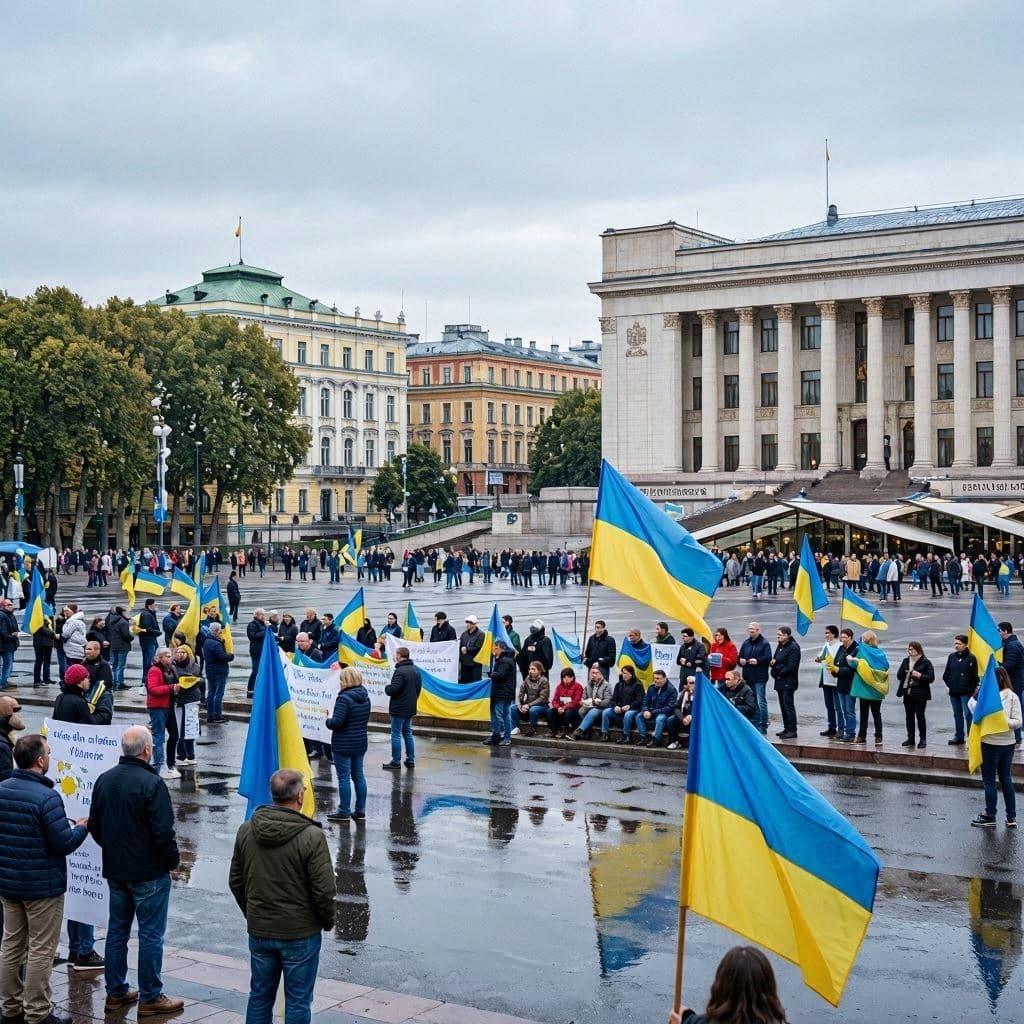
The course of a nation at war often resembles a river moving through uncertain terrain. Even when its direction remains clear, hidden currents beneath the surface can reshape its path. In Ukraine, those currents have become increasingly visible as political debate, military leadership, and public sentiment converge during one of the country's most challenging periods.
President Volodymyr Zelenskyy is reportedly considering whether to replace Commander-in-Chief Oleksandr Syrskyi following growing protests across several Ukrainian cities. The demonstrations emerged after the dismissal of Defense Minister Mykhailo Fedorov, whose technology-focused reforms and modernization efforts had earned significant public support.
The protests have drawn a broad mix of participants, including civilians, veterans, and relatives of active service members. Many demonstrators have called for Syrskyi's removal while also expressing disappointment over Fedorov's departure, arguing that his approach to innovation had strengthened Ukraine's defense capabilities.
According to multiple reports, disagreements between Fedorov and Syrskyi centered on military strategy, procurement reforms, and the pace of adopting new technologies such as drone warfare. Those differences gradually evolved into a leadership dispute that ultimately prompted Zelenskyy to choose between the two senior officials.
As public pressure has intensified, Zelenskyy has convened military leaders to assess battlefield conditions and consider possible adjustments within Ukraine's armed forces. While no final decision regarding Syrskyi has been announced, discussions about military leadership have become a central political issue during an active phase of the war.
Ukraine's international partners are also watching developments closely. Several Western governments have viewed Fedorov as a leading advocate for military modernization, making the recent leadership changes significant not only for domestic politics but also for ongoing international cooperation and defense planning.
Despite the political turbulence, Ukrainian officials continue to emphasize that military operations against Russia remain ongoing and that maintaining operational effectiveness is the government's primary objective. The coming days are expected to clarify whether additional changes will be made within the country's defense leadership.
For Ukraine, the challenge extends beyond selecting individual leaders. It is also about preserving confidence in institutions while navigating the demands of an enduring conflict, balancing military necessity with public expectations as the country continues to confront an uncertain future.
AI Image Disclaimer: The accompanying illustrations for this article are AI-generated visual representations intended to reflect the reported events and should not be interpreted as authentic documentary photographs.
Sources:
Reuters Financial Times Associated Press (AP) The Guardian ABC News Australia
Published by Banx Network. This article is part of the Banx decentralized media programme, powered by the BXE token on the XRP Ledger.


.jpg&w=3840&q=75 "Sally Rooney’s Books to Be Withdrawn From UK Sale Over Palestine Action Support")