Some nights arrive carrying a quiet promise. The air cools, the sky darkens, and above it all, something unseen begins to stir far beyond the atmosphere. Long before colors reach the horizon, the story starts at the Sun, where bursts of energy travel patiently across space, destined to brush against Earth’s magnetic shield. When they do, the sky sometimes answers in light.
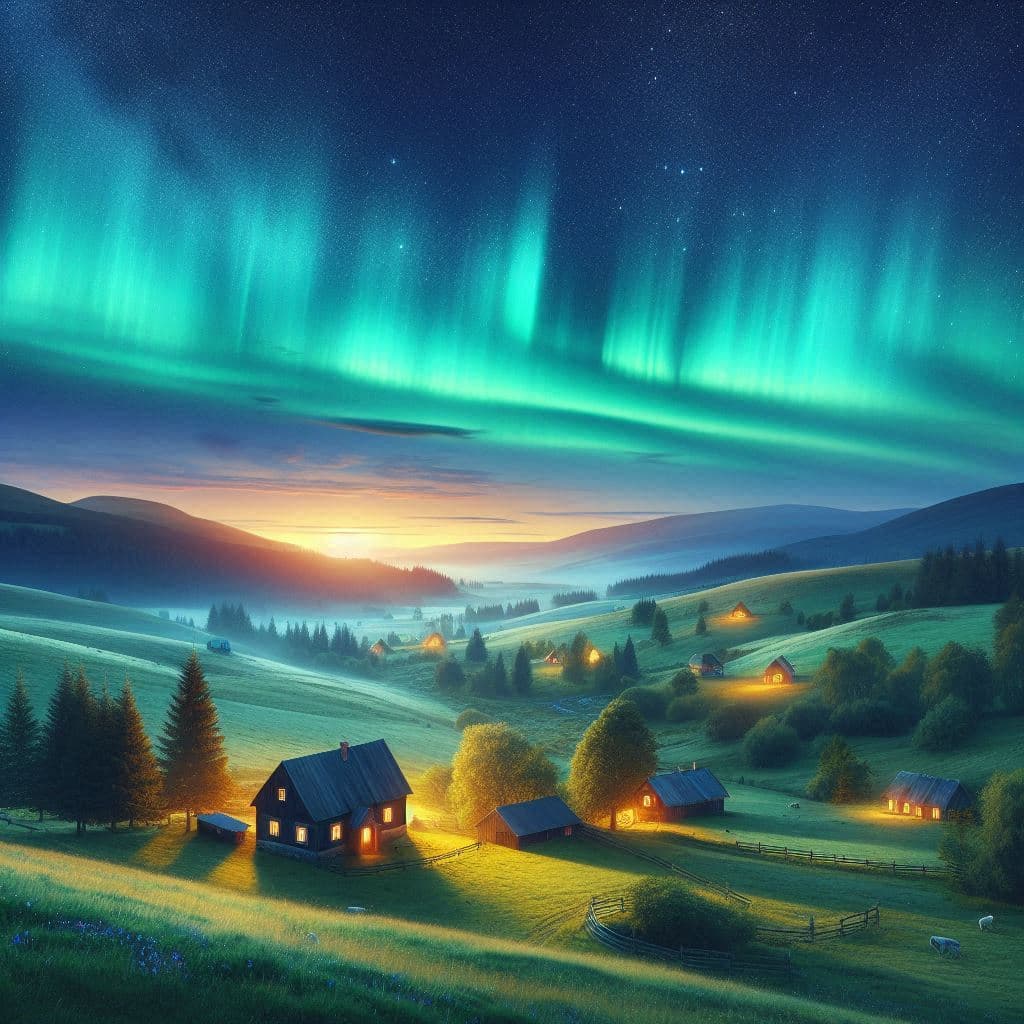
This Saturday night, that ancient exchange may be visible across parts of the United States. Space weather forecasters say heightened geomagnetic activity could allow the northern lights to drift farther south than usual. For residents in up to ten states, the sky may briefly abandon its familiar darkness and glow instead with soft greens, faint purples, and pale ribbons that seem to move without urgency.
The aurora is not a spectacle that announces itself loudly. It arrives unevenly, shaped by solar winds, cloud cover, and local darkness. States closest to the Canadian border have the strongest chance, but under clear skies, the glow may stretch into regions where it is rarely seen. Observers are often advised to step away from city lights, to let their eyes adjust, and to be patient with the night.
What unfolds overhead is not rare in the universe, but it is rare in daily life. Charged particles collide gently with Earth’s upper atmosphere, releasing energy as light. Science explains the process clearly, yet the experience itself remains quietly emotional, a reminder that the planet is not standing still, but constantly interacting with forces far beyond it.
Forecasts suggest the best viewing window will be during the late evening into early morning hours, depending on local conditions. No special equipment is needed, only darkness, clear skies, and a willingness to look up. Some will see vivid arcs; others may notice only a faint glow, easy to miss unless one is paying attention.
According to space weather agencies, geomagnetic conditions are expected to be elevated Saturday night, increasing the likelihood of auroral visibility across northern and upper Midwestern states. Visibility will ultimately depend on weather and solar activity at the time, but officials say the potential is there for a brief and quiet display.
AI Image Disclaimer Illustrations were produced with AI and serve as conceptual depictions.
Source Check NOAA Space Weather Prediction Center NASA Associated Press Space.com National Weather Service
Published by Banx Network. This article is part of the Banx decentralized media programme, powered by the BXE token on the XRP Ledger.