The high-altitude tracks of the Thaba-Tseka district are critical to the function of the central highlands, carving a path through dramatic basalt ridges and deep river valleys. These unpaved roads connect remote cattle posts and small agricultural villages to the regional center, providing the only route for supply trucks, emergency vehicles, and public minibuses. Maintained through a combination of regional budgets and local labor, these tracks represent a continuous effort to overcome the natural isolation of the terrain.
Yet, the stability of these mountain corridors is constantly tested by the heavy summer rain systems that characterize the alpine climate. When consecutive days of intense rainfall saturate the thin topsoil layers resting on the smooth basalt bedrock, the risk of slope failure increases significantly. A sudden saturation can cause the upper earthen banks to give way, sending a heavy mixture of red clay, loose gravel, and small rocks cascading onto the roadway below.
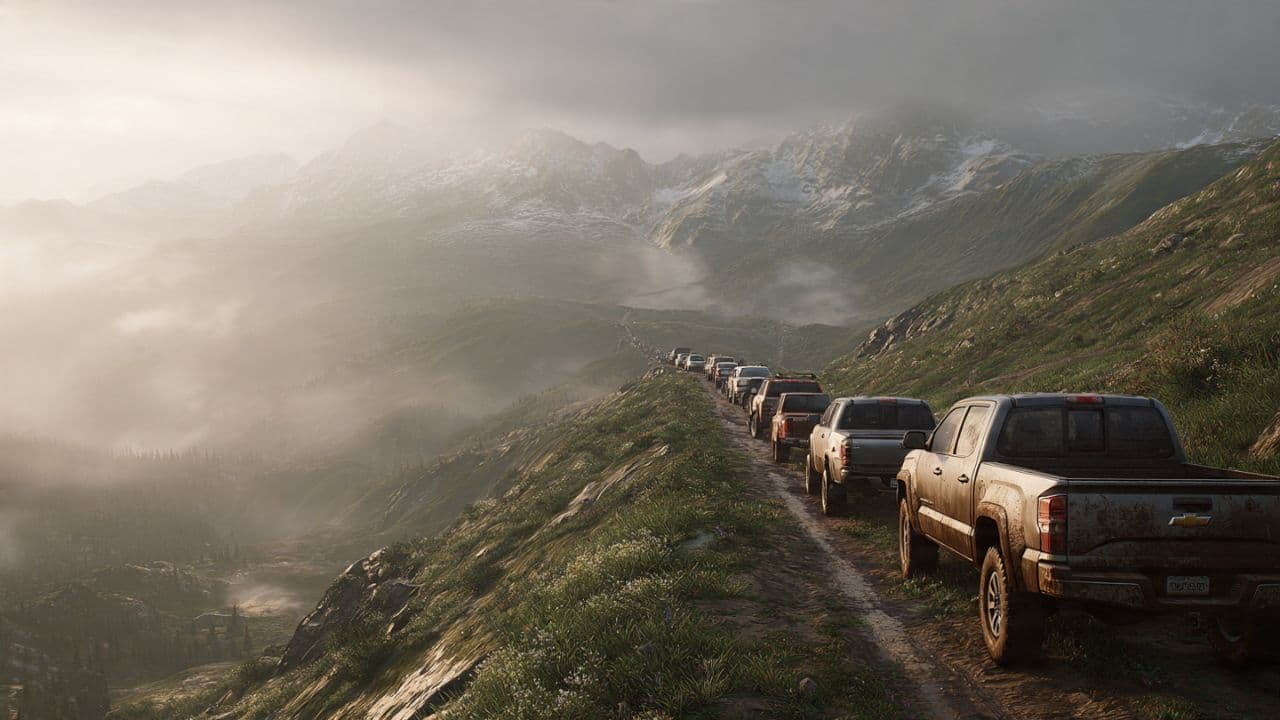
For the travelers and transport operators stranded along the ridge the morning after the storm, the embankment collapse presented a significant barrier. A twenty-meter section of the road was covered in thick, sticky mud and mountain debris, making it impassable for standard vehicles and highly dangerous for heavier transport. Public minibuses were forced to halt their journeys, leaving passengers to transfer their belongings to pack animals or wait out the clearance operations.
The response from the regional roads agency was initiated as soon as the weather stabilized, with heavy earth-moving equipment dispatched from the central district depot. Operating on narrow ridge lines under a low, misty sky, the bulldozer operators worked to clear the thick mud and push the fallen earth off the outer shoulder into the uninhabited valley below. The work requires high precision, as operators must navigate the unstable margins while ensuring the underlying roadbed remains secure.
By the afternoon of the second day of clearing operations, the heavy equipment had successfully cleared a stable single-lane passage through the slide area, allowing the queued vehicles to resume their journeys under strict caution. Drivers navigated the damp, clay-slicked surface slowly, guided by ground crews monitoring the upper slope for any signs of secondary movement. The successful opening brought immediate relief to the stranded commuters, restoring the primary link between the valleys.
The incident underscores the ongoing challenge of maintaining reliable transport infrastructure in a mountainous region subject to severe seasonal weather. Simple gravel cuttings require continuous structural reinforcing, such as the installation of wire gabions and deep interceptor ditches above the slopes to redirect heavy water runoff. The regional authorities face a demanding task to distribute limited maintenance resources across an extensive and topographically challenging network.
Beneath the immediate technical task of clearing the slide lies a broader reflection on the endurance of the mountain communities who rely on these routes. The people of the highlands are accustomed to the sudden disruptions of the weather, meeting the challenges with patience and practical adaptability. The road is a vital thread that keeps the communities connected, maintained by a shared commitment to keeping the highland passes open.
The dark tire tracks left in the drying clay will eventually smooth out under the passage of daily traffic, and the sun will dry the exposed basalt face of the cutting. The normal rhythm of the highway will return, carrying the life and trade of the district across the high ridges under a wide mountain sky. The track remains open, a functional link maintained against the natural forces of the landscape.
The Thaba-Tseka District Road Engineer confirmed that approximately thirty-five cubic meters of earth and rock debris were cleared from the secondary highland route following the embankment failure. While the primary driving lane has been opened to all traffic, maintenance crews will remain on-site to install temporary drainage channels and monitor slope stability. No vehicular accidents or injuries were reported as a result of the slide.
Published by Banx Network. This article is part of the Banx decentralized media programme, powered by the BXE token on the XRP Ledger.