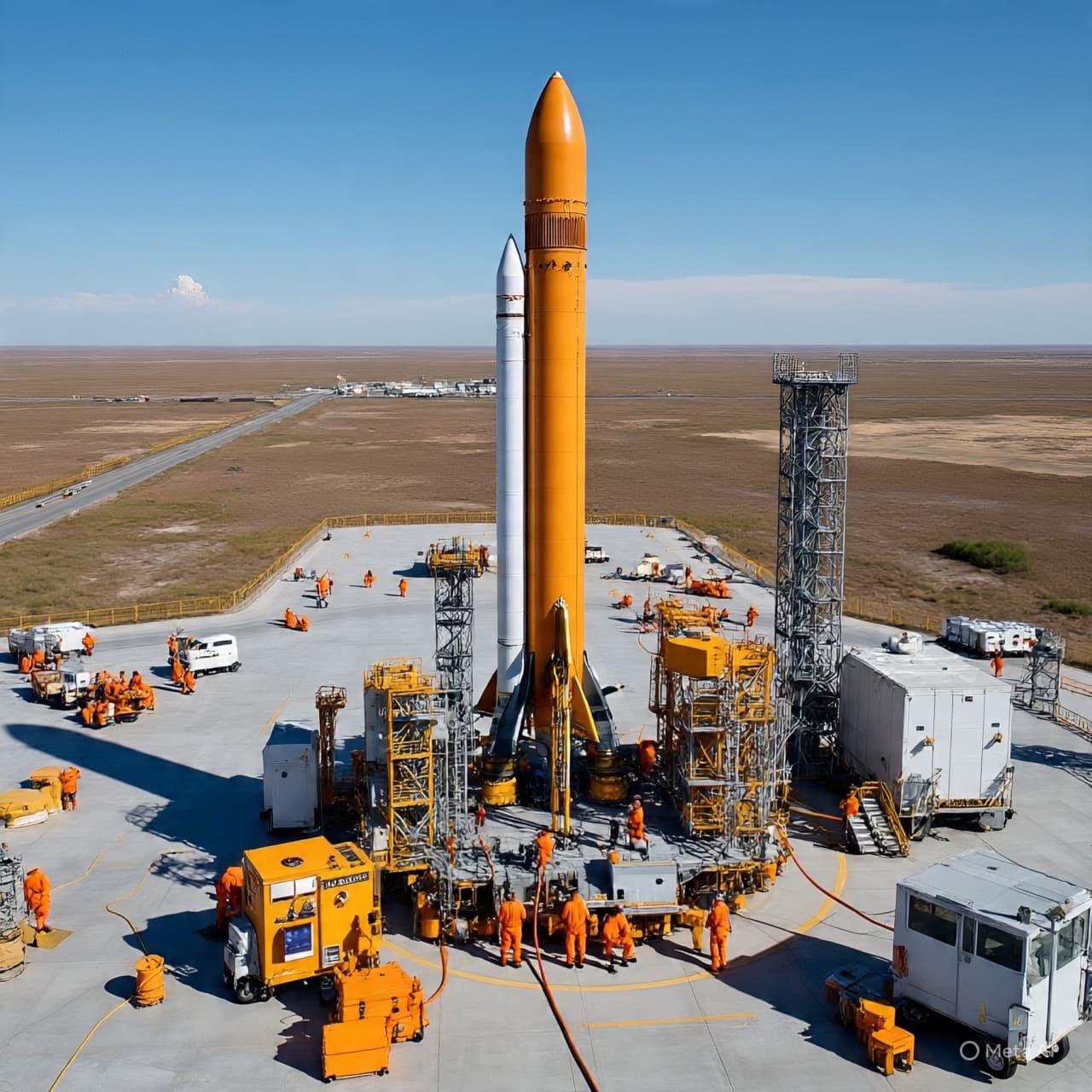
There is a certain tenderness in the moments before a great endeavor — an almost imperceptible hush that blankets a place where ambition and caution meet. At NASA’s Kennedy Space Center in Florida, this hush seemed to settle over engineers and space enthusiasts alike during the recent fueling rehearsal for Artemis II. What was meant to be a dress rehearsal before humanity’s next journey toward the Moon became a quiet reminder of the delicate balance between precision and patience that underpins spaceflight. A whisper of hydrogen, invisible yet potent, drew focus to the nuanced craft of exploration.
In the hours devoted to what NASA calls a “wet dress rehearsal,” teams worked to fill the Space Launch System (SLS) rocket’s tanks with cryogenic propellant, including liquid hydrogen and oxygen, simulating the process that would occur on launch day. Engineers successfully brought the rocket’s tanks to full capacity and practiced much of the countdown sequence, almost touching the brink of liftoff. Yet as the simulated clock drew near T-0, a persistent hydrogen leak emerged at a fueling interface, compelling mission controllers to stop the countdown and step back from the simulated moment of ignition.
The leak was not merely a technical anomaly — it was a lesson in the idiosyncrasies of hydrogen. As one of the lightest molecules known, liquid hydrogen operates at temperatures colder than deep space itself, making its containment an exercise in both engineering and humility. Despite thorough preparations, engineers found themselves debugging familiar problems that had surfaced during previous tests, illustrating the iterative nature of aerospace innovation.
It is perhaps fitting that in a test designed to rehearse every conceivable aspect of launch preparation, this subtle imperfection would emerge. The Artemis II mission, poised to be the first crewed lunar flight in more than half a century, carries not just astronauts but the aspirations of a generation. Yet even as hope looms large, the realities of rocket science remind us that progress often unfolds in incremental steps, each marked by attentive analysis and quiet adjustment.
NASA’s decision to delay the launch window until March reflects a thoughtful prioritization of safety and readiness over schedule. The agency plans to review data from the rehearsal, adjust procedures as needed, and conduct another wet dress rehearsal before setting a firm launch date. This approach underscores an enduring truth about exploration: that the journey toward a destination comprises not only the drive to travel forward, but the wisdom to ensure every step is sound.
In the gentle shift from rehearsal to reflection, the agency prepares not just for fuel and flight, but for a renewed opportunity to send astronauts safely beyond Earth’s embrace. The Moon’s silent call remains unchanged, holding space for both our hopes and our careful deliberations.
AI Image Disclaimer (Rotated Wording)
Visuals are created with AI tools and are not real photographs.
Sources Identified (Media Names Only):
NASA official updates / NASA blog
AP News
Reuters
WTOP (science reporting)
News.Az / other news outlets
Published by Banx Network. This article is part of the Banx decentralized media programme, powered by the BXE token on the XRP Ledger.