It feels strange—and strangely comforting—that in the middle of everything, the biggest supermoon of the year still has a schedule.
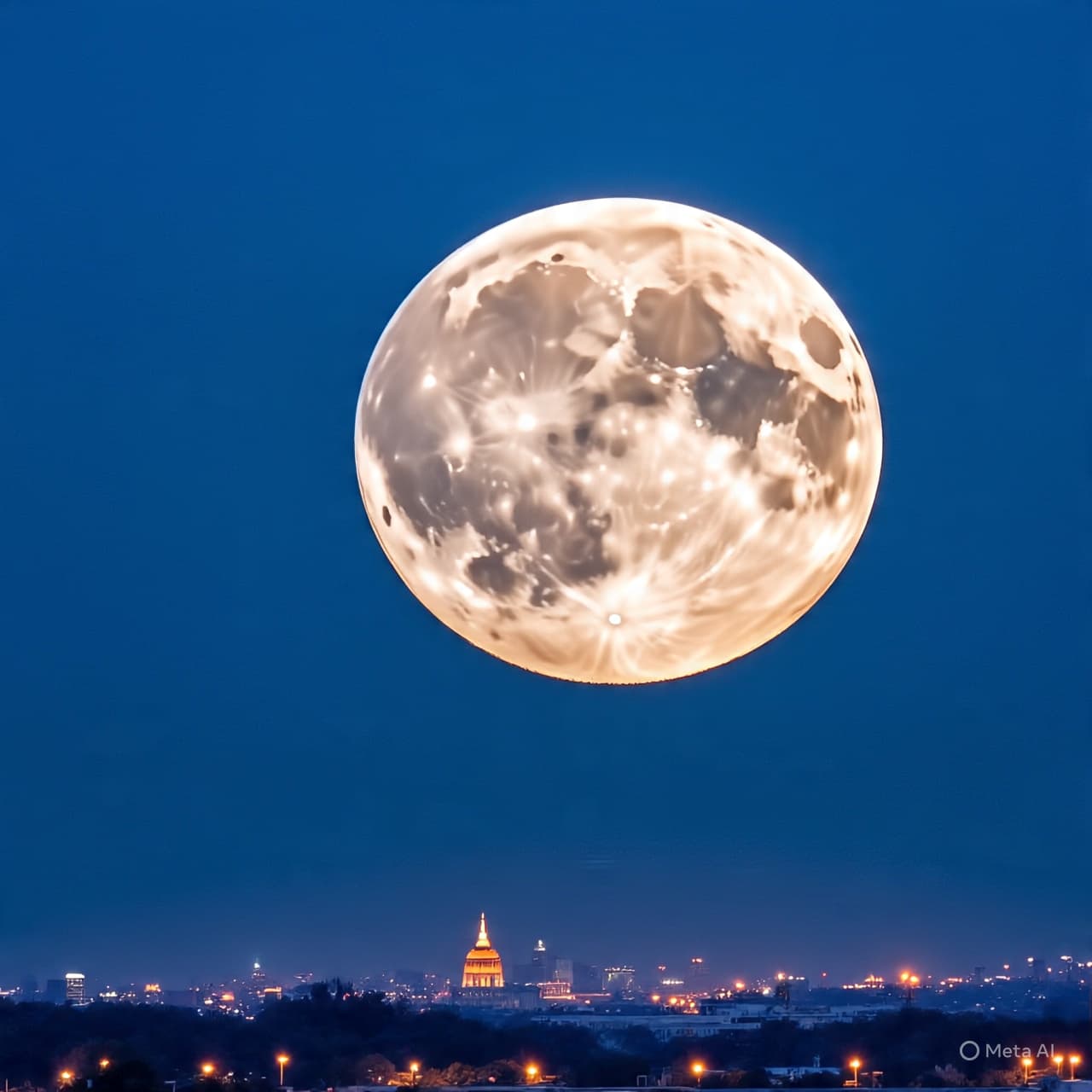
On Wednesday night, the Moon reaches perigee—its closest point to Earth—and swells in the sky by those subtle margins only the naked eye and human memory can appreciate. Not enormous. Not comic-book gigantic. But just enough larger and brighter to make a casual onlooker pause. Enough to make someone who wasn’t planning a sky moment… step outside.
Astronomy events like this have become a quiet punctuation in the long run-on sentence of digital life. Notifications, charts, astronomy bloggers, weather apps—they all say the same thing this week: just look up.
A supermoon isn’t a rare miracle. It’s the geometry of an elliptical orbit meeting the psychology of human expectation. We want the Moon to do something. To perform a bit for us. To justify our attention. Yet its real power is the opposite—it’s the one thing that doesn’t care if we’re watching or not.
And still, we watch.
Wednesday’s phenomenon will be especially brilliant just after moonrise in most regions, when the visual trick of the horizon makes the Moon seem larger than when it is high in the sky. It’s not an illusion born of deceit; it’s the mind using landscape as a measuring stick. The brain does the arithmetic, and the sky gets upgraded.
Across cultures, supermoons trigger a quiet civilian science. Families on balconies. Amateur photographers negotiating the perfect frame. Couples walking outside for “just 5 minutes,” which always turns into 20. A shared pause.
For a moment, the world will be reminded that no matter how complicated news cycles become, the cosmos still runs its own schedule.
Wednesday night’s supermoon will be bright enough to put a slight silver sheen on oceans, lakes, asphalt, and rooftops. And maybe the most unexpected gift is this: it is free, it is visible from almost everywhere, and it will happen whether the audience remembers to show up or not.
Published by Banx Network. This article is part of the Banx decentralized media programme, powered by the BXE token on the XRP Ledger.