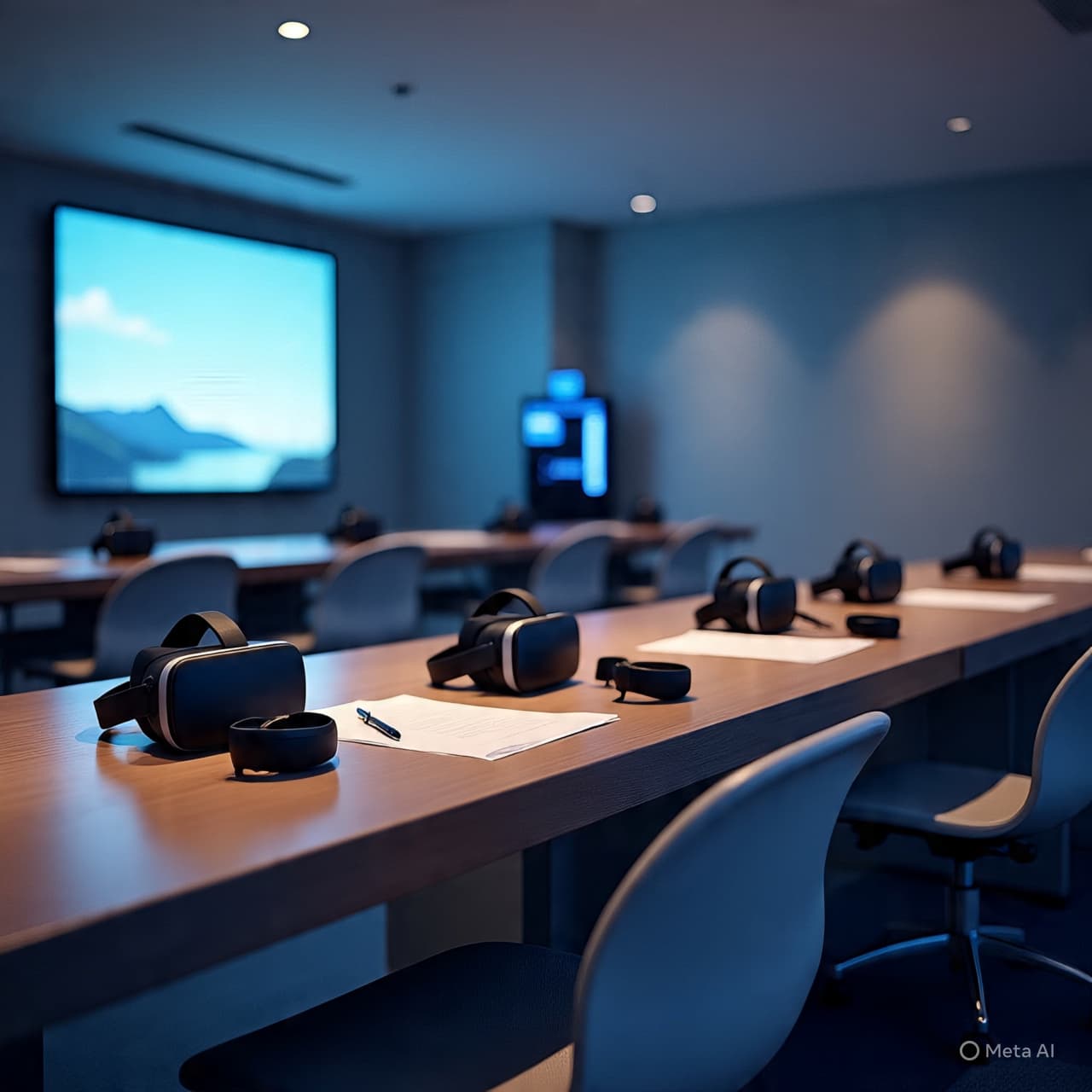
In the early days of virtual reality, the industry felt like a long, winding bridge suspended over possibility. Each headset was a lantern, each studio a small settlement built on belief rather than certainty. Meta, once the loudest architect of this bridge, poured resources into the promise that immersive worlds might one day feel as natural as the air we breathe. That confidence carried many forward, including the leaders tasked with turning ambition into experience.
Yet bridges, like visions, require constant reinforcement. As Meta gradually steps back from bankrolling its internal VR game studios, the rhythm inside its virtual halls has changed. The company’s VR game leadership, long associated with shaping content for Meta’s headsets, is now preparing to leave. The departure does not arrive with thunder or spectacle, but with the quieter weight of strategic realignment.
Meta’s decision to reduce investment in first-party VR game studios follows broader shifts inside Reality Labs, where resources are increasingly directed toward artificial intelligence, wearables, and core platform technologies. Studios once seen as cornerstones of a future metaverse have been closed, merged, or left to wind down. For the VR game division, this has meant fewer internal teams and a growing reliance on external developers to sustain content pipelines.
The executive overseeing VR gaming stood at the intersection of vision and execution, navigating a space where creative experimentation met corporate patience. As funding priorities evolved, so too did the limits of that role. Leadership in creative fields often depends not only on ideas, but on the steady backing that allows those ideas to breathe. When that support thins, departures become less a statement than a consequence.
Inside the industry, reactions have been measured rather than dramatic. Some developers view the shift as an acknowledgment that VR gaming, while vibrant, remains a long-term endeavor rather than an immediate engine of profit. Others see opportunity in Meta’s stated commitment to third-party partnerships, suggesting that innovation may continue, simply in different hands.
For Meta, the recalibration reflects a broader corporate narrative. The company has not abandoned virtual reality, but it has softened its tone, exchanging sweeping declarations for narrower, more disciplined goals. The exit of its VR game chief underscores that change, marking a transition from bold internal experimentation to a more distributed ecosystem.
In straightforward terms, Meta has confirmed that its VR gaming leadership will depart as the company continues to restructure Reality Labs and scale back internal studio funding. The company maintains that it remains invested in VR hardware and external game development, even as its internal creative footprint becomes smaller
AI Image Disclaimer Visuals in this article are created using AI tools and are intended as conceptual representations, not real photographs.
Source Check (Completed): Bloomberg The Wall Street Journal TechCrunch Game Informer Engadget
Published by Banx Network. This article is part of the Banx decentralized media programme, powered by the BXE token on the XRP Ledger.