There are places on Earth where time appears to hold its breath. In the far north, beneath sheets of ice and layers of frozen soil, centuries have passed in silence. The ground, hardened by cold and memory, seemed permanent — a quiet archive of ancient seasons. Yet even silence can shift. As the planet warms, the ice loosens its grip, and something long dormant begins to stir.
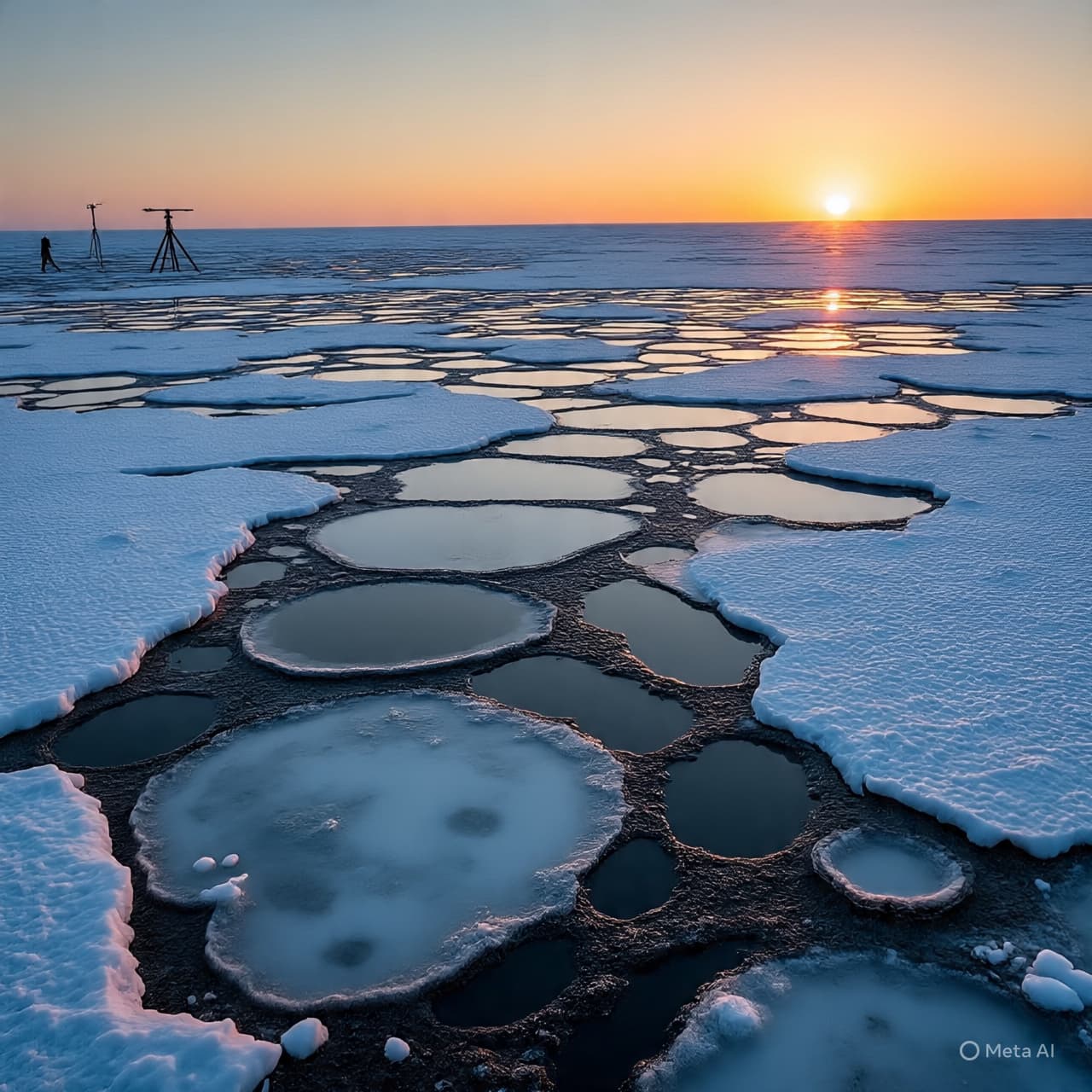
Across the Arctic and other polar regions, thawing permafrost is awakening microbes that have remained frozen for years, sometimes millennia. Permafrost — ground that has stayed frozen for at least two consecutive years — stretches across vast expanses of the , Siberia, Alaska, and northern Canada. Locked within it is not only ancient soil but also immense stores of organic carbon, preserved by the cold like pages sealed inside a forgotten book.
When temperatures rise and permafrost begins to thaw, that book opens. Microorganisms — bacteria and archaea — resume metabolic activity. They feed on organic material from long-dead plants and animals that never fully decomposed in frozen conditions. As they break down this matter, they release carbon dioxide and methane into the atmosphere.
Methane, though less abundant than carbon dioxide, is particularly potent in its heat-trapping capacity over shorter timescales. Scientists studying thawing Arctic soils have observed that even modest temperature increases can significantly accelerate microbial processes. Field measurements and laboratory simulations suggest that thaw-driven emissions could create a feedback loop: warming triggers microbial activity, microbial activity releases greenhouse gases, and those gases contribute to further warming.
The scale of the carbon reservoir beneath permafrost is considerable — estimated to contain nearly twice as much carbon as is currently present in the atmosphere. Not all of it will be released, and not all thaw occurs at once. But the gradual exposure of these frozen stores adds uncertainty to climate projections. Researchers are working to refine global climate models to better account for microbial responses and methane fluxes from thawing regions.
The visible effects of permafrost thaw are already reshaping landscapes. In parts of Alaska and Siberia, ground subsidence has damaged roads and buildings as once-solid soil turns unstable. Lakes expand and shift as ice-rich ground collapses. Beneath these visible transformations, the microbial world continues its quiet work — unseen but influential.
Scientists emphasize that understanding these processes is essential. Improved monitoring, expanded field studies, and satellite observations are helping researchers map thaw patterns and quantify emissions. The awakening of ancient microbes is not a sudden catastrophe but a gradual development that underscores the interconnected nature of Earth’s systems.
As climate discussions often focus on smokestacks and tailpipes, the thawing Arctic offers a reminder that change also emerges from the ground itself. Ice that once seemed inert reveals its hidden vitality. In the slow release of greenhouse gases from newly active microbes, the planet’s past meets its future — not dramatically, but steadily.
The story unfolding in the north is still being written in data and observation. Scientists continue to assess how much carbon may ultimately be released and over what timeframe. What is clear is that warming permafrost introduces another variable into the global climate equation, one that researchers are now measuring with increasing precision.
AI Image Disclaimer Illustrations were produced with AI and serve as conceptual depictions.
Source Check
Credible mainstream and science outlets covering this topic include:
Reuters BBC News The New York Times The Guardian Nature
Published by Banx Network. This article is part of the Banx decentralized media programme, powered by the BXE token on the XRP Ledger.