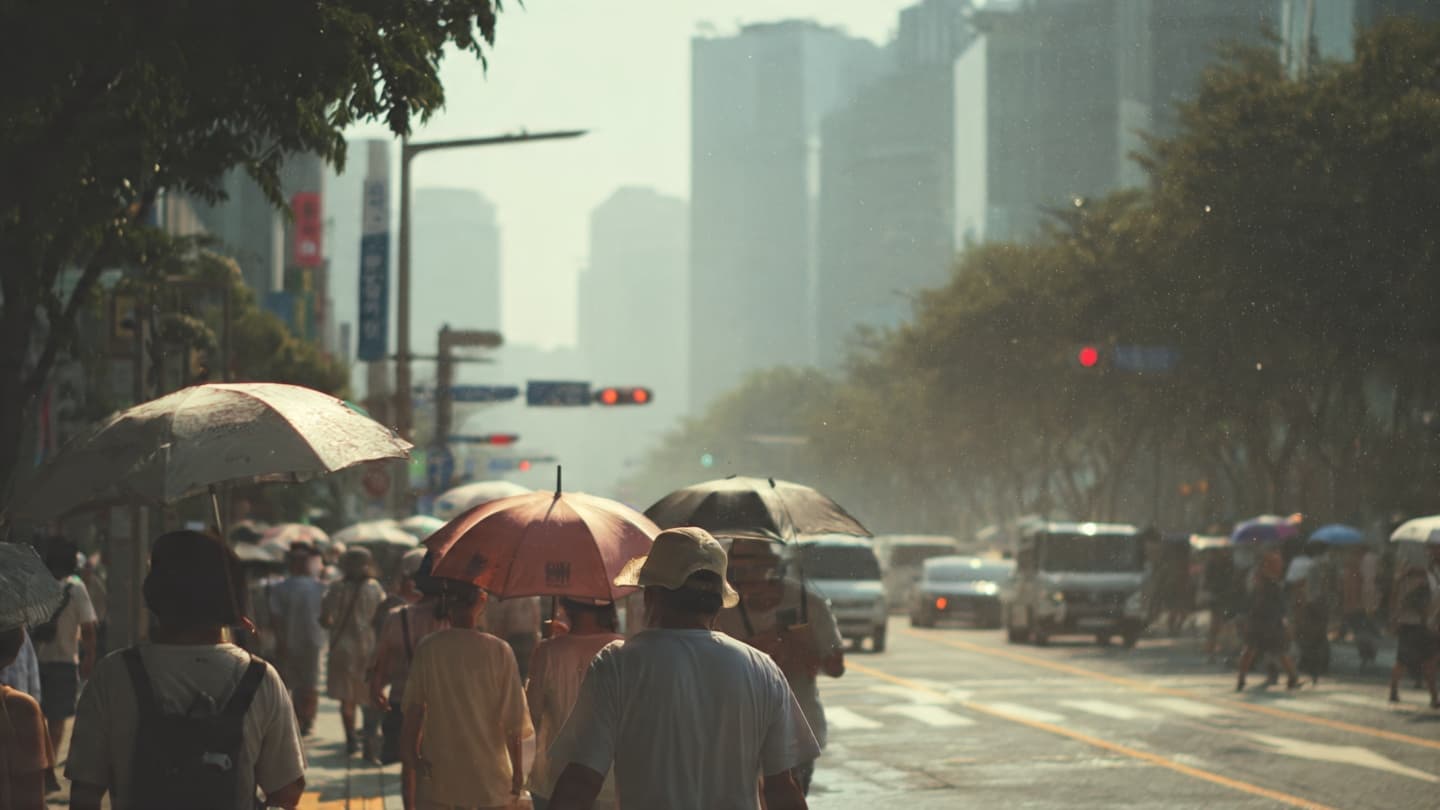
There are summers when heat becomes more than a background detail, settling into the rhythm of daily life until familiar streets seem strangely different. Across South Korea, August has arrived beneath such a sky. The air has grown heavier, pavement has held the afternoon warmth, and the ordinary routines of millions have been reshaped by temperatures reaching extraordinary levels.
The most striking reading came from Yangsan, where temperatures reached 42.5°C during the ongoing heatwave. Reuters reported that the measurement represented the highest temperature recorded in South Korea's 122 years of weather records. The number itself is difficult to absorb without imagining what it means at street level, where every hour outdoors becomes a calculation between movement, shade, water, and rest.
The extreme conditions have also carried a serious human cost. Reuters reported that 14 people had died and nearly 1,900 people had suffered heat-related illnesses as the heatwave spread across the peninsula. Such figures transform a weather report into something more immediate, revealing how extreme temperatures can quietly affect ordinary lives.
Seoul has not been spared. Temperatures in the capital reached around 40°C, placing additional pressure on residents, outdoor workers, and public infrastructure. In a densely built city, heat can remain trapped among roads and buildings long after the sun begins to fall, making the evening less of a reprieve than it might ordinarily be.
For people working outside, the consequences are particularly tangible. Construction workers, delivery personnel, agricultural workers, and others whose jobs require prolonged exposure to the weather have had to adjust their routines. Authorities have emphasized rest measures and greater protection for workers as temperatures remain elevated.
The government has responded with an expanded emergency effort, urging ministries and local authorities to use available resources to protect vulnerable groups. Cooling shelters, water supplies, and public facilities have become important parts of the response, illustrating how a period of extreme weather can quickly become a test of everyday infrastructure.
The heatwave has also placed attention on electricity demand. As households and businesses turn increasingly to air conditioning and other cooling systems, the national power grid must accommodate a sudden increase in consumption. In this way, a temperature recorded at a weather station can eventually be felt inside homes, factories, offices, and energy-control rooms.
Meteorologists have linked the unusual heat to persistent atmospheric patterns, including high-pressure systems that have helped trap hot air over the peninsula. The presence of Typhoon Dolphin has also been monitored because its broader atmospheric effects may influence weather patterns around the region, although it is not itself a direct threat to South Korea.
For now, South Korea remains under intense summer pressure as authorities continue monitoring temperatures and assisting communities at greater risk. Weather records are usually reduced to numbers on a page, but during an event such as this, those numbers become part of daily life. The country is experiencing a summer in which heat has moved from the background of the season to the center of the national conversation.
AI Image Disclaimer: Visuals are AI-generated and serve as conceptual representations of the reported conditions.
Sources:
Reuters Korea Meteorological Administration Yonhap News Agency
Published by Banx Network. This article is part of the Banx decentralized media programme, powered by the BXE token on the XRP Ledger.