In the hush between Earth and the bright circle of its companion, the Moon has long been thought of as a distant, silent sentinel—still, cold, a relic of ancient cosmic violence. Yet recent scientific work has begun to reshape that perception, much like light slowly brightening a darkened room, revealing previously hidden contours of an environment that is far more alive than expected. New maps of subtle surface features and seismic evidence suggest that the Moon’s crust continues to shift and crack, a reminder that even celestial bodies once deemed dormant can bear tectonic life beneath their tranquil surfaces.
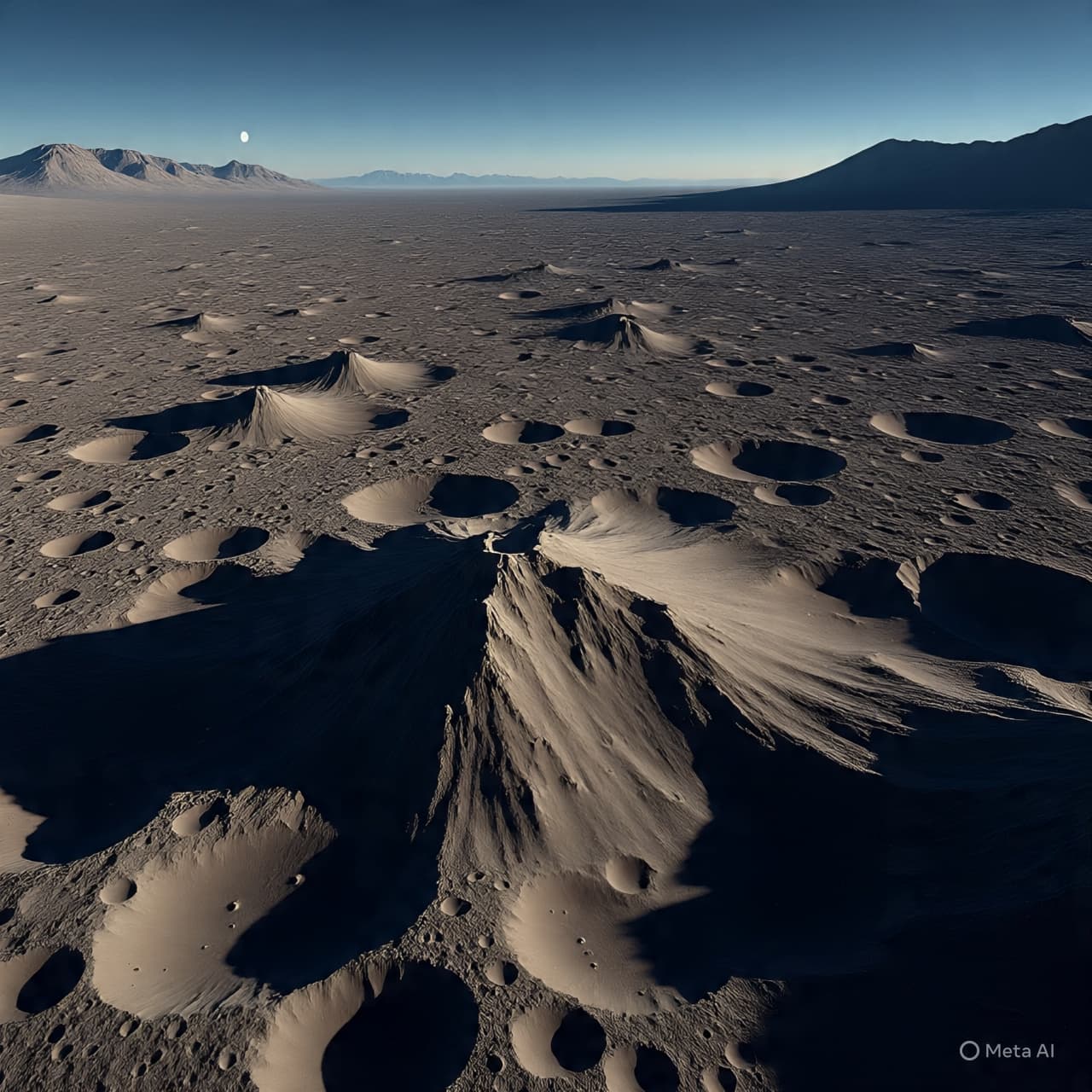
At the heart of this revised picture are small mare ridges, gentle wrinkles in the Moon’s broad volcanic plains, which scientists have mapped with unprecedented detail. These features form through compression of the lunar crust—stress that builds as the Moon’s interior cools and contracts over billions of years, similar to how a grape wrinkles as it dries into a raisin. The recent global catalogue of thousands of these ridges, many of them younger than about 124 million years, paints a vivid portrait of ongoing tectonic forces that have shaped the surface long after the Moon’s fiery origins.
This discovery’s implications reach beyond academic curiosity. Instruments left by the Apollo missions and modern orbiters have detected moonquakes—tremors analogous to small earthquakes—that occur both deep and shallow within the lunar crust. While deep moonquakes are largely driven by the tug of Earth’s gravity, shallow moonquakes arise along faults like those marked by small mare ridges. These tremors, though modest compared with Earth’s seismicity, can last for several minutes and may cause landslides of loose regolith in regions with steep slopes.
Such shaking has practical resonance for humanity’s future on the Moon. As space agencies and international partners advance plans for Artemis missions and eventually sustainable lunar bases, understanding where and how the ground beneathfoot might shift matters greatly. A site that appears smooth and safe from afar could sit atop hidden faults capable of transmitting seismic waves or triggering regolith movement. Deep knowledge of these subtle tectonic behaviors allows mission planners to assess risks and adapt both technology and strategy to the Moon’s complex reality.
Yet this living portrait of the Moon does not lessen its allure. Instead, it enriches our understanding of Earth’s nearest neighbor as a dynamic world with its own rhythms and history. Just as scientists study seismology on Earth to protect cities and infrastructure, so too will lunar explorers draw on tectonic insights to build safe harbor in the stark beauty of the lunar environment. Whether guiding the choice of landing site or informing the design of future habitats, this deeper appreciation of the Moon’s subtle seismic life offers both caution and inspiration as humanity prepares to walk its dusty plains once again.
AI IMAGE DISCLAIMER Illustrations were produced with AI and serve as conceptual depictions.
SOURCE CHECK Credible mainstream/niche science sources confirming the Moon’s ongoing tectonic activity and its implications for lunar exploration:
Smithsonian / The Planetary Science Journal (detailed study) ScienceDaily (global map of small mare ridges) NDTV science reporting on moonquakes triggering landslides Phys.org (seismic activity affecting surface features) The Independent (science news roundup)
Published by Banx Network. This article is part of the Banx decentralized media programme, powered by the BXE token on the XRP Ledger.