Sport has long been a place where nations gather, stories unfold, and emotions cross borders. Yet sometimes, the powerful symbolism of international competition can carry messages far beyond the playing field. For one Australian woman, a moment connected to Argentina’s World Cup celebrations became an unexpected experience of public attention, raising questions about identity, representation, and how individuals can become caught within larger political narratives.
The woman at the center of the discussion said she felt she had been “used as a political football” after appearing in imagery connected to an Argentine World Cup-related stunt. The situation drew attention because the use of her image and identity became linked to a broader national conversation involving history, politics, and sporting symbolism.
The controversy emerged after Argentina’s celebrations following its World Cup victory included references and imagery connected to the Falkland Islands, known as the Malvinas in Argentina. The long-running sovereignty dispute between Argentina and the United Kingdom has remained a sensitive issue for decades, with strong emotions attached on both sides.
The Australian woman, who has a personal connection to the imagery used, said she did not expect to become part of such a politically charged discussion. She expressed concerns that her involvement had been taken out of a personal context and placed into a much larger debate beyond her control.
The episode highlights how modern sporting events can extend beyond competition and become platforms where national identity and historical memories are expressed. For many supporters, symbols displayed during major tournaments can represent pride and belonging, but they can also carry meanings that are interpreted differently across countries and communities.
International sporting moments often bring together millions of people with different histories and perspectives. While athletes and fans celebrate achievements, political and cultural messages sometimes emerge alongside those celebrations, creating complicated situations for individuals connected to those symbols.
The response to the incident reflects the sensitive relationship between personal identity and public representation. When an individual becomes associated with a broader message, questions can arise about consent, intention, and whether a person’s own story is being accurately reflected.
For the Australian woman involved, the experience has been a reminder of how quickly personal moments can become part of global conversations. In an era where images can travel across the world within seconds, the boundary between private identity and public symbolism has become increasingly complex.
The situation continues to illustrate the powerful connection between sport, history, and national memory. While competitions may end with a final score, the conversations created around them can continue much longer, revealing the many meanings people attach to symbols, stories, and shared moments.
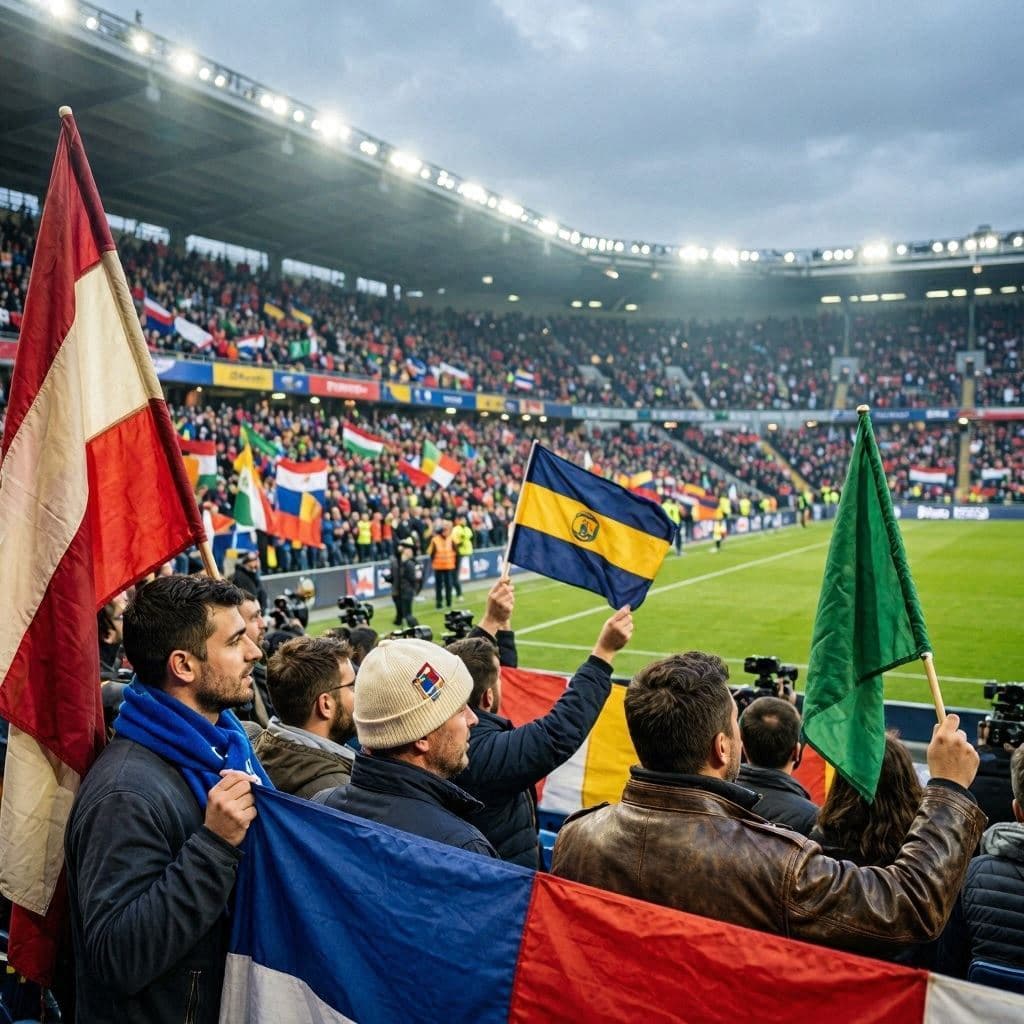
AI Image Disclaimer: The images accompanying this article are AI-generated illustrations created to represent the broader themes of sport, identity, and public discussion. They do not depict the actual individuals or events described.
Sources:
ABC News Australia Reuters Associated Press BBC News
Published by Banx Network. This article is part of the Banx decentralized media programme, powered by the BXE token on the XRP Ledger.