The water does not arrive with a singular intent, but rather as an accumulation of moments—a persistent drumming on the roof, the slow swelling of a creek, and finally, the inevitable breach of the banks. In the regions recently beset by major weather disasters, the landscape has been transformed into a reflection of the sky’s volatility. Where there were once orderly lines of property and pathways, there is now a vast, muddy expanse, a testament to the sudden power of nature that cares little for the borders we draw upon the earth. The silence that follows such an event is perhaps the most profound; it is a quiet that is heavy with the weight of loss and the uncertainty of what remains beneath the silt.
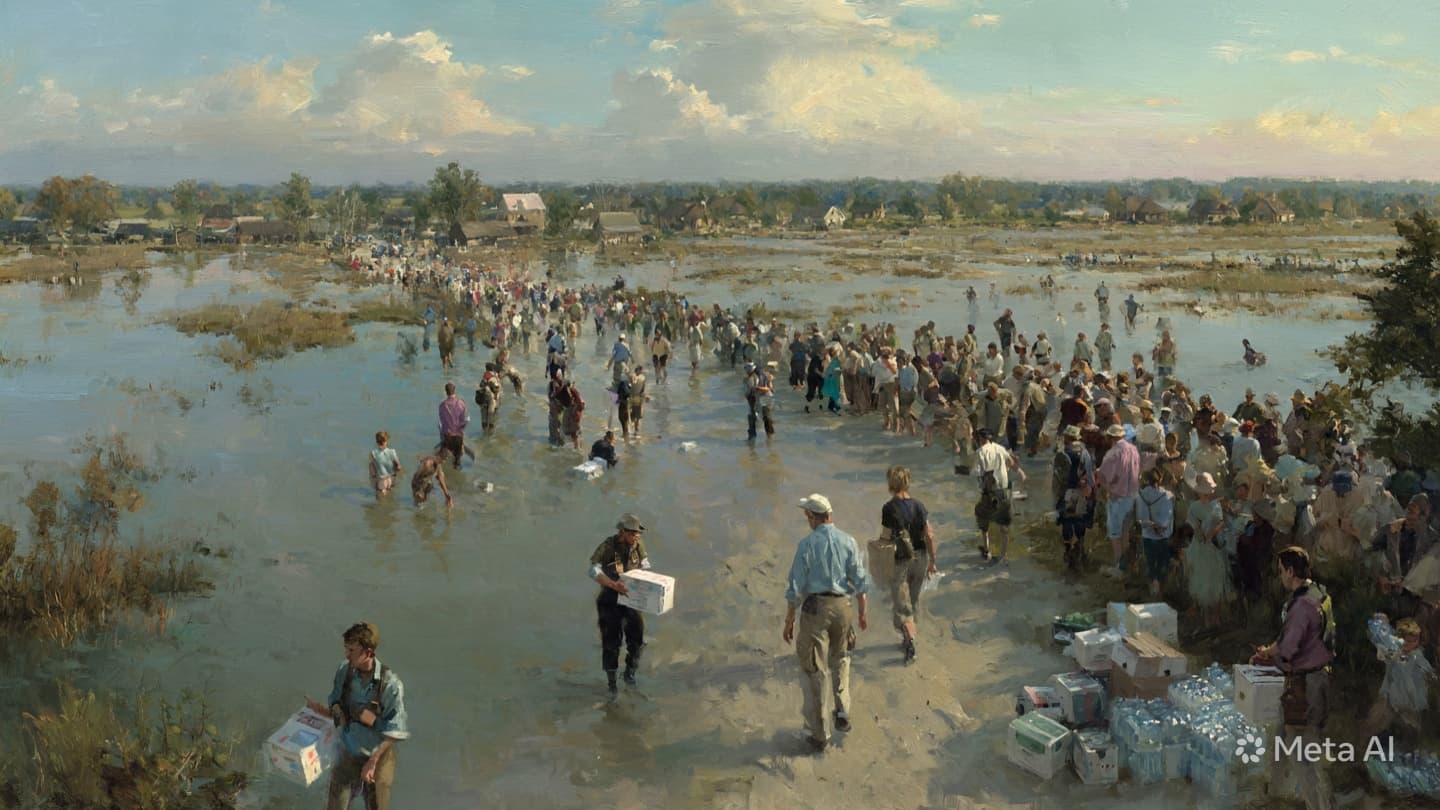
In the immediate aftermath, the focus shifted from survival to the methodical, human labor of restoration. Assistance did not come as a sudden, sweeping gesture, but in the slow, persistent arrival of support teams, supplies, and the coordination of local agencies. There is a specific, sobering grace in the way people respond to such displacement. One observes the assembly of temporary shelters, the distribution of clean water, and the quiet, determined work of clearing debris from thresholds that were, only days prior, the sites of private, sheltered lives.
The logistical architecture of aid is vast, yet it manifests in small, tangible ways. It is seen in the arrival of heavy machinery meant to reopen blocked arteries of transit, and in the presence of mobile medical clinics parked on the edges of affected villages. Each action is a thread in a larger, complex tapestry of recovery. The assistance provided is designed not only to restore the physical structures that were compromised, but to address the fundamental human need for certainty in an environment that has suddenly become unreliable.
As the recovery phase matures, the narrative moves away from the raw urgency of the storm toward the endurance of the community. Experts emphasize that the path forward is rarely a straight line; it is a cycle of assessment, repair, and a gradual, cautious return to the familiar rhythms of daily life. The challenge lies in the sheer scale of the damage, which requires a collaborative alignment of government resources, non-governmental expertise, and the resilience of those whose homes and livelihoods were caught in the path of the flood.
While the data may eventually record these events as a series of numbers—square kilometers of inundated land, estimated costs of infrastructure repair, the count of households served—the reality on the ground is far more nuanced. It is captured in the stories of families navigating the logistics of their own displacement, and in the quiet, collective effort to preserve what can be salvaged. There is a deep, human resilience that emerges when the water finally retreats, a quality that is not easily quantified by reports or metrics.
Financial and structural support continues to be directed toward the most vulnerable points of the region, where the impact was deepest and the recovery needs are most pressing. The focus is on rebuilding not merely what was lost, but on reinforcing the resilience of the communities themselves, ensuring that they are better equipped to withstand the next season of storms. It is a forward-looking perspective, grounded in the reality of the present, yet shaped by the lessons learned from the recent disaster.
As the recovery efforts progress, the government agencies overseeing the aid have confirmed that all major emergency funding has been fully allocated to the affected provinces. The current phase of operations is concentrated on the rehabilitation of essential services, including the restoration of power grids, the repair of primary roadways, and the provision of long-term housing assistance for those whose homes were rendered uninhabitable. Monitoring of the flood-prone zones remains a priority as the transition into the next season begins.
Published by Banx Network. This article is part of the Banx decentralized media programme, powered by the BXE token on the XRP Ledger.