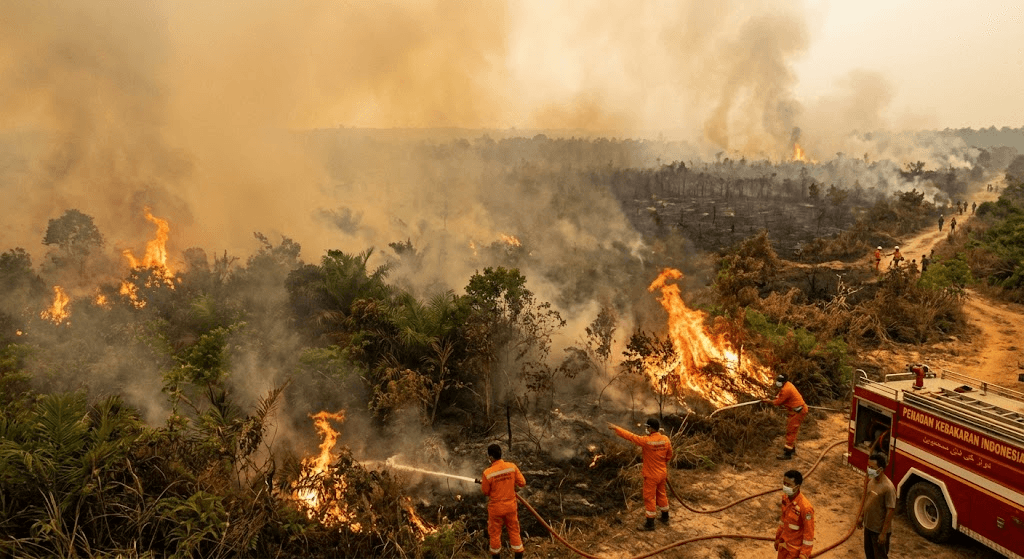
PALEMBANG — Choking toxic haze has blanketed major parts of South Sumatra and neighboring provinces, turning daytime skies into an eerie yellow gloom as emergency crews struggle to contain thousands of wildfires raging across Indonesia’s forests and peatlands.
Driven by an intensifying El Niño climate pattern and a prolonged dry spell, South Sumatra has emerged as the country's main hotspot. Satellites have registered over 1,400 active fire hotspots across the province, with severe ground blazes rapidly consuming subterranean peat layers that release massive volumes of dense carbon smoke.
As visibility dropped below 50 meters in some urban areas and public health risks escalated, the crisis forced local communities and authorities to resort to extraordinary measures. In Palembang, thousands of residents gathered to perform salat istisqa—special Islamic prayers for rain—as thick, suffocating smoke enveloped the city streets.
Simultaneously, Indonesia’s disaster management agency launched massive aerial operations, deploying a fleet of over 50 aircraft for continuous water-bombing and cloud-seeding missions to artificially trigger rainfall over stubborn fire zones. Meanwhile, the crisis took on an international dimension as high-altitude winds pushed the toxic haze into neighboring Malaysia and Brunei, triggering widespread school closures and unhealthy air quality alerts across the region.
Indonesian authorities are pointing to human activity as a primary catalyst for the widespread blazes. Police have arrested 72 individuals and placed several commercial agricultural companies under investigation for illegally using fire to clear forest ground for plantations. Suspects face severe legal penalties under national environmental laws, carrying fines and sentences up to 15 years in prison as officials try to break the annual cycle of land-burning practices.
Environmental experts warn that the situation could worsen if dry weather persists, as burning peatlands are notoriously difficult to extinguish once ignited below the surface. In response, regional officials are expanding health clinics, distributing millions of protective face masks, and urging vulnerable residents to stay indoors while firefighting teams work around the clock to contain the advancing flames.
Published by Banx Network. This article is part of the Banx decentralized media programme, powered by the BXE token on the XRP Ledger.