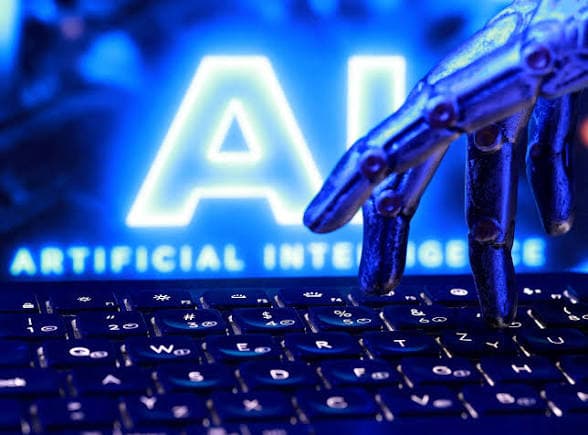
There is a quiet threshold in human progress where innovation crosses from novelty to necessity — like a river that begins as a stream and, over years, becomes the lifeblood of the valley it crosses. At this point of transformation, society must ask itself not just what the innovation can do, but why it should be trusted to do it. In recent conversations among global leaders, this subtle question has been taking center stage, especially in discussions about artificial intelligence and its expanding role in the world.
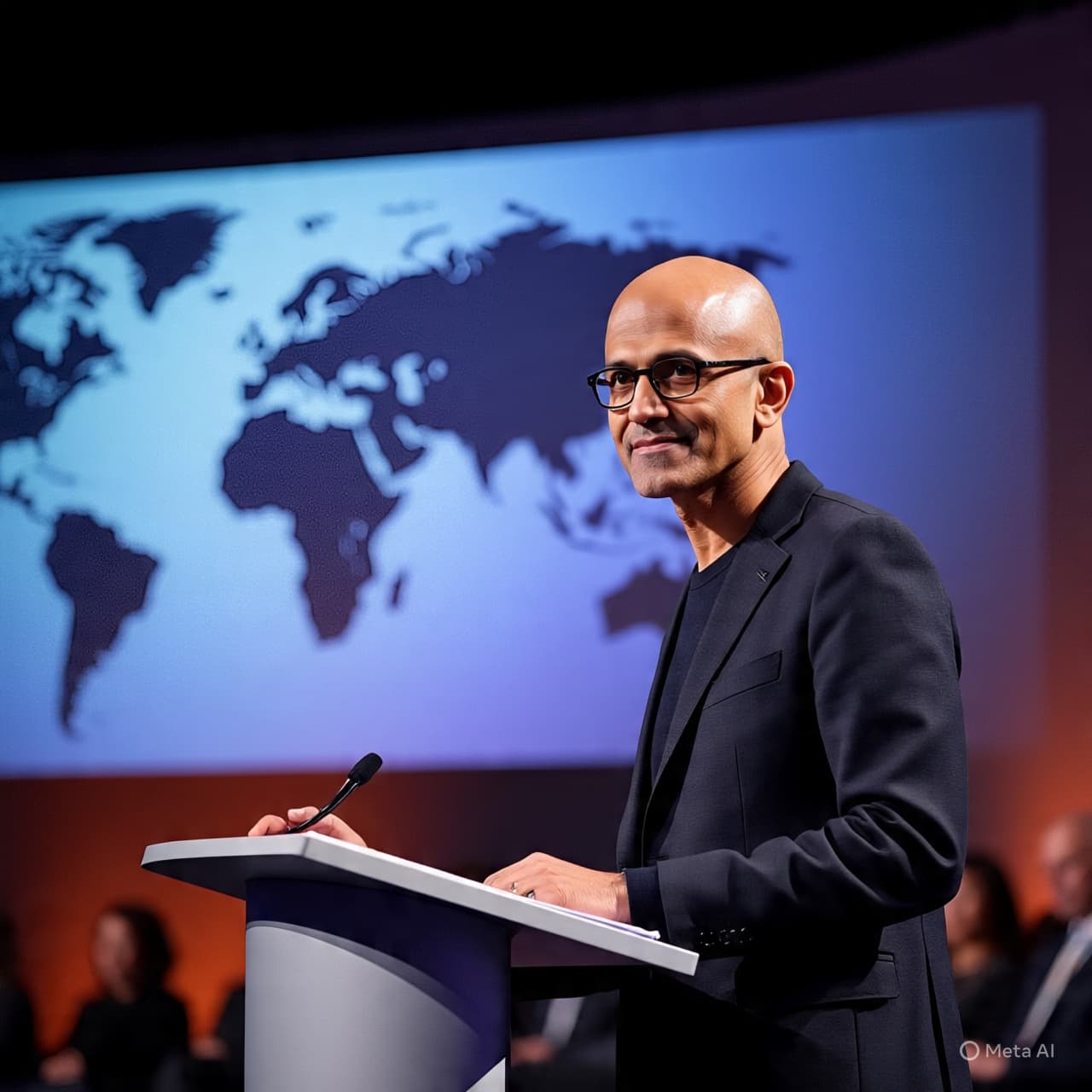
At the World Economic Forum in Davos this week, Microsoft’s chief executive, Satya Nadella, spoke with a reflective tone about the crossroads at which AI now stands. As technology surges ahead, consuming vast amounts of energy and reshaping entire industries, he suggested, there is a kind of unwritten contract between innovators and society — a “social permission” that must be earned and upheld. In truth, it is not merely about whether AI can exist, but whether it can matter in ways that extend beyond code and computation.
Nadella used the metaphor of energy — a scarce and precious resource — to explain his point. In a world where AI systems can demand enormous power to train and run, he said, the public will increasingly ask whether that energy use is justified by real, tangible benefits. If the results do not translate into improvements in areas such as healthcare, education, public sector efficiency, and economic productivity, then the technology could lose the societal support that underpins its adoption. In his words, burned energy must be earned by outcomes that improve lives and address real human needs.
It was not a warning delivered in harsh tones, but rather a gentle call for balance — a reminder that the true value of innovation lies not in how swiftly it advances, but in how deeply it reaches. Nadella noted that society often rewards tools that solve problems and helps communities flourish. AI, he argued, will find its strongest footing not by dazzling users with complexity alone, but by showing up in everyday life wherever it can make meaningful differences.
This perspective aligns with broader concerns within the tech community about the sustainability and equitable distribution of AI’s benefits. If AI remains a resource mostly devoted to serving large tech firms or generating speculative investment gains, without spreading its advantages to sectors like health and education, people may conclude that the costs outweigh the rewards. In such a scenario, the public’s willingness to accept both the environmental and economic toll of powering AI could diminish.
In emphasizing this point, Nadella did not dismiss the excitement around AI’s potential — quite the opposite. He acknowledged how the technology has already transformed the efficiency of data analysis, accelerated drug discovery workflows, and opened new possibilities for personalized learning. But he made it clear that potential must be paired with purpose. Only when AI contributions are visible in measurable improvements in people’s lives, he suggested, will the world continue to perceive the technology as worthy of the energy it consumes.
This is a message that resonates beyond boardrooms and research labs. For teachers wondering whether AI can help students learn more deeply, for doctors seeking tools to make diagnoses more accurate, and for policymakers aiming to balance progress with responsibility, the question remains the same: How does AI serve the common good? The answer, Nadella implies, will determine whether the next chapter of technological progress feels like shared advancement — or a leap taken without the consent of those it affects.
In straightforward terms, Microsoft CEO Satya Nadella said that artificial intelligence could lose the public’s “social permission” to consume large amounts of energy if it fails to demonstrate real-world benefits — particularly in areas like health, education and overall societal productivity — as part of broader discussions at the World Economic Forum.
AI Image Disclaimer
“Visuals are created with AI tools and are not real photographs.”
Sources Check
Here are credible mainstream sources used for this article (listed per instructions, no URLs unless asked):
1. Yahoo Finance — Microsoft CEO Satya Nadella warns AI could lose public “social permission” if it doesn’t improve health or education.
2. Tom’s Hardware — Nadella’s remarks at the World Economic Forum about AI’s energy use and societal benefit.
3. Windows Central — Microsoft CEO’s warning about AI’s energy footprint and societal expectations.
4. Financial Times — (context on Nadella’s broader comments at WEF on equitable AI impact and bubble concern).
5. Benzinga — Report on Nadella emphasizing real-world benefits like health, education, and productivity outcomes.
Published by Banx Network. This article is part of the Banx decentralized media programme, powered by the BXE token on the XRP Ledger.