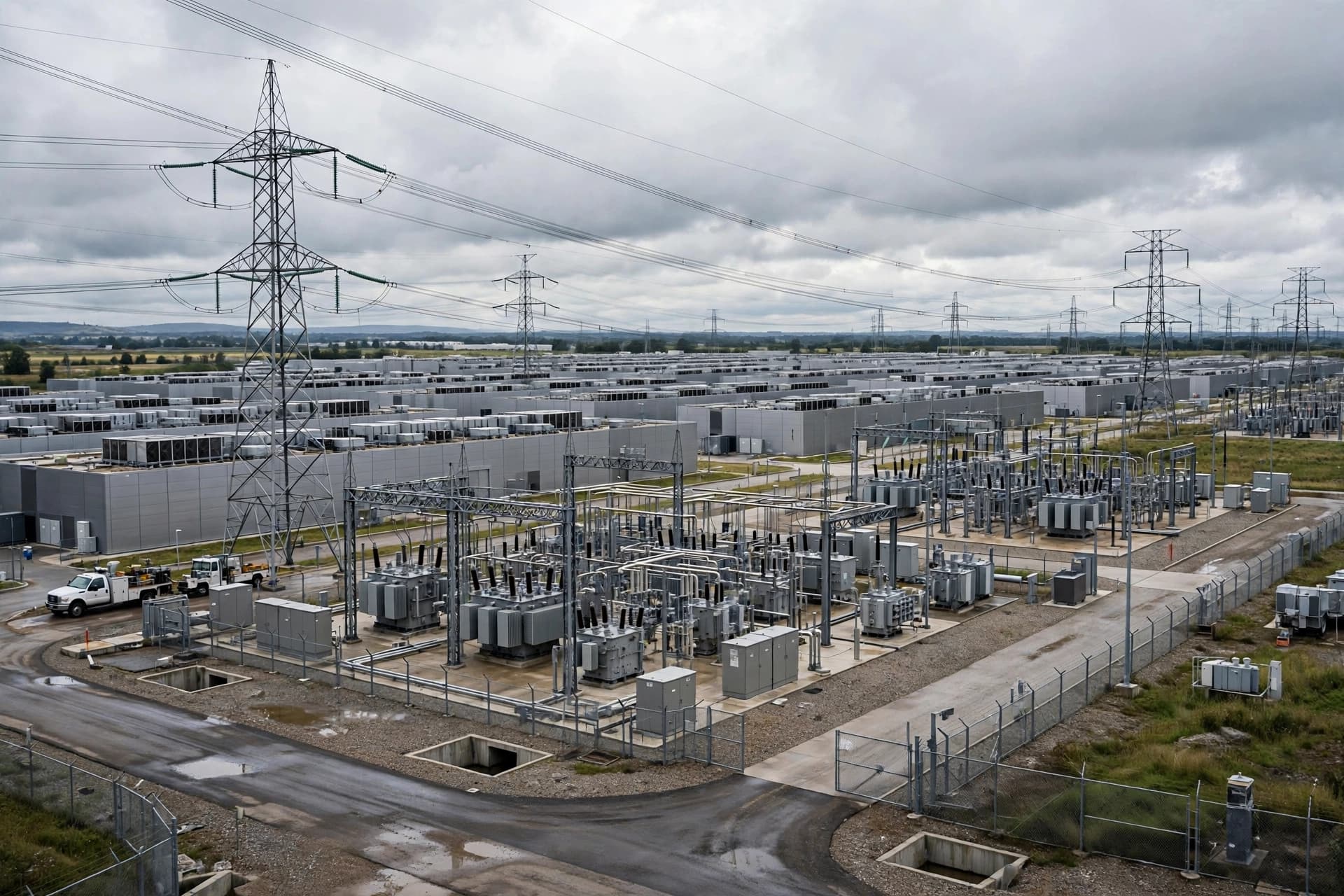
Artificial intelligence often arrives through a screen, but the systems behind it occupy a far more physical world. Behind every model are buildings, electricity, cooling systems, networks and enormous quantities of computing equipment.
That physical layer is drawing another major investment. Samsung Electronics and five Samsung affiliates have committed a combined $1 billion to Helix Digital Infrastructure, a U.S.-based AI infrastructure company backed by KKR.
Samsung Electronics will provide $500 million, while Samsung C&T, Samsung SDS, Samsung SDI, Samsung Life Insurance and Samsung Fire & Marine Insurance will contribute the remaining $500 million. The investment brings several parts of Samsung’s technology and industrial portfolio into the expanding AI infrastructure market.
Helix focuses on infrastructure required to operate large-scale AI systems. Its activities include hyperscale data centers, power generation and transmission, as well as fiber and connectivity assets that connect computing facilities to the wider digital network.
The company said the latest commitment builds on more than $10 billion in capital already committed to the Helix strategy. Its anchor investors include KKR, the Kuwait Investment Authority and Nvidia, among others.
For Samsung, the investment also creates a path to combine different capabilities within the wider group. Samsung Electronics brings semiconductor and technology expertise, while other affiliates contribute areas including construction, information technology, batteries and energy-storage capabilities.
Helix expects to use Nvidia’s full-stack technology alongside Samsung’s technology and energy-storage capabilities to accelerate development and delivery of AI infrastructure. The approach reflects how the AI industry increasingly depends on coordination between computing hardware, energy and physical facilities.
The investment comes during a period in which AI computing demand is pushing data-center developers toward larger facilities and greater power requirements. Training and running advanced AI models requires dense computing capacity, making access to electricity and suitable locations increasingly important parts of the technology equation.
This changes the character of the AI infrastructure race. Competition is no longer limited to who develops the most capable model or produces the fastest processor. It also extends to who can build the physical environment in which those technologies can operate at scale.
Samsung’s involvement places the company closer to that infrastructure layer. Rather than participating only through devices, memory, chips or other technology products, its broader corporate network is now connected to the development of facilities designed specifically around the requirements of AI computing.
For Helix, the new commitment provides additional capital as it expands its infrastructure strategy. For Samsung, it represents another connection between its existing industrial capabilities and the rapidly growing physical demands of artificial intelligence.
Published by Banx Network. This article is part of the Banx decentralized media programme, powered by the BXE token on the XRP Ledger.