In the soft hush of a late winter morning at a scientific meeting, eyes lifted not just skyward but inward—toward the very essence of curiosity that has driven us to look up for centuries. As storytellers once whispered of distant lands beyond the horizon, today’s astronomers, engineers, and dreamers gathered in Phoenix shared tales of a new kind of horizon: one drawn not by shorelines or mountain ridges, but by the curve of spacetime itself. In that charged stillness, a private initiative teased the promise of fresh cosmic perspective, a testament to human wonder and the subtle dance between perseverance and imagination.
A philanthropic endeavor, led by longtime supporters of scientific inquiry, has revealed plans for a large private space telescope that could rival historic instruments of observation and open new paths for discovery above Earth’s atmosphere. This project, known as the Lazuli Space Observatory, aims to place a 3-meter class telescope into orbit by the end of this decade—an instrument larger than the venerable Hubble Space Telescope and designed to capture light from exoplanets, supernovae, and other celestial phenomena.
But the scope of this initiative does not end with a single eye in the sky. The telescope sits at the heart of a broader system of observatories, including three ground-based partners focused on survey imaging, radio astronomy, and spectroscopic analysis. The blending of these facilities reflects a vision that sees observation not as an isolated act, but as a symphony of perspectives working in concert.
What makes this project particularly notable is its place in history: it would be the first large-scale space observatory fully funded outside traditional national space agencies, a symbol of how private support and philanthropic capital are reshaping the landscape of astronomy. While projects of such scale have often required decades of public investment, this effort channels nimble innovation with an eye toward openness, promising access to data and scientific collaboration worldwide.
Yet, as with any ambitious endeavor that reaches beyond our planet, questions linger—about timelines, technical challenges, and how this new model will harmonize with longstanding public-sector programs. These are not obstacles so much as reflections of the complexity inherent in pushing the boundaries of knowledge. In striving toward the stars, we also refine the tools with which we chart our place among them.
In the quiet wake of the announcement, the broader astronomy community watched with thoughtful anticipation. The future of space exploration has always been shaped by a mix of curiosity, perseverance, and the bold belief that each new viewpoint, each fresh lens aimed skyward, can alter not just our science but our sense of connection to the universe
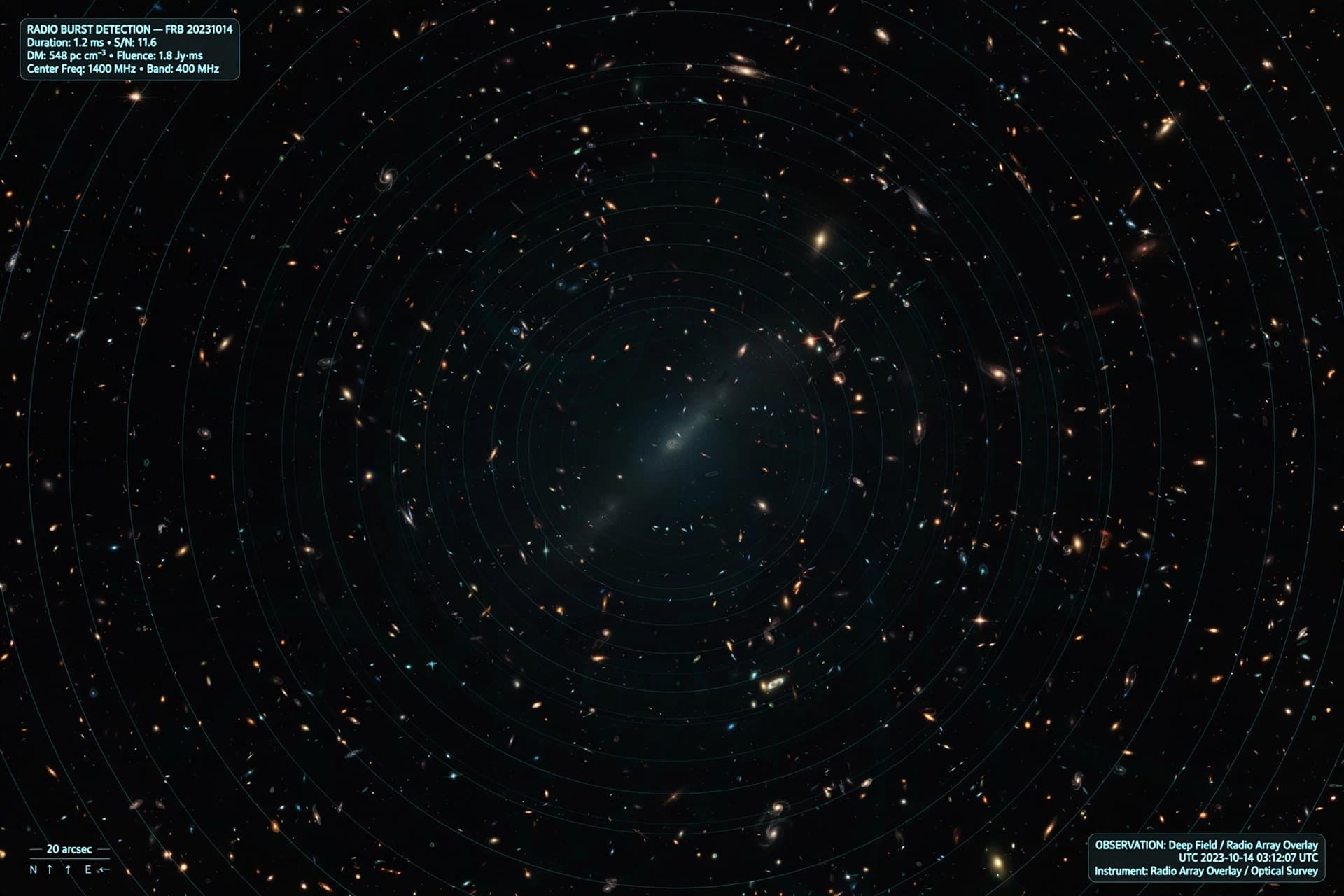
AI Image Disclaimer *Graphics are AI-generated and intended for representation, not reality.*
Sources (media names only):
Scientific American Astronomy Magazine The Verge Aerospace Daily & Defense Report / Aviation Week Network Time News
Published by Banx Network. This article is part of the Banx decentralized media programme, powered by the BXE token on the XRP Ledger.