The internet was once imagined as a place that remembered everything. Pages faded from prominence, but not from existence. Links aged, designs changed, yet traces remained—quietly preserved, waiting to be revisited. The Internet Archive grew from that impulse, a collective memory built on the belief that what was published should not simply disappear.
That assumption is now under strain. Publishers are increasingly blocking the Internet Archive, driven by concern that AI scrapers could use it as a workaround to access content they have otherwise restricted. What was designed as a tool for preservation has become, in this view, a vulnerability.
The fear is not abstract. As publishers tighten controls around their websites—deploying paywalls, blocking bots, and enforcing licensing boundaries—the Archive’s historical snapshots offer a parallel route. Content once publicly available can still be retrieved, read, and potentially ingested by automated systems. For companies seeking to control how their material is used in the age of large-scale AI training, that persistence feels less like memory and more like exposure.
Blocking the Archive represents a shift in priorities. Preservation gives way to prevention. The value of maintaining a public record is weighed against the risk that past openness undermines present restrictions. In this calculation, history becomes negotiable.
Yet the implications extend beyond AI. Researchers, journalists, and readers rely on archived pages to verify claims, track changes, and understand how narratives evolve. When access is cut off, continuity fractures. The record becomes partial, shaped not by what existed, but by what is still allowed to be seen.
This tension reflects a broader uncertainty about ownership in digital space. Publishers argue, with increasing urgency, that control over content must persist even after publication. The Archive, by contrast, embodies an older idea: that once something enters the public web, it becomes part of a shared informational commons, subject to recall even if not to reuse.
AI has accelerated this conflict, but it did not create it. What it has done is force a reckoning. The same systems that promise new forms of knowledge extraction also expose how fragile the balance between access and control has become. In trying to prevent automated reading at scale, publishers risk limiting human reading as well.
There is no simple resolution. Blocking the Archive may slow certain forms of scraping, but it also narrows the historical lens through which the internet understands itself. Each restriction redraws the boundary between what is remembered and what is allowed to fade.
In protecting the present, parts of the past are being quietly sealed off. And with each seal, the question grows sharper: who gets to decide what the internet is allowed to remember?
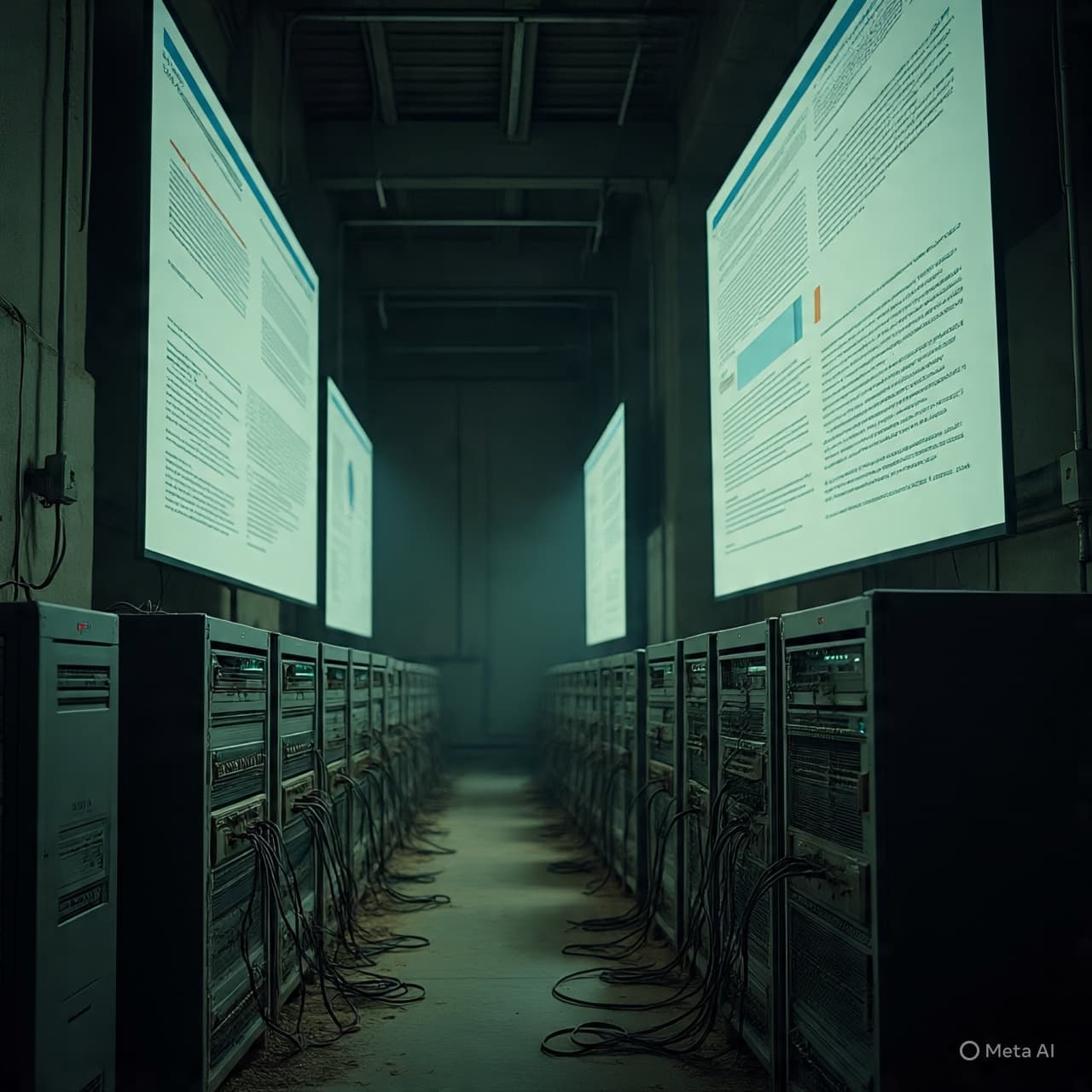
AI Image Disclaimer Visuals are AI-generated and serve as conceptual representations.
Sources Internet Archive Publishing industry statements Digital rights and preservation research
Published by Banx Network. This article is part of the Banx decentralized media programme, powered by the BXE token on the XRP Ledger.