Some robots announce themselves with height, speed, and precision. They stand tall, move decisively, and seem to ask humans to adjust to them. Sprout does the opposite.
It waits.
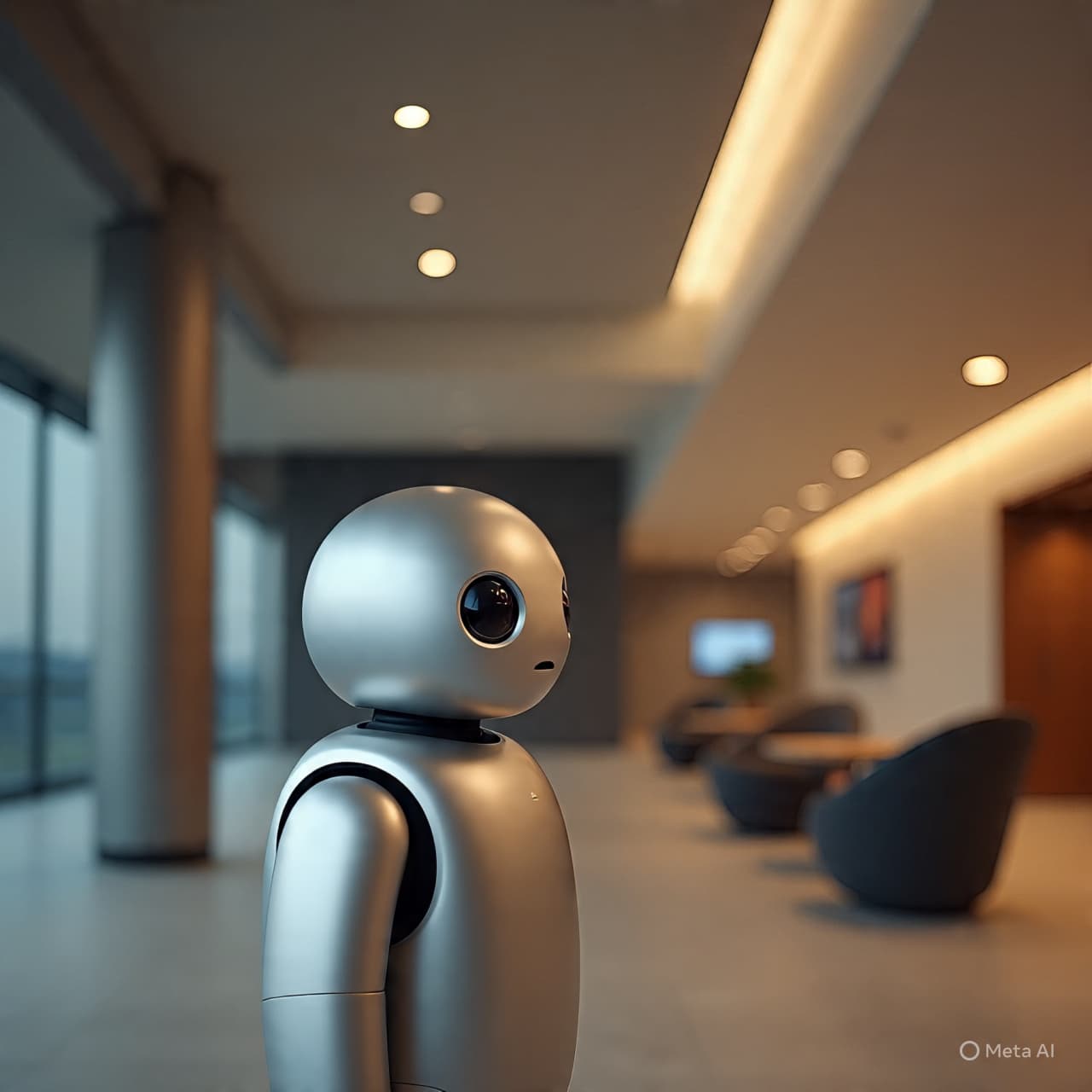
Small, rounded, and deliberately unassuming, Sprout was designed with a question rarely asked in robotics: not what a machine can do, but how close a human feels comfortable standing next to it. Its creators set out to build a robot that does not dominate space or demand attention, but invites it—quietly, patiently, without urgency.
Approachability, in this context, is not cosmetic. It is structural. Sprout’s proportions are compact, its movements slow and predictable. There are no sudden gestures, no sharp angles that suggest threat or authority. The robot communicates intention through subtle motion, orienting its body gently toward people rather than advancing on them. It is less about performance and more about presence.
This design philosophy reflects a growing realization in robotics: as machines move out of factories and into homes, schools, and public spaces, emotional response becomes as important as technical capability. Humans read machines instinctively, borrowing cues from how they interpret animals and other people. A robot that moves too quickly or occupies too much space can trigger unease, regardless of its function.
Sprout is built to lower that barrier.
Instead of faces or expressive screens, it relies on posture and timing. Pauses are intentional. Movements unfold slowly enough to be legible. The robot gives people time to notice it, understand it, and decide how to engage. In doing so, it returns a sense of agency to the human—a subtle but meaningful shift in power.
Researchers working with Sprout have observed that people tend to step closer, speak more naturally, and linger longer around it than around more conventional robots. Children treat it with curiosity rather than caution. Adults describe it as “polite,” a word rarely applied to machines. These reactions are not accidents; they are the product of design choices that prioritize psychological comfort over spectacle.
The implications extend beyond a single robot. As societies debate how much autonomy machines should have, Sprout represents a counterpoint to narratives of speed and efficiency. It suggests that robots do not need to mimic humans to feel acceptable. They need to respect human rhythms—our need for space, predictability, and consent.
In environments where trust matters, such as healthcare, education, or assisted living, this restraint may prove essential. A robot that knows how to wait may be more useful than one that knows how to rush.
Sprout’s significance lies not in what it replaces, but in what it reframes. It asks whether the future of robotics might be shaped less by intelligence alone, and more by etiquette. By choosing to be approachable first and capable second, it hints at a future where machines earn their place not by impressing us, but by making us comfortable enough to stay.
AI image disclaimer Visuals are AI-generated and serve as conceptual representations.
Sources MIT Media Lab Carnegie Mellon University IEEE Robotics and Automation Magazine ACM Human-Robot Interaction Conference
Published by Banx Network. This article is part of the Banx decentralized media programme, powered by the BXE token on the XRP Ledger.