There’s always been a poetic separation between the Moon we look at, and the Moon we measure. One belonged to wonder. The other, to mission reports.
Today, that line thinned again.
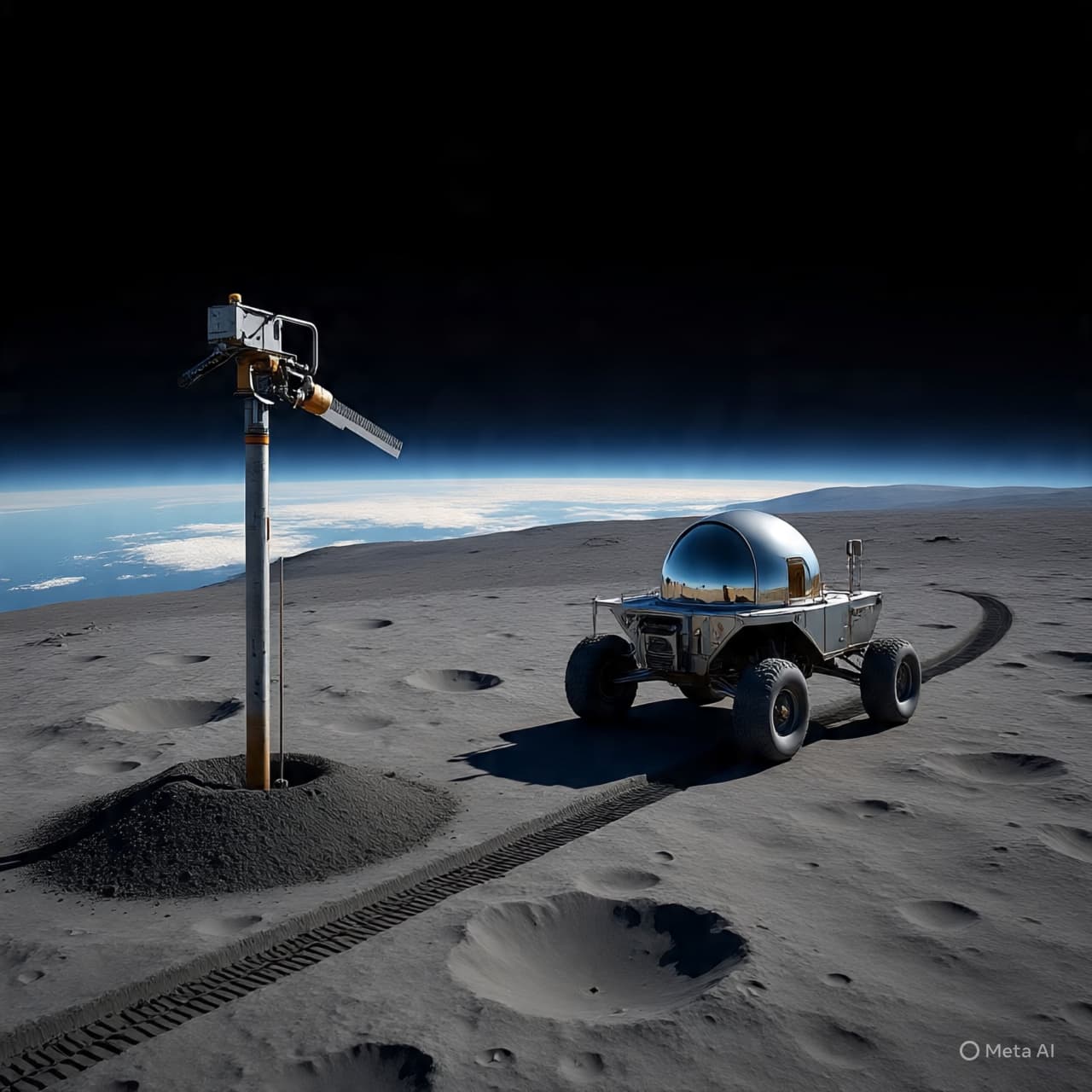
A mining company now says it has identified highly valuable material on the lunar surface—commercially promising enough that it could theoretically justify extraction scenarios. Their announcement wasn’t framed as a distant fantasy. It was framed like a claim. Like someone looking at a geological survey in Nevada or Western Australia.
And that’s where the cognitive shift is.
Space used to be the sacred abstraction of science, religion, romance, and philosophy. The Moon was where we projected metaphor, not market value. But private industry is rapidly converting all that soft mythology into a draft business model.
We know governments have been preparing for this transition. Space agencies have been quietly discussing lunar resource rights for years. The Artemis missions are designed to map, sample, and eventually support infrastructure. But when a private mining company declares potential value on the Moon, it changes the emotional architecture. It suggests ownership. It suggests extraction rights. It implies that the Moon might soon be categorized like a commodity region.
Science isn’t surprised. Geologists expected this contest.
But the public might be. Because at some level, the Moon felt exempt—protected by poetry. And yet physics never promised that exemption. If a rock contains valuable isotopes, elements, or compounds, then any civilization driven by scarcity or competitive advantage will eventually try to retrieve them.
Regulators will insist this is still just the beginning. A declaration, not an operation. We’re early. But beginnings are where the future silently decides its tone.
The significant part isn’t whether this company is right about exact composition or economic feasibility. The significant part is that the Moon is now officially being spoken about in the same language as lithium fields, oil basins, and rare earth belts.
That’s how empires start—on a spreadsheet.
Published by Banx Network. This article is part of the Banx decentralized media programme, powered by the BXE token on the XRP Ledger.