In the quiet depths of the ocean, survival often takes forms that seem both strange and ingenious. Among the many creatures that inhabit these waters, octopuses stand out—not only for their intelligence but for their remarkable ability to adapt.
One of their most curious traits is the ability to lose and regenerate limbs. At first glance, the idea of an amputee octopus may seem unusual, even alarming. Yet in the natural world, this process is neither rare nor accidental.
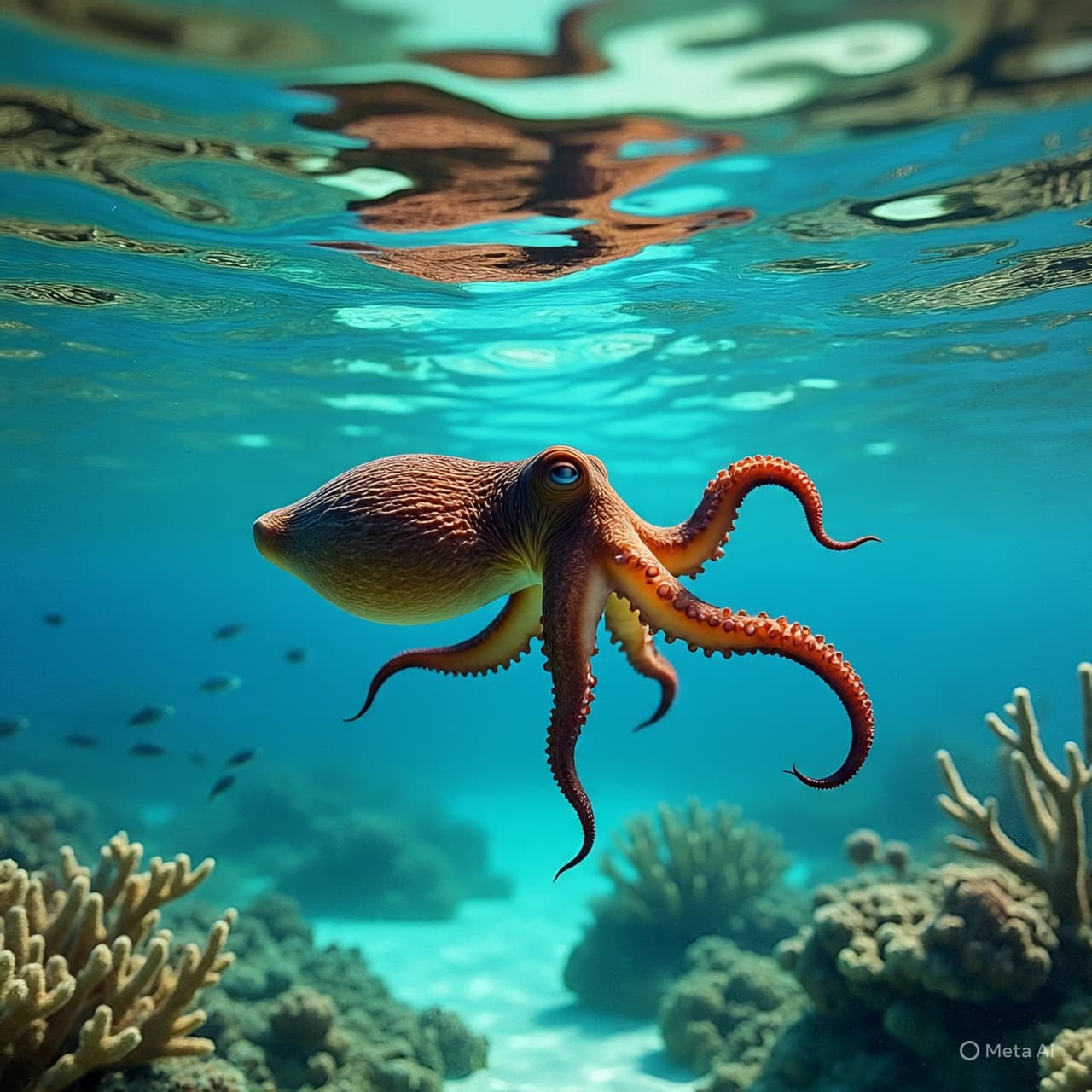
Octopuses can shed their arms as a defensive mechanism, a strategy known as autotomy. When threatened by predators, they may sacrifice a limb to escape, leaving behind a writhing distraction while they retreat to safety. It is a trade-off between loss and survival.
What makes this phenomenon even more fascinating is the regrowth process. Unlike many animals, octopuses can regenerate fully functional arms, complete with nerves, muscles, and suckers. Over time, the new limb becomes indistinguishable from the original.
Scientists study this ability not out of curiosity alone but for its broader implications. Understanding how octopuses regenerate tissue could inform medical research, particularly in areas such as nerve repair and regenerative medicine.
However, the question remains: is there a “need” for amputee octopuses, or is it simply an evolutionary byproduct? In nature, survival strategies are not designed with intention but shaped by countless generations of adaptation.
In environments filled with predators, the ability to escape—even at a cost—provides a clear advantage. An octopus that can survive an attack has the opportunity to reproduce, passing on traits that favor resilience.
Observations in the wild show that many octopuses live with partially regrown limbs, suggesting that this process is not only common but integral to their life cycle. It reflects a dynamic balance between vulnerability and recovery.
Researchers also note that limb loss does not significantly impair the octopus in the long term. Their decentralized nervous system allows remaining arms to function independently, maintaining mobility and dexterity even after injury.
Yet, like many natural processes, there are limits. Regeneration requires energy, and repeated injuries may weaken the animal. The ocean offers no guarantees, only possibilities shaped by adaptation.
In the end, the existence of amputee octopuses is not a question of necessity but of survival. It is a quiet reminder that in nature, resilience often comes not from avoiding harm, but from the ability to recover and continue forward.
AI Image Disclaimer Visuals are created with AI tools and are not real photographs.
Source Check (Credible Media) BBC National Geographic Current Biology Science Magazine The Guardian
Published by Banx Network. This article is part of the Banx decentralized media programme, powered by the BXE token on the XRP Ledger.