In the quietly complex world of quantum computing, where bits become qubits and logic meets the logic of nature, the path forward often lies in unexpected places. One of the most promising avenues isn’t just in cooling atoms to near absolute zero or isolating fragile quantum states in vacuum chambers — it’s in light itself, flowing through microscopic channels etched into silicon chips. This is the promise of silicon photonics, a technology that merges the familiar infrastructure of standard chipmaking with the quantum world’s ethereal demands, and it may hold the key to scaling quantum computers from laboratory curiosities to practical machines.
At its core, silicon photonics harnesses photons — particles of light — to carry and manipulate information on a silicon substrate much like electrical currents do in conventional microchips. Unlike electrons, photons don’t generate resistive heat or require complex wiring, allowing information to travel with minimal loss and noise. These qualities make silicon photonics an attractive platform not just for telecommunications and AI acceleration, but also for quantum information science, where maintaining coherence and fidelity is essential.
Quantum computing depends on qubits that can exist in superposition and entangle with other qubits, enabling operations far beyond classical bits. One of the biggest roadblocks to building large‑scale quantum systems is the difficulty of interconnecting many qubits efficiently without losing states to noise or decoherence. Optical waveguides built with silicon photonics can transmit quantum information — often encoded in photons — with low interference, a feature that makes it far easier to build dense interconnects between qubits, even across separate chips. This helps address one of the key bottlenecks in scaling quantum processors.
Another advantage of silicon‑based photonics is that it can leverage the vast infrastructure already used in classical semiconductor manufacturing. Photonic components — such as waveguides, resonators, and modulators — can be patterned on silicon wafers using techniques similar to those that produce everyday computer processors. This compatibility allows quantum photonic chips to benefit from high‑volume production, tighter tolerance control, and potential cost efficiencies that would be difficult for exotic materials or bespoke fabrication methods to match.
Recent advances show these theoretical benefits translating into real progress. For example, researchers have demonstrated integrated photonic circuits that can generate and control entangled photons across dozens of channels, enabling multiple quantum operations in parallel and pointing toward complex quantum networking and computing architectures. Such work brings the vision of practical quantum systems — capable of solving chemistry problems or optimizing complex networks — closer to realization.
Perhaps most importantly, photons — unlike most electron‑based qubits — can operate at or near room temperature and travel long distances without decoherence. This reduces reliance on extreme cryogenic setups that dominate many quantum computing platforms today, potentially opening the door for hybrid systems that blend photonic qubits, spin qubits, and traditional qubit types in a unified architecture.
In a field filled with competing technologies — from superconducting circuits to trapped ions — silicon photonics offers a compelling path forward: one built on light, leverage of mature manufacturing, and scalability. As quantum ambition moves from prototypes to powerful machines, the photonic highway etched into silicon may become the backbone that connects tomorrow’s qubits into computers that transform how we compute and communicate.
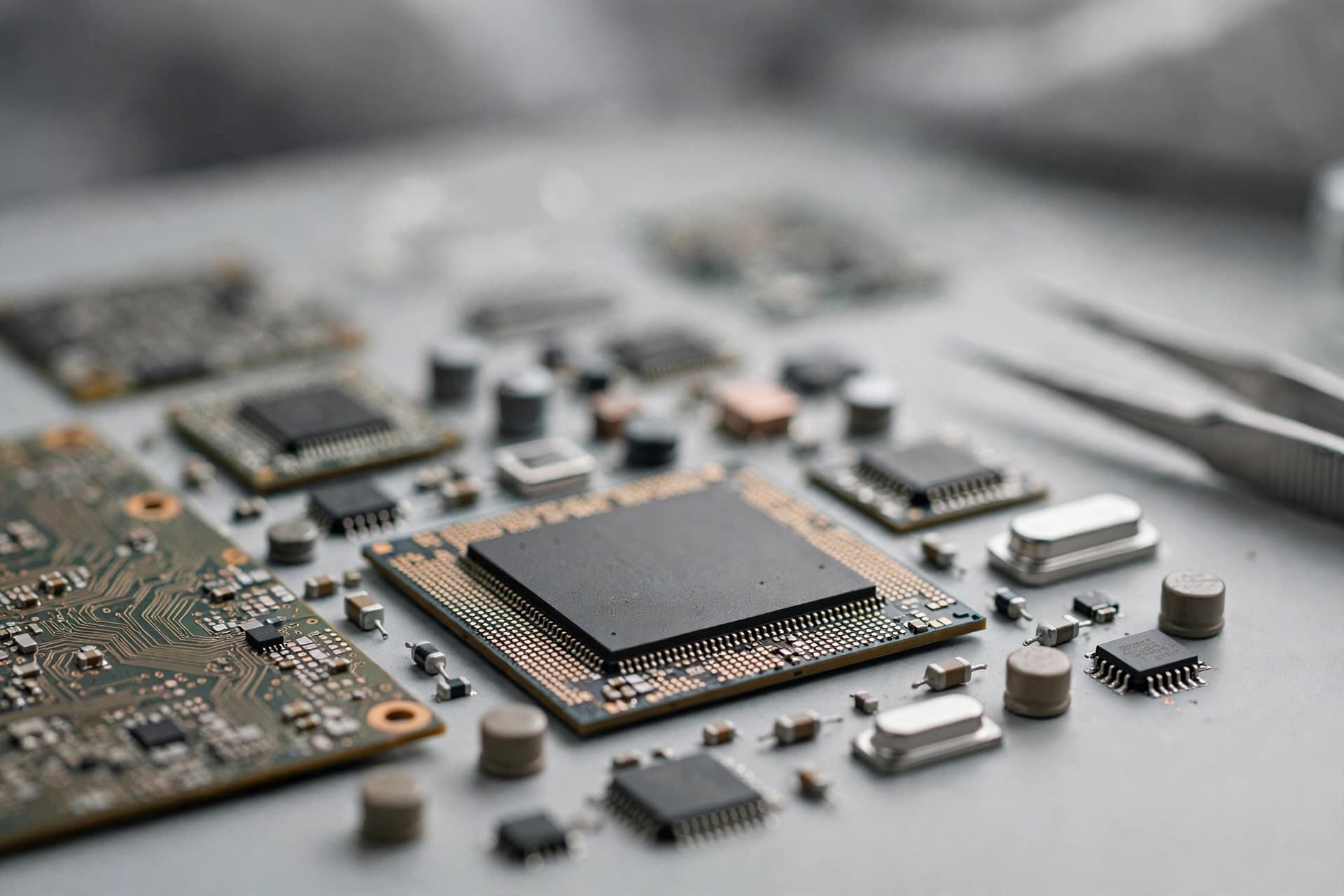
AI Image Disclaimer Visuals are AI‑generated illustrations intended for concept representation, not actual quantum hardware photographs.
Sources (Media Names Only) Avantier Inc. Phys.org Wikipedia (Silicon Photonics) Yole (Photonics Industry Report)
Published by Banx Network. This article is part of the Banx decentralized media programme, powered by the BXE token on the XRP Ledger.