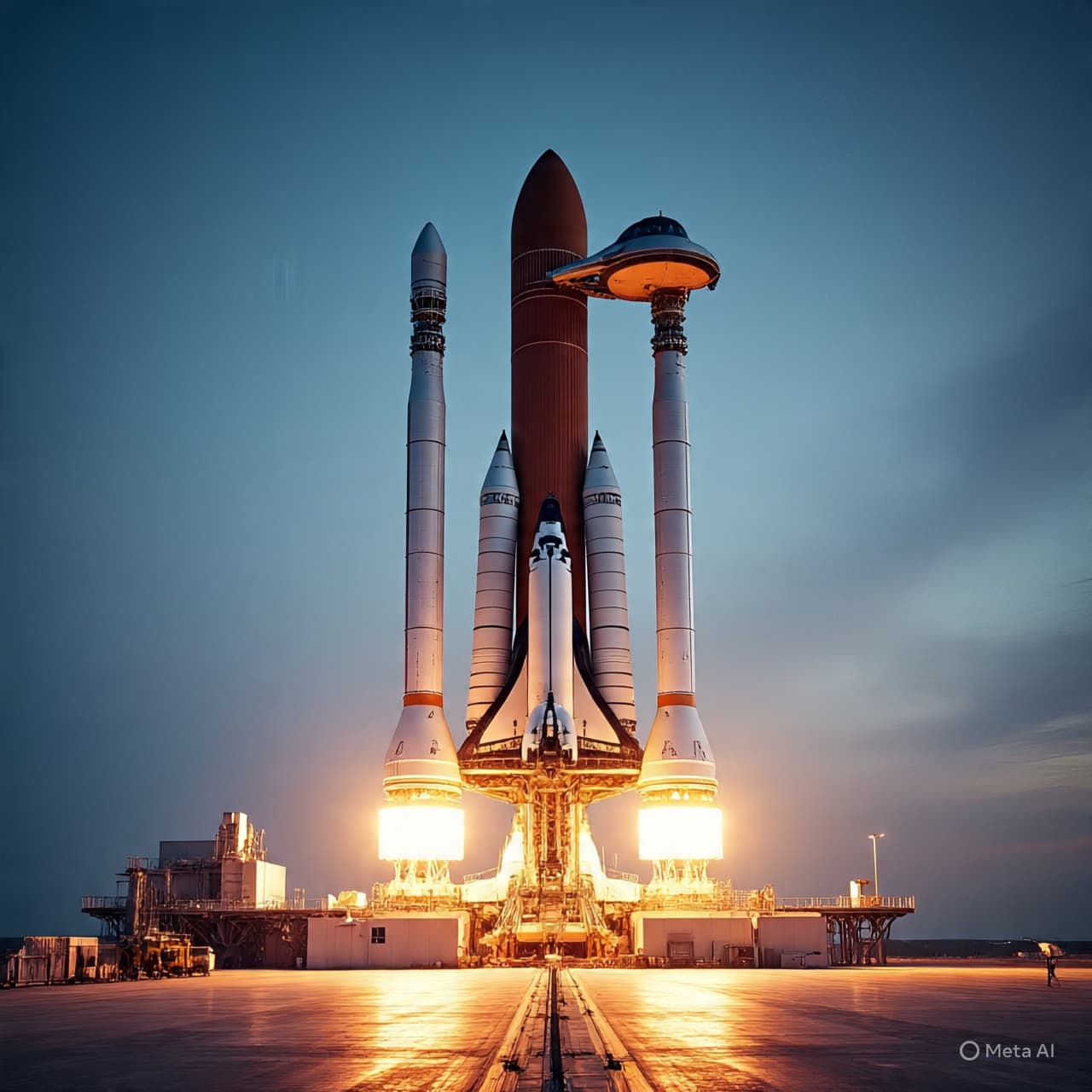
The spacecraft is tall, white, and patient, waiting in the humid stillness of Florida air. On the launchpad, it looks like certainty itself—metal stacked upon metal, equations made physical. Yet beneath the stillness, a quieter tension lingers. NASA is preparing to send people back to the Moon, and not everyone agrees the vehicle meant to carry them there is ready to fly.
The spacecraft is Orion, paired with the Space Launch System, a program shaped by ambition, politics, and time. For NASA, it represents continuity—a bridge between Apollo’s legacy and a future that includes lunar bases and eventual journeys to Mars. For critics, it is something more fragile: a machine burdened by complexity, cost overruns, and unresolved questions about risk.
Orion has flown before, uncrewed, circling the Moon and returning safely to Earth. The Artemis I mission proved that the spacecraft could survive deep space and the violence of reentry. Heat shields held. Systems responded. By the metrics of engineering, the test was a success. But crewed flight raises a different standard. Human lives turn margins into absolutes, and “acceptable risk” becomes a phrase heavy with history.
Some concerns focus on the spacecraft’s life-support systems and emergency escape capabilities, others on the rocket beneath it—SLS—whose components trace their lineage back to the Space Shuttle era. To its defenders, that heritage is reassurance: familiar hardware, well understood. To skeptics, it is a reminder that old designs carry old lessons, not all of them comforting.
NASA acknowledges the risks openly. Spaceflight, the agency repeats, is never safe in the ordinary sense. It is managed danger, mitigated through testing, redundancy, and discipline. The Artemis II mission, planned to carry astronauts around the Moon but not land, is meant to be that final measured step—a rehearsal conducted far from Earth, but short of the surface.
What complicates the moment is not only engineering, but context. Commercial spacecraft now ferry astronauts to low Earth orbit with regularity, altering public expectations of pace and progress. Against that backdrop, Artemis can appear both monumental and strangely cautious, a program moving forward while constantly looking over its shoulder.
Still, the Moon waits as it always has, indifferent to debate. It reflects no opinion on heat tiles or booster joints. It has seen risk before—bold, compressed, imperfect—and it remembers who came anyway.
As NASA prepares to fly humans once more into deep space, the question is not whether the spacecraft is flawless. None ever are. The question is whether the risks are understood, owned, and chosen deliberately. In that quiet calculus—between aspiration and restraint—the future of human exploration is being decided again.
AI Image Disclaimer
“Visuals are AI-generated and serve as conceptual representations.”
Sources (names only)
NASA NASA Office of Inspector General Government Accountability Office The Atlantic SpaceNews
Published by Banx Network. This article is part of the Banx decentralized media programme, powered by the BXE token on the XRP Ledger.