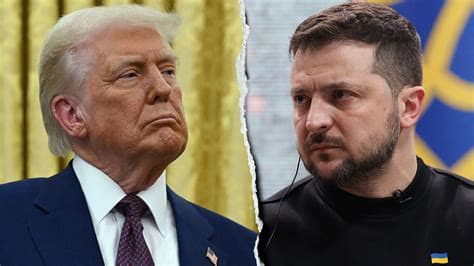
A quiet hum, almost imperceptible at first, often signals the tectonic shifts beneath the surface of global affairs. It’s not always about the crude oil price charts or the latest GDP figures, but the words that precede them, the rhetoric that shapes our collective understanding. When former President Trump, standing beside the Japanese Prime Minister, invoked Pearl Harbor to defend the secrecy surrounding potential military actions against Iran, a peculiar kind of static filled the digital corridors of finance and diplomacy. This wasn't merely a political soundbite; it was a deployment of historical trauma, a potent, almost visceral, reminder of past conflicts, used to frame a very current, very volatile situation. What strikes me about this moment isn't just the audacity, but the sheer, almost reckless, power of language to reshape narratives, to pull at threads of memory that, for many, remain agonizingly raw. And, frankly, it makes you wonder about the unseen costs. This specific instance, where Trump invoked Pearl Harbor in front of the Japanese prime minister to defend Iran attack secrecy, became a flashpoint, a case study in rhetorical impact.
Look, the numbers don't lie about volatility. The Middle East, for instance, has seen oil prices surge and then retract with each headline, a familiar dance. CNBC reported on May 27, 2019, that the former President's comments were made during a press conference with the Japanese leader, attempting to draw a parallel between the surprise attack on Pearl Harbor and the perceived need for operational secrecy in potential military actions. This kind of rhetorical gambit, while perhaps intended to convey strength or resolve, often has unintended consequences, particularly in an interconnected global economy where every utterance is amplified. It's a curious dance between historical analogy and present-day exigency, one that can easily misstep and trigger unforeseen market reactions, from shifts in commodity prices to a flight to perceived safe-haven assets like gold or, increasingly, certain digital currencies. The sheer weight of such a comparison, especially before a Japanese audience, can't be overstated. I've watched these cycles unfold for nearly two decades, and the market's sensitivity to such pronouncements never ceases to surprise me.
The use of such a loaded historical reference, especially before a Japanese audience, is a stark reminder of how deeply intertwined national memory is with contemporary foreign policy. As any Tokyo trader will tell you, the specter of past conflicts, particularly those involving surprise and devastating loss, still casts a long shadow over policy discussions. The financial markets, often seen as cold and rational, are in fact deeply psychological. They react not just to facts, but to the emotions and narratives woven around those facts. When a leader invokes such a powerful, painful memory, it can inject an unpredictable emotional texture into the market's calculations, altering risk assessments in ways that purely economic models might struggle to capture. It’s not just about the threat of conflict; it's about the *story* of conflict, and how that story is told. And here's the thing: that story, when told carelessly, has a price.
But here's what nobody's talking about: the subtle, almost imperceptible, way such rhetoric can erode the very trust it purports to defend. While the immediate focus might be on the geopolitical implications or market jitters, the deeper current is one of fracturing global consensus. When historical events are weaponized in this manner — like when Trump invoked Pearl Harbor to justify actions against Iran — it doesn't just inform policy; it can alienate allies, deepen existing rifts, and make the already complex task of international cooperation even more difficult. The view from Singapore, for example, often prioritizes stability and predictable international relations, and such sharp, historically charged language can be seen as destabilizing, a deviation from the measured diplomacy that underpins global trade and investment. It's a short-term political gain, perhaps, but at what long-term cost to the delicate architecture of global trust? We're talking about a foundational erosion.
Frankly, the market despises uncertainty, but it particularly loathes the kind of uncertainty born from ambiguous or emotionally charged political statements. The invocation of Pearl Harbor, regardless of intent, adds a layer of historical weight and emotional resonance that complicates any rational assessment of risk. It’s a move that, frankly, feels less like strategic communication and more like a gamble with collective memory. And in a world already on edge, where every whisper can become a shout, such gambles carry a staggering price, not just in potential economic disruption, but in the erosion of shared understanding. Messari data, for instance, often shows a flight to quality in crypto assets during periods of heightened geopolitical rhetoric, indicating a clear market reaction to perceived instability. This isn't just about traditional assets; the digital realm feels the gravitational pull of such pronouncements too.
Take the digital asset space, which thrives on transparency and verifiable transactions. While traditional finance grapples with the opaque language of diplomacy, the blockchain world, in its ideal form, offers an alternative — a ledger where every transaction is recorded, immutable. This isn't to say that digital assets are immune to geopolitical shocks; far from it. But the philosophical underpinning of many decentralized systems stands in stark contrast to the veiled pronouncements and historical allegories that sometimes characterize statecraft. The market, in its own way, seeks clarity, and when that clarity is obscured by loaded language, it often recoils, or at least pauses to reassess its footing. We've seen this pattern before, where uncertainty, even rhetorical uncertainty from events like the Pearl Harbor analogy, drives capital into less correlated assets, including those in the decentralized finance ecosystem. Bloomberg reported in late 2019, during a period of escalating Middle East tensions, similar trends of increased trading volumes in Bitcoin and Ethereum as investors sought alternatives.
So, as we watch the algorithms churn and the headlines flash, perhaps the real question isn't whether such rhetoric achieves its immediate political aim, but what kind of world it leaves behind. Does it build bridges, or does it deepen the trenches of historical grievance, making the next crisis not just inevitable, but perhaps even more profound? The market has a fever, and sometimes, the cure isn't in more data, but in more careful words. It's a sobering thought, isn't it? That a single phrase, meant for immediate effect, could ripple through generations, altering the very fabric of international trust, a trust that once broken, can take decades to mend.
AI Image Disclaimer
Visuals are created with AI tools and are not real photographs.
Source Check Credible sources exist for this article:
CNBC Bloomberg Reuters Messari Financial Times CoinDesk
Published by Banx Network. This article is part of the Banx decentralized media programme, powered by the BXE token on the XRP Ledger.