There is a particular gravity to the waters of the Strait of Hormuz, a narrow passage where the world's economies and the world's conflicts meet. For centuries, empires have understood that whoever controls this chokepoint holds a hand on the pulse of global commerce. In recent months, that understanding has been tested anew, as the United States has imposed a naval blockade aimed at Iran, and as vessels have attempted—sometimes desperately—to run it.
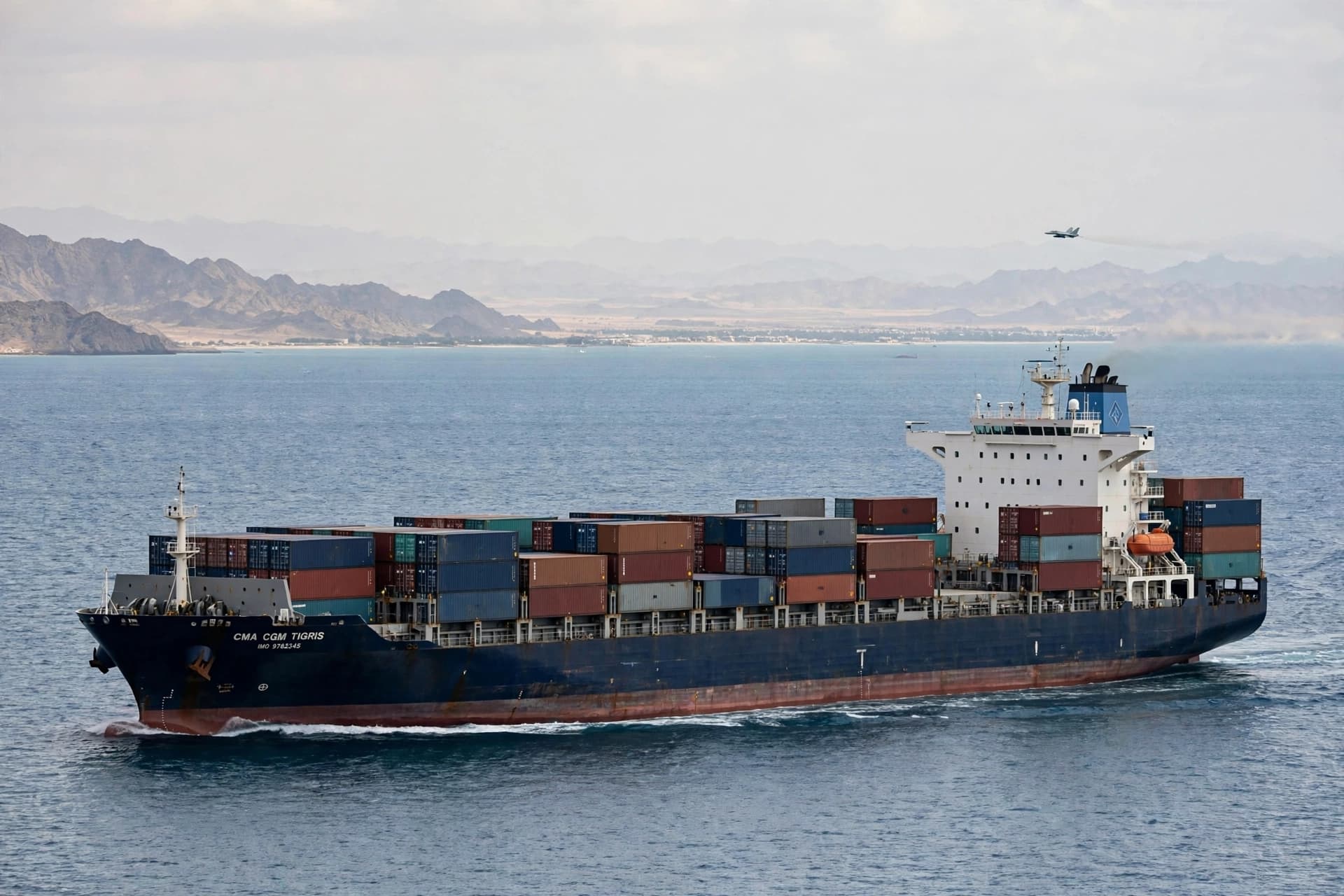
On Saturday, U.S. Central Command announced that its forces had disabled a commercial cargo vessel that attempted to bypass the blockade in the Gulf of Oman . The ship, identified as the Panama-flagged M/V Ocean Molica, also known as the Arika Sun, had departed an Iranian port and ignored repeated warnings from U.S. forces . A U.S. military fighter jet struck the stern of the vessel with a precision munition, disabling its propulsion system without harming the crew .
The action was not an isolated event. According to Centcom, four shipping vessels have been disabled and 135 ships have been turned around since the blockade resumed on July 14 . U.S. forces have also destroyed ten tankers linked to the Islamic Revolutionary Guard Corps' shadow network over the same period . The numbers suggest a sustained and systematic enforcement campaign, one that has reshaped the rhythms of maritime traffic in the region.
The context of the blockade is a broader conflict that has escalated in recent months. Following U.S. and Israeli strikes on Iran, the strait—through which roughly twenty percent of the world's oil supply normally passes—has seen a sharp decline in traffic . Tanker attacks have risen to their highest levels since the war began, and shipping companies have grown increasingly cautious about transiting the waterway . The blockade has added a new layer of risk, turning a commercial passage into a zone of military enforcement.
Centcom's statement carried a clear message for mariners: heed the warnings. "All mariners are advised to heed blockade warnings from Centcom forces," the command said, urging vessels to monitor maritime advisories and contact U.S. naval forces . The warning reflects an operational reality in which the distinction between a commercial voyage and a violation of blockade has become consequential in the most immediate sense.
For the crew of the Ocean Molica, the encounter ended without injury, but with a vessel rendered immobile and a journey halted. For the shipping industry, the incident is another data point in an increasingly uncertain calculus: the risks of attempting to run the blockade now include not only interception but the physical disabling of the ship itself. The strait remains open in principle, but the conditions under which vessels may pass have narrowed considerably.
The enforcement of the blockade continues, and with it, the questions that accompany any use of force in contested waters: what constitutes a legitimate target, what warnings are sufficient, and what the long-term consequences will be for a region already strained by conflict. Those questions will not be answered quickly. For now, the waters of Hormuz remain what they have always been—a place where geography and power intersect, and where the stakes are measured in more than cargo.
AI Image Disclaimer: The images accompanying this article are AI-generated and are intended for illustrative purposes only.
Sources:
· The Hill · Central News Agency (Taiwan) · Radio Taiwan International · Reuters
Published by Banx Network. This article is part of the Banx decentralized media programme, powered by the BXE token on the XRP Ledger.