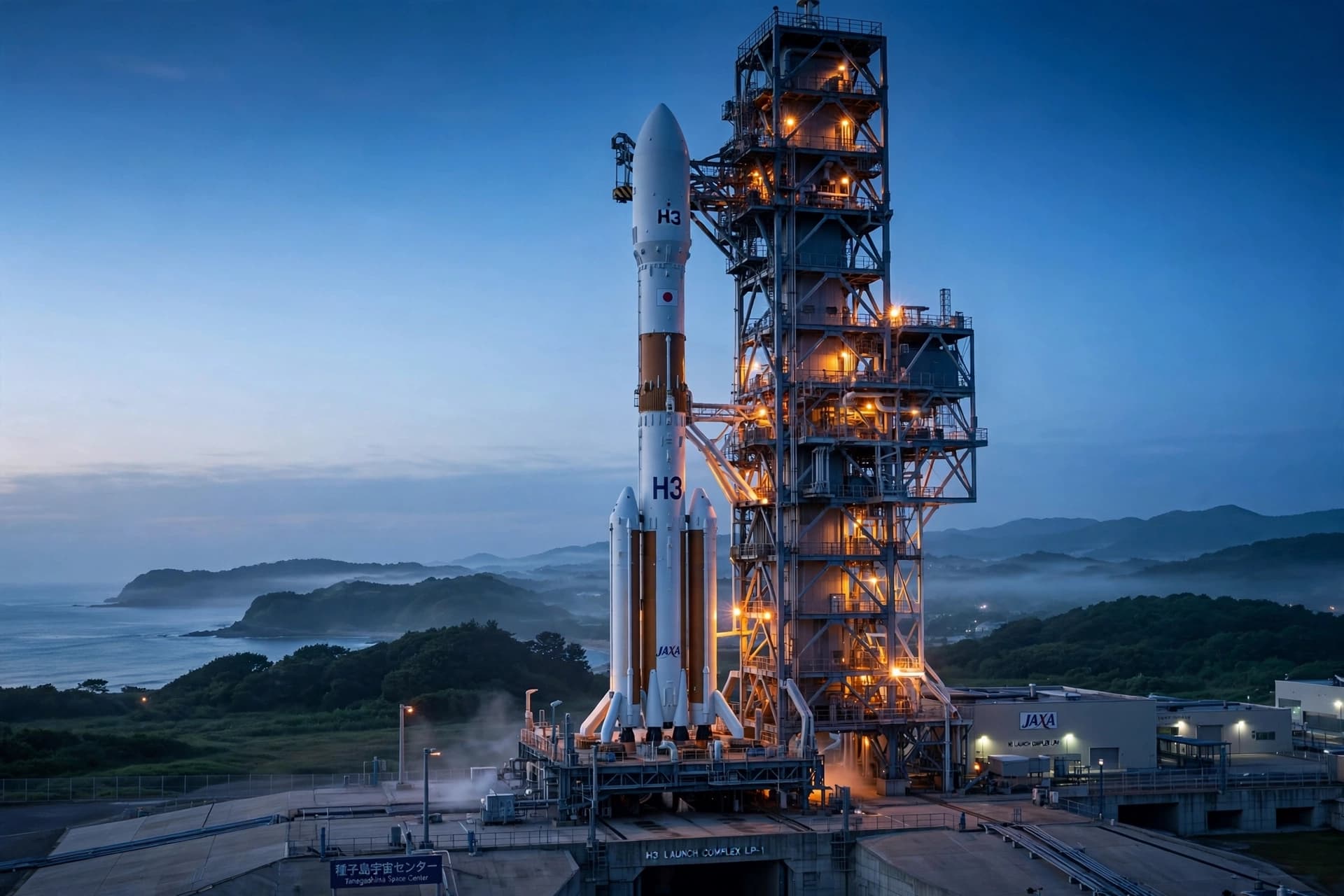
There is a particular stillness that belongs only to launch mornings. It settles over the coastline, over the steel towers and cables, over the capsule waiting patiently at the top of its rocket. For a brief moment, the world seems to narrow its focus, as if listening for a distant cue. Then the engines ignite, and the silence gives way to a rising column of light. The SpaceX Crew-12 mission lifted off under the joint banner of and , sending a Dragon capsule and its astronauts cleanly into orbit. The ascent was smooth, the trajectory precise. Within minutes, the spacecraft separated from its Falcon 9 rocket and began its measured arc toward the .
Reaching orbit is both technical achievement and quiet transition. The roar fades. Acceleration softens. What remains is the steady hum of systems working as designed. Inside the Dragon capsule, the astronauts shifted from launch posture to orbital routine, checking instruments and confirming that the journey ahead would continue as planned.
Crew-12 represents another chapter in a series of rotations that keep the station fully staffed and scientifically active. Each mission carries not only people, but continuity. Experiments waiting in microgravity depend on steady hands and consistent oversight. Maintenance tasks, though rarely dramatic, ensure that the station remains a safe laboratory circling Earth every ninety minutes.
The Falcon 9’s reusable booster completed its role with a controlled descent and landing, reinforcing a model of spaceflight that has grown familiar in recent years. What once seemed extraordinary—the return of a rocket stage to Earth—has become a practiced element of the process. Routine, in this context, is its own milestone.
As Dragon now travels toward docking, orbital mechanics guide the approach with patience rather than haste. Small thruster burns adjust speed and alignment. The station, visible as a bright structure against the blackness, awaits its visitors with the quiet inevitability of an appointment kept.
When the hatch eventually opens, the exchange will be simple and human: greetings in microgravity, handshakes that float rather than press. The station’s population will settle into its new configuration, and the work will expand accordingly—research in biology, materials science, and technology demonstrations continuing without interruption.
In straightforward terms, NASA and SpaceX confirmed that the Crew-12 Dragon capsule successfully reached orbit and is en route to the International Space Station, where the astronauts are scheduled to dock and begin their mission.
AI Image Disclaimer Illustrations were produced with AI and serve as conceptual depictions.
Source Check
Credible mainstream and niche sources covering the Crew-12 mission and Dragon capsule launch:
NASA
Reuters
Associated Press
Space.com
CNN
Published by Banx Network. This article is part of the Banx decentralized media programme, powered by the BXE token on the XRP Ledger.