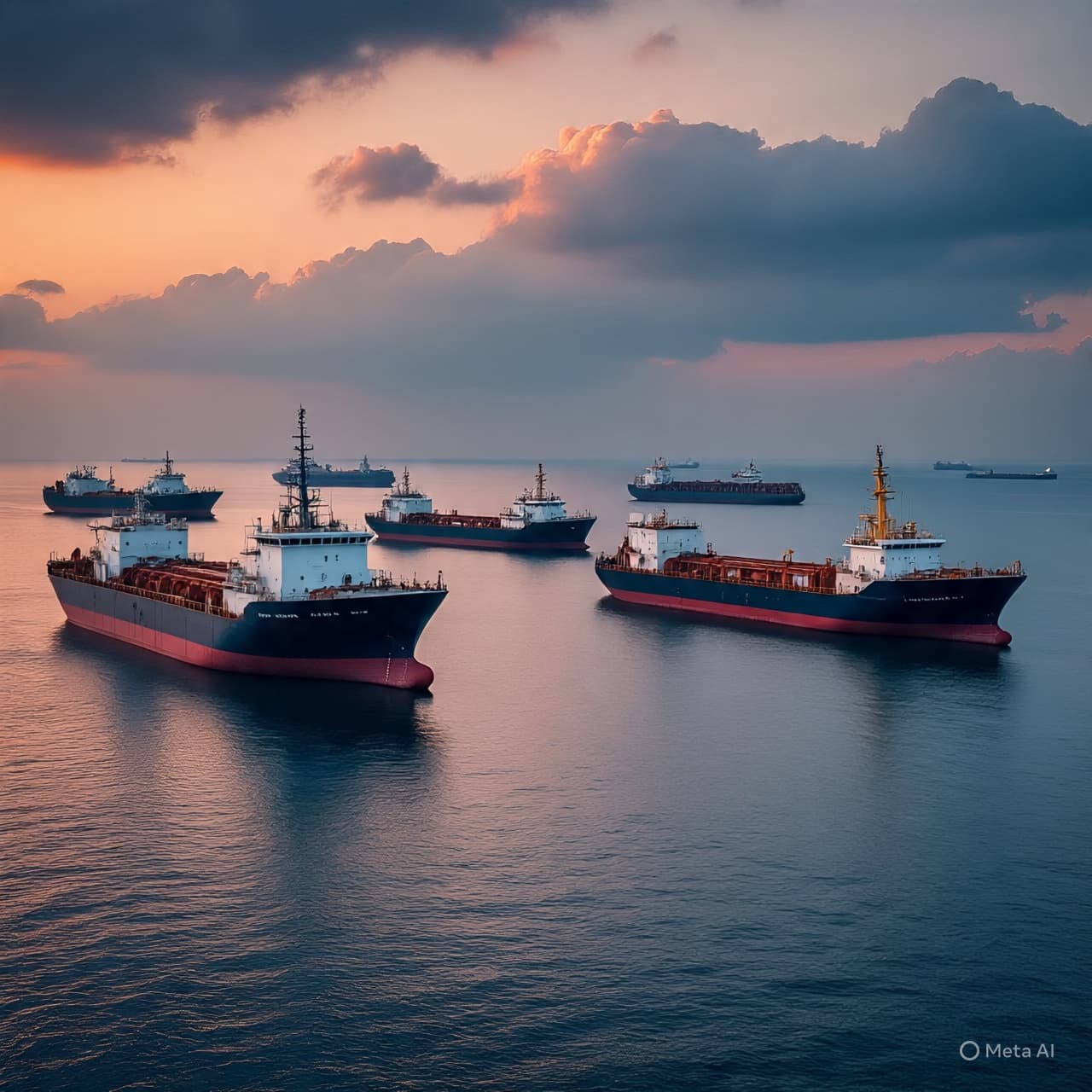
On the open water, where tankers trace slow arcs across shipping routes, the world’s energy moods often reveal themselves long before markets catch on. Lately, those moods have turned contemplative. Iranian crude held at sea has reached its highest level in roughly two and a half years, according to shipping data tracked by market observers. It isn’t a dramatic shock so much as a quiet indicator—a gentle pressure point reminding traders how sensitive the global oil system has become.
A rise in floating storage usually signals imbalance. Sometimes it’s a matter of timing, sometimes refinery maintenance, sometimes a pause in buying patterns that sends barrels into a momentary limbo. In this case, softer demand from China appears to be the catalyst, creating a mismatch between the pace of exports and the appetite of the world’s largest oil importer. When buyers slow even slightly, the ocean absorbs the excess.
Floating barrels offer a unique kind of message. They don’t shout; they accumulate. They reflect the push and pull within the commodity ecosystem, shaped by shifting consumption trends, regional refinery cycles, and evolving trade preferences. And because most of this activity unfolds out of public view—beyond ports, beyond headlines—the data becomes a rare window into a market’s unspoken dynamics.
At the same time, Iran’s exports remain elevated. That combination—strong outflows paired with slower intake—creates a form of suspended energy, both literal and symbolic. It marks a moment when the global supply chain continues to hum, but the rhythm feels slightly off-beat, suggesting that the delicate choreography between producer and consumer is adjusting once again.
For analysts, the rise in offshore storage raises practical considerations. Tankers tied up in holding patterns alter freight availability, shipping rates, and even insurance calculations. Storage at sea is more expensive than storage on land, and its use typically reflects a calculation made reluctantly, not casually. In a market where efficiency is paramount, barrels lingering offshore point to uncertainty about short-term demand, pricing, or logistics.
Yet this tension is part of a broader truth: the oil market is never static. It constantly interprets shifting macro conditions, adapting not with loud movements but with small changes—extra storage here, marginal demand fluctuations there. Today’s floating barrels are simply one more signal in a landscape defined by subtle recalibration.
Whether the volumes at sea contract quickly or linger will depend on how demand evolves in the months ahead. But for now, the tankers drifting with full holds remind us that every barrel tells a story, and sometimes the most important stories are the ones waiting offshore.
Published by Banx Network. This article is part of the Banx decentralized media programme, powered by the BXE token on the XRP Ledger.