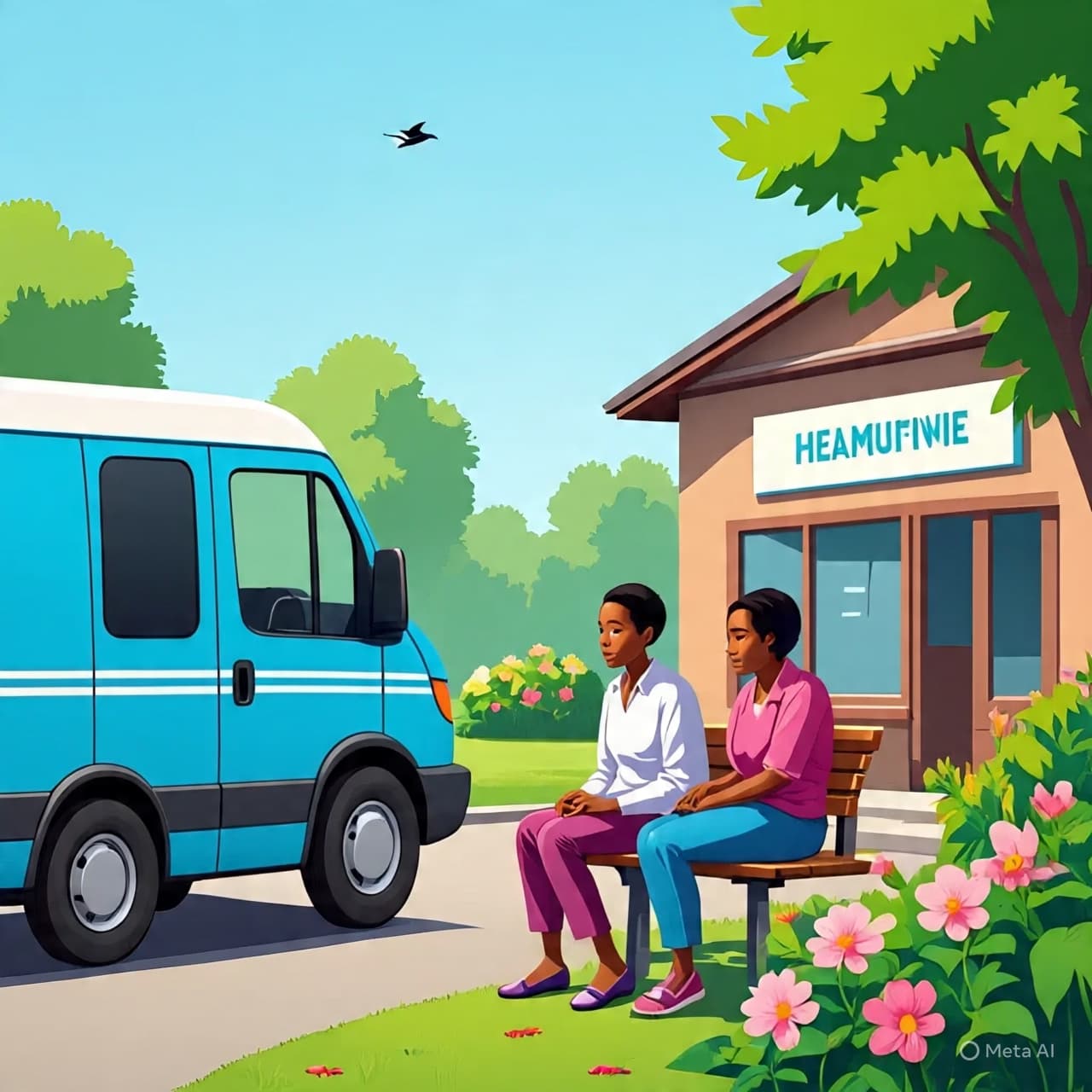
Some services arrive with fanfare, announced by banners and schedules pinned neatly to walls. Others arrive more quietly, like a familiar knock at the door, patient and unassuming. Mobile public health units belong to the second kind. They move not to attract attention, but to meet people where life already unfolds — in parking lots, near schools, beside community centers where time is measured less by calendars and more by daily routines.
Across many communities, upcoming mobile immunization and testing clinics are preparing to roll forward once again. Their purpose is practical, yet their presence carries something deeper: an acknowledgment that health is not static, and care cannot always wait behind fixed addresses. These units bring vaccinations and diagnostic testing closer to neighborhoods that may otherwise face distance, time constraints, or uncertainty when seeking care.
The clinics are designed with accessibility in mind. No elaborate entryways, no complicated pathways — just a straightforward offering of preventive services delivered in a familiar environment. Immunizations help reinforce collective protection, while testing allows early awareness, a quiet but powerful step in preventing wider spread of illness. Together, they form a rhythm of care that adapts to the movement of everyday life.
For public health workers, the mobile model is both logistical and human. It allows professionals to listen as much as they administer, to observe patterns not always visible from stationary clinics. For residents, the encounter can feel less clinical and more conversational, easing hesitation and building trust one visit at a time.
As schedules are announced and routes finalized, these units will soon be seen again — parked briefly, then moving on. Their impact, however, lingers longer than their stay. Each test conducted and each vaccine given adds quietly to a broader tapestry of preparedness and shared responsibility.
In the end, mobile clinics do not promise perfection or certainty. They offer something more modest and perhaps more valuable: presence. In arriving where they are needed, they remind communities that public health is not only a system, but a relationship — one that continues to travel forward.
AI Image Disclaimer (Rotated Wording) Illustrations were produced with AI tools and are intended as conceptual depictions, not real photographs.
Source;
Centers for Disease Control and Prevention World Health Organization Reuters Associated Press Johns Hopkins Bloomberg School of Public Health
Published by Banx Network. This article is part of the Banx decentralized media programme, powered by the BXE token on the XRP Ledger.