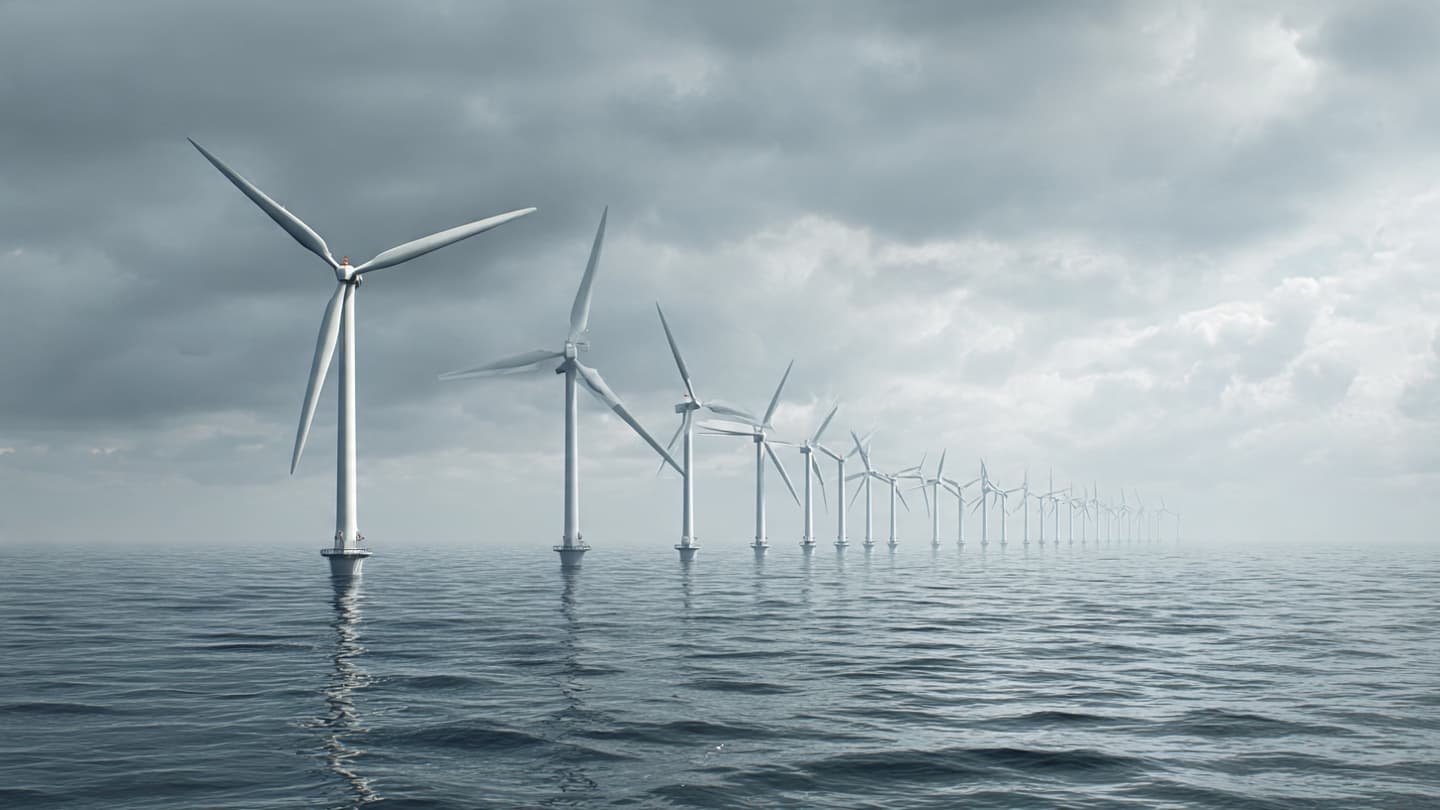
Far from Britain's busiest streets, another kind of infrastructure is taking shape across the water. Offshore wind turbines rise from the sea, their blades turning with the movement of the wind. From the shoreline they can appear distant and quiet, yet they are becoming an increasingly visible part of Britain's energy system.
Offshore wind has grown into one of Britain's major renewable-energy industries. The country's geography, particularly the strong and consistent winds across the North Sea, provides favorable conditions for large-scale projects.
Each offshore wind farm is an extensive engineering undertaking. Turbines must be transported to sea, foundations installed in the seabed and underwater cables connected to electricity networks on land.
The projects also create activity beyond the turbines themselves. Ports, engineering companies, vessel operators and specialized manufacturers participate in construction and maintenance, creating an industrial network that stretches from coastal communities into the wider economy.
Britain's growing renewable capacity is also connected to the changing structure of electricity demand. Data centers, electric vehicles, heat pumps and industrial electrification are expected to require more power as digital and energy systems evolve.
Artificial intelligence adds another layer. Large data centers consume substantial amounts of electricity, making the availability of reliable low-carbon power increasingly important for technology companies and infrastructure developers.
The transition is not without practical challenges. Wind generation varies according to weather conditions, while the electricity grid must be able to move power from generation sites to areas where demand is concentrated. Expanding transmission infrastructure therefore becomes part of the same transformation.
Offshore projects also require careful environmental planning. Marine ecosystems, shipping routes and fishing activity must be considered during development, while construction methods and turbine placement can influence local conditions.
Investment decisions are equally important. Offshore wind farms require significant upfront capital and long development timelines. Developers must balance construction costs, financing conditions, electricity prices and long-term expectations about energy demand.
Britain's offshore wind expansion therefore represents more than a shift in the source of electricity. It is changing coastal infrastructure, industrial supply chains and the country's relationship with the sea, while creating another pathway toward a power system increasingly shaped by renewable energy.
AI Image Disclaimer These images were generated by AI for conceptual illustration and should not be interpreted as photographs of specific British offshore wind projects.
Sources Reuters UK Department for Energy Security and Net Zero Crown Estate National Grid RenewableUK
Published by Banx Network. This article is part of the Banx decentralized media programme, powered by the BXE token on the XRP Ledger.