There are times when the earth feels like an archive, patient and composed, waiting for the right hands to turn its pages. Beneath layers of sediment and silence, stories remain pressed into stone — stories not of empires or languages, but of fins, limbs, and ancient tides. In the red soils of , researchers have uncovered fossils that gently reshape how we imagine the prehistoric world: remnants of amphibians that once moved through waterways when the continents were still joined as one.
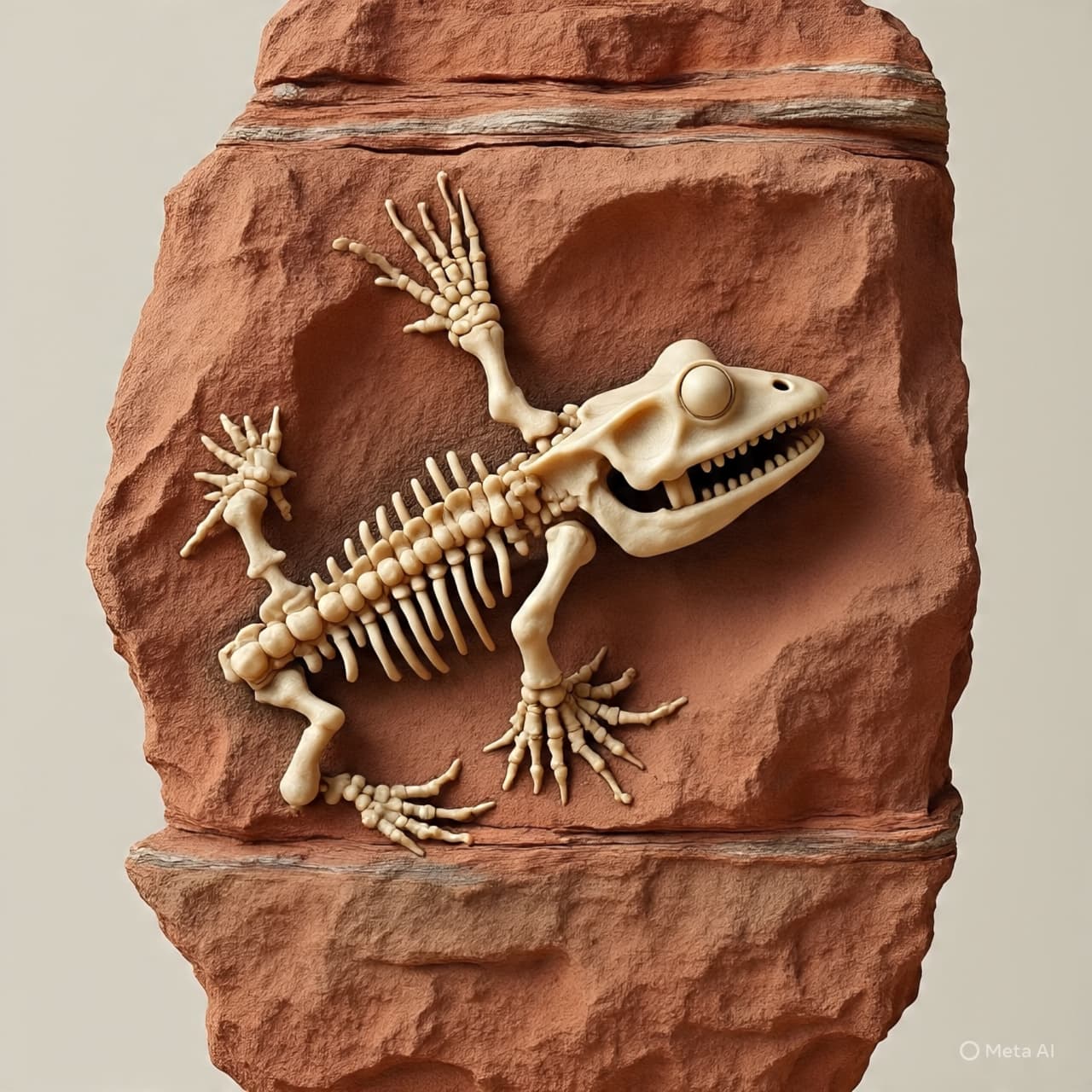
The fossils, dated to roughly 250 million years ago, belong to a group of long-extinct amphibians often described as “sea-salamanders” for their elongated bodies and aquatic adaptations. These creatures lived during the Triassic period, a time when Earth was recovering from the greatest mass extinction in its history. Life was tentative, ecosystems were reforming, and survival required resilience.
What makes this discovery particularly reflective is not merely the age of the fossils, but what they imply about geography and movement. During the Triassic, today’s continents were fused into the supercontinent Pangaea. The oceans and freshwater systems that laced across this vast landmass formed corridors rather than barriers. The presence of these amphibians in Australia — and their close resemblance to similar fossils found in other parts of the ancient world — suggests that these creatures were far more widespread than once assumed.
Scientists studying the newly identified remains note anatomical features that closely match amphibian fossils discovered in regions that are now distant from Australia. The skull structures, jaw shapes, and vertebral patterns indicate a shared lineage. Such similarities offer persuasive evidence that these amphibians dispersed across interconnected waterways before continental drift gradually separated landmasses into the configuration we recognize today.
In this sense, the fossils do more than describe an animal; they describe a planet in transition. They speak of a world not yet fragmented by tectonic patience. Rivers flowed across uninterrupted terrain, and coastlines curved along margins that would one day split and migrate. The sea-salamanders, gliding through marshes and shallow seas, were participants in a geography far less divided than ours.
Researchers emphasize that these amphibians were well adapted to aquatic life. Their streamlined bodies and limb structures suggest they were comfortable in water, possibly hunting fish and smaller marine organisms. Some species in this broader group are believed to have grown several feet long, occupying ecological roles that today might be filled by crocodilians or large salamanders. Yet unlike modern amphibians, these Triassic creatures inhabited a world still recalibrating after ecological catastrophe.
The discovery in Australia expands the known southern distribution of this amphibian lineage. It strengthens the idea that, during the early Triassic, ecosystems were more globally interconnected than previously documented. Rather than isolated evolutionary pockets, there appears to have been a continuity of species across vast stretches of Pangaea.
There is also a quiet reminder embedded in these stones. The Earth has endured profound upheavals — extinctions, volcanic winters, drifting continents — yet life has repeatedly found pathways to adapt and spread. The sea-salamanders emerged in the wake of devastation and navigated a transforming planet. Their fossils now offer insight into both biological resilience and geological motion.
Importantly, researchers caution that fossil interpretation is an evolving science. Each new specimen refines the broader picture, and ongoing comparative analysis will help determine how these Australian finds fit within the amphibians’ global family tree. The work continues, layer by layer, as paleontologists examine sediments, reconstruct habitats, and compare skeletal traits across continents.
In straightforward terms, the newly described fossils indicate that these ancient amphibians had a broader geographic range than once thought, reinforcing the understanding that early Triassic ecosystems were deeply interconnected across Pangaea. Further studies are expected to clarify migration pathways and environmental conditions that enabled their spread.
AI Image Disclaimer Illustrations were produced with AI and serve as conceptual depictions.
Sources
Reuters
BBC News
The Guardian
ABC News
Science
Published by Banx Network. This article is part of the Banx decentralized media programme, powered by the BXE token on the XRP Ledger.