The story of ice is often told in silence. It gathers over centuries, layer upon layer, like pages in a book no one expects to open. In the white vastness of West Antarctica, that book has been quietly recording shifts in climate, ocean currents, and the restless rhythm of Earth itself. Now, from deep beneath the frozen surface, a sediment core has begun to speak.
Scientists examining ancient marine sediment retrieved from the seabed near the West Antarctic Ice Sheet have uncovered evidence that significant ice retreat occurred in the past. The core, extracted from layers of mud and microscopic fossils, offers a detailed timeline of how the ice sheet responded to earlier periods of warming. Each grain and fragment becomes a timestamp, marking moments when the ice pulled back and the ocean advanced.
The findings, reported in research published in Nature Geoscience, suggest that portions of the West Antarctic Ice Sheet retreated more extensively than previously understood during past warm intervals. The sediment layers indicate that warm ocean waters likely played a decisive role, slipping beneath floating ice shelves and weakening them from below. What appears solid from above can, over time, thin from unseen currents below.
For researchers at institutions including the British Antarctic Survey and teams supported by the National Science Foundation, the sediment core functions like a climate archive. Chemical signatures, fossilized microorganisms, and mineral traces combine to reconstruct conditions stretching back thousands — in some cases millions — of years. These clues allow scientists to compare past warming events with today’s accelerating changes.
The implications are measured but meaningful. The West Antarctic Ice Sheet contains enough ice to raise global sea levels by several meters if fully destabilized. While such a scenario would unfold over long timescales, understanding how and when retreat occurred in the past sharpens projections for the future. It refines models, narrows uncertainties, and provides context for modern observations from satellites and ocean sensors, including those operated by NASA.
Importantly, the study does not claim immediate collapse. Instead, it illustrates sensitivity — a reminder that ice sheets respond to sustained oceanic warmth. Past retreats occurred under climate conditions that, in some respects, resemble projections for the coming centuries. The sediment core does not predict, but it informs.
There is something humbling about learning from mud beneath the sea floor. It reminds us that the planet has experienced transformation before. Ice has advanced and retreated; coastlines have shifted; ecosystems have adapted. Yet the pace and drivers of change matter deeply for modern societies built along today’s shores.
In closing, researchers emphasize that continued monitoring and further drilling efforts will help clarify the scale and timing of past ice loss. The sediment core adds one more piece to a complex puzzle. As scientific teams continue their work in Antarctica, the new findings contribute to ongoing assessments of ice sheet stability and long-term sea level projections.
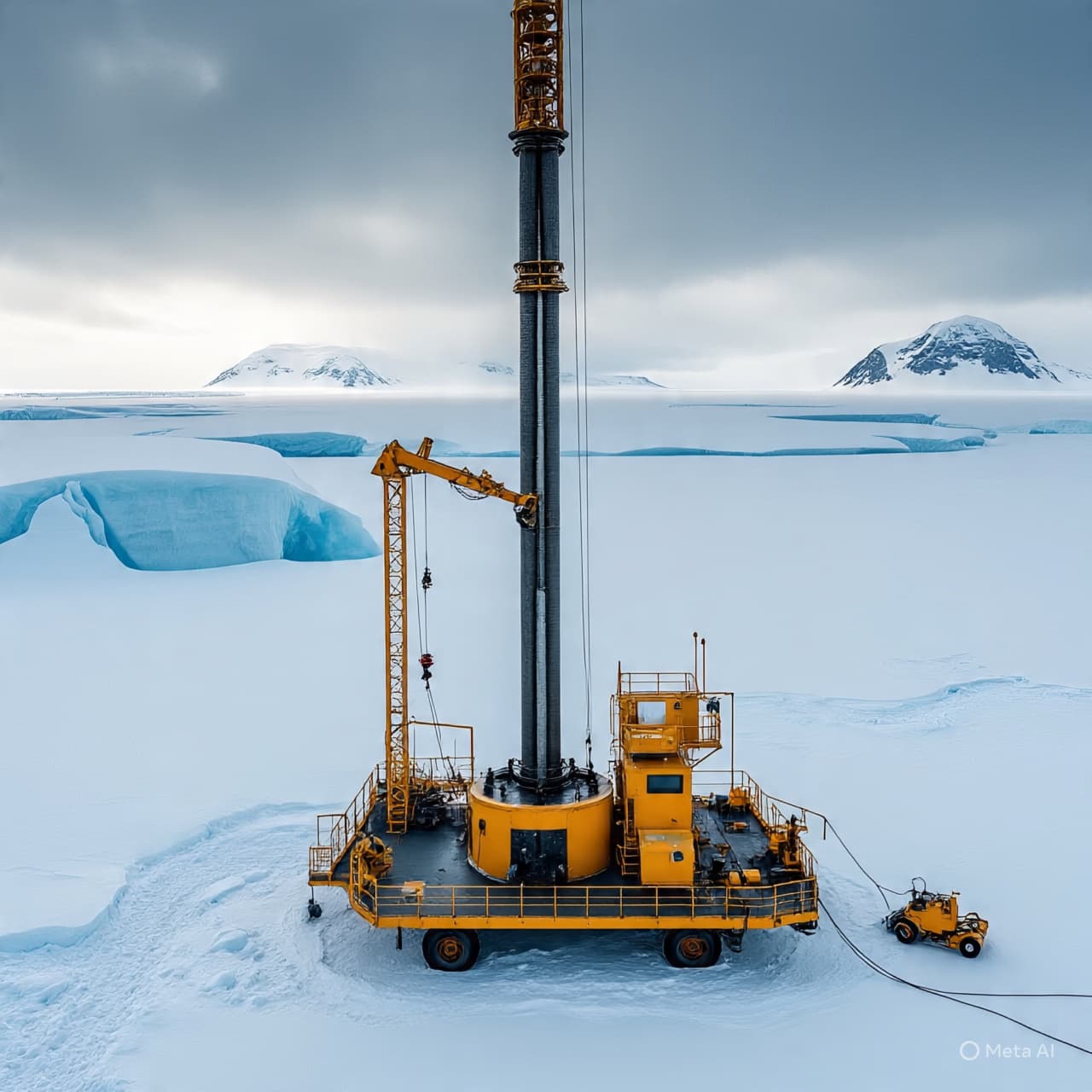
AI Image Disclaimer Graphics are AI-generated and intended for representation, not reality.
Source Check
Credible mainstream and scientific sources covering this topic include:
Nature Geoscience British Antarctic Survey National Science Foundation NASA Reuters
Published by Banx Network. This article is part of the Banx decentralized media programme, powered by the BXE token on the XRP Ledger.