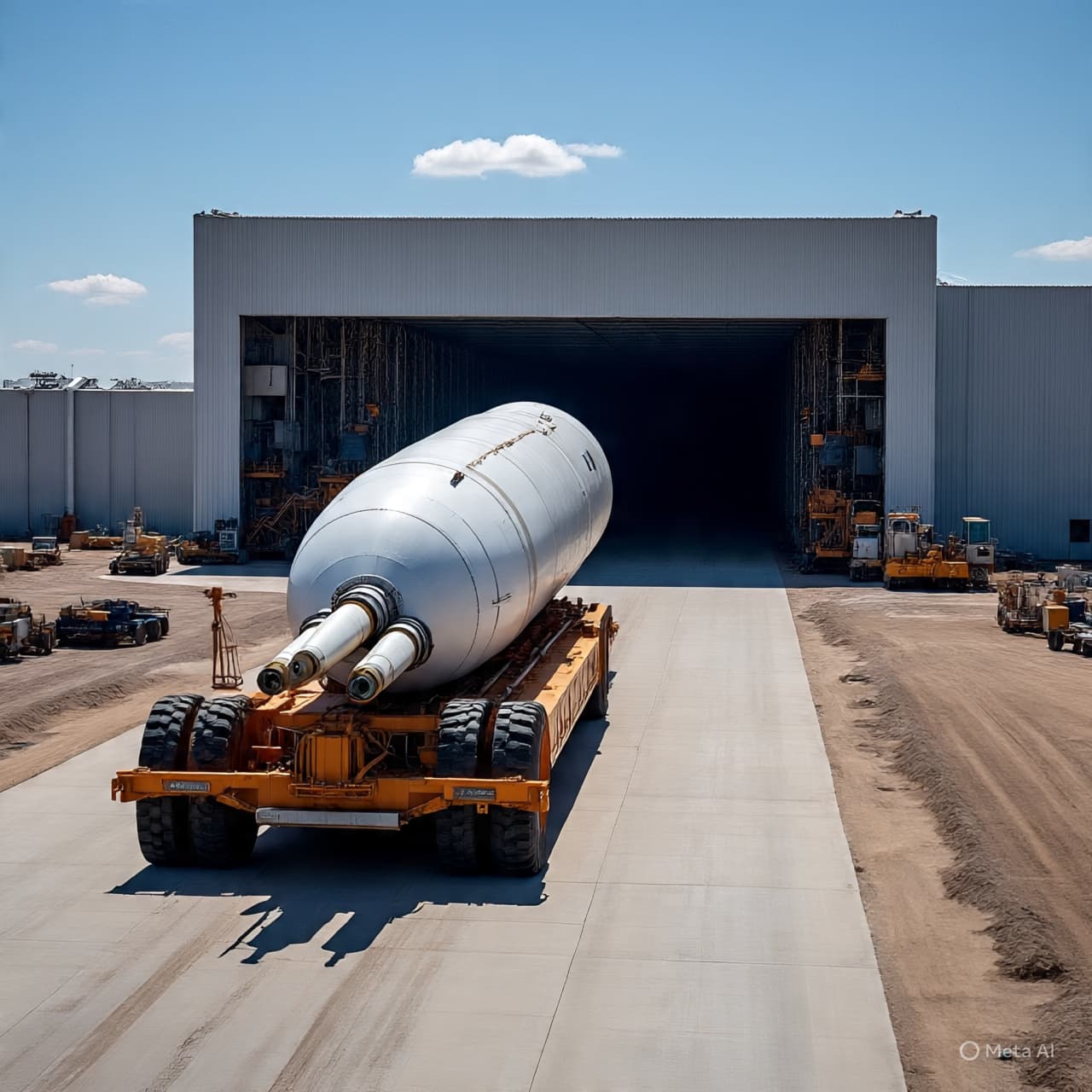
There is a certain stillness that settles over a launch pad when motion gives way to reconsideration. A rocket, upright against the sky, often symbolizes momentum and anticipation. Yet sometimes progress is expressed not in ascent, but in retreat — a careful step backward so that the next stride forward may be steadier.
That quiet recalibration now surrounds Artemis II, as prepares to roll back the Space Launch System rocket and Orion spacecraft from the launch pad. The decision reflects not urgency, but attentiveness — the kind that has long defined the more cautious chapters of space exploration.
Rolling back a rocket is not a gesture of doubt. It is a procedural necessity when engineers determine that additional inspections, technical adjustments, or hardware refinements are best conducted inside the shelter of the Vehicle Assembly Building. The journey from pad to building is slow and deliberate, the towering stack inching along a crawler-transporter at a walking pace. It is a choreography familiar to Florida’s Kennedy Space Center, where patience often partners with ambition.
Artemis II represents a pivotal step in NASA’s renewed lunar ambitions. Unlike Artemis I, which flew uncrewed, this mission is intended to carry astronauts on a lunar flyby, testing life-support systems and validating the Orion spacecraft’s readiness for deep space with humans aboard. Every valve, seal, software sequence, and structural interface must meet rigorous standards. In that context, rollback becomes less a setback and more a safeguard.
Reports indicate that the move will allow teams to address outstanding technical items and continue evaluations that are difficult to complete at the pad. Large integrated systems — particularly those as complex as the Space Launch System and Orion — demand environments where access is controlled and conditions are stable. The Vehicle Assembly Building offers precisely that.
Spaceflight history is filled with such pauses. The path to orbit or beyond is rarely a straight line; it bends around engineering realities and human responsibility. The Artemis program itself has seen schedule shifts before, reflecting the scale of its objectives. The aim is not merely to revisit the Moon, but to establish a sustainable presence and lay groundwork for future missions to Mars. Such ambition tolerates no shortcuts.
For the Artemis II crew, training continues. Simulators hum. Procedures are refined. The rollback does not alter the destination, only the timing. In many ways, it affirms a central principle: that exploration demands humility before physics and prudence before spectacle.
NASA officials have indicated that further updates will follow as teams complete inspections and adjustments. A revised timeline for launch activities is expected once the required work is finished. For now, the rocket’s temporary retreat stands as a quiet testament to diligence — a reminder that in space exploration, careful preparation is itself a form of progress.
AI Image Disclaimer Graphics are AI-generated and intended for representation, not reality.
Sources
NASA
Reuters
The Associated Press
SpaceNews
Florida
Published by Banx Network. This article is part of the Banx decentralized media programme, powered by the BXE token on the XRP Ledger.