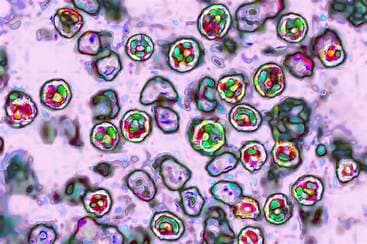
There are times when the things we cannot see change the way we feel — a breeze stirring the branches, a scent carried on air long after its source has gone. So too might nanoplastics, tiny remnants of the vast plastic world around us, move quietly through the body, altering things we might never have expected. Picture them as minuscule guests at a dinner party: unseen by most, yet influencing the rhythm of conversation between the gut and the liver, especially depending on the food on the table. In recent research, this hidden influence emerged not with a shout, but with a ripple — revealing that when diet and nanoplastics meet, the body’s inner metabolism may shift in surprising ways.
In a study conducted with mice over a period of three months, researchers sought to understand how low doses of nanoplastics — plastics so small they measure less than one micrometer — might interact with the digestive system. These particles, introduced through drinking water, never needed to pierce the gut’s defenses to leave an impression. Even without crossing that boundary, they altered the architecture of the gut’s microbial community and impacted the liver’s metabolic functions. Diet played a subtle but important role: a Western-style regimen high in fats and sugars magnified some effects, gently tilting the balance of glucose processing and weight gain in ways that differed from a standard diet.
It’s natural to think of plastics as inert, but this research underlines that even additive-free nanoplastics — the simplest fragments of widely used materials — can influence gut barrier integrity and microbiota composition. They may shift the landscape within the gut without ever consciously announcing their presence. In mice on a Western-style diet, several disruptions were more pronounced, hinting at a complex dance between diet, tiny plastic particles, and the body’s internal balance.
The liver, a central organ for energy, digestion, and detoxification, also registered these changes. Metabolic pathways that break down fats and regulate glucose were gently but clearly altered in the study’s animals. Interestingly, these effects were observed regardless of whether the nanoplastics crossed the gut barrier, suggesting that indirect mechanisms — including changes in the microbial signals sent from the gut to the liver — play a role in this emerging picture.
In the quiet unfolding of science, such findings encourage reflection on how our environment, diet, and unseen particles interact over time. The dinner table becomes more than a place of nourishment; it becomes a crossroads of tiny influences we are only beginning to map. As with all research, the journey from mice to human health effects will require further steps, careful study, and thoughtful interpretation. Still, this work adds another thread to our evolving understanding of how the smallest elements in our world might participate in the largest processes within us.
In straightforward terms: a recent study in Environmental Science: Nano found that low doses of polystyrene nanoplastics altered gut and liver metabolism in mice in ways that depended on the diet they consumed. Even without entering the bloodstream, these tiny particles changed gut microbiota composition, gut barrier integrity, fat metabolism, and glucose processing — with effects varying between standard and Western-style diets
AI Image Disclaimer Graphics are AI-generated and intended for representation, not reality.
Sources NutritionInsight Phys.org EurekAlert! Yahoo/Health news Environmental Science: Nano (journal)
Published by Banx Network. This article is part of the Banx decentralized media programme, powered by the BXE token on the XRP Ledger.