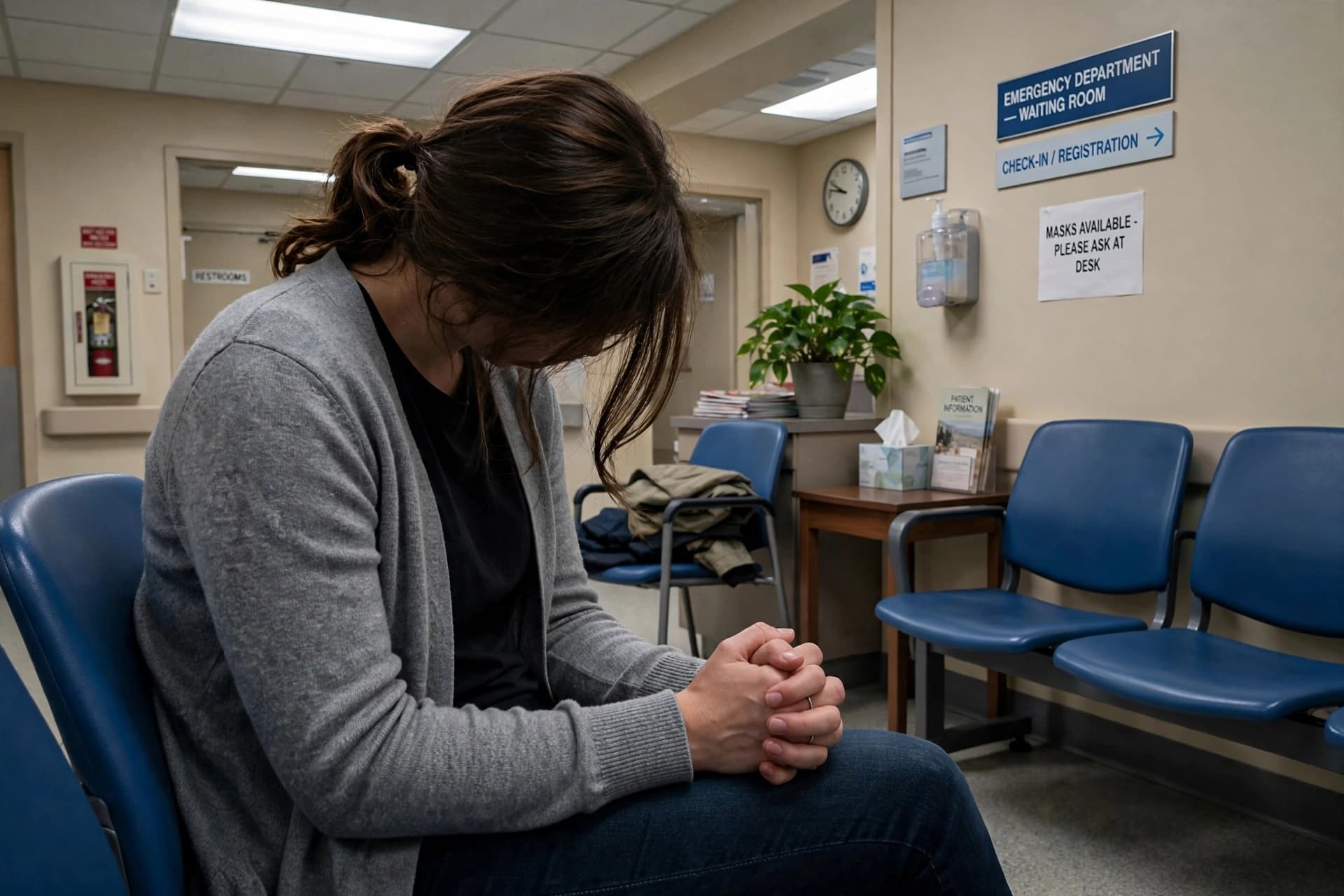
There is a particular kind of exhaustion that comes from being disbelieved—not once, not twice, but for years. It is a weariness that settles into the body, compounding the pain it already carries. For many women living with endometriosis in Canada, this exhaustion has become inseparable from the condition itself, a chronic illness compounded by a chronic failure of recognition. The pain begins, persists, and is too often dismissed as something women must simply endure. Now, some are choosing to leave the country for the care they cannot access at home.
Noelle Menu, a thirty-seven-year-old supply-chain systems adviser from Calgary, is one of them. Her pain began at twenty-six, when she and her husband decided to try for children. It came to define her life, limiting her work, forcing her to halve her hours, and sending her to emergency rooms without lasting relief. After years of delays, a hysterectomy, and waitlists stretching into the distance, she was told it would be three to four years before she could see a specialist . "It was literally destroying my life," she said. "We can't deal with it in Canada" .
Menu and her husband drained their savings and went into debt to travel to Tijuana, Mexico, for private treatment at a clinic called EndoGlobal. The cost was approximately thirty-five thousand dollars, including airfare and a multi-day hotel stay . For Vanessa Papiernik, a veterinarian in Victoria, the wait was even longer—roughly thirty years before she received a diagnosis, a journey that included a cancer scare when a colonoscopy revealed a mass that turned out to be endometriosis infiltrating her colon .
The numbers behind these individual stories are stark. A November 2025 report by the House of Commons health committee found that Canada is doing a "poor" job of providing care for endometriosis, which affects one in ten women . The average time to diagnosis is five years, with some women waiting up to twenty. Even after diagnosis, it can take six to eighteen months to see a specialist and up to twenty-four months for surgery. The lost productivity costs the Canadian economy an estimated two and a half billion dollars annually .
The report identified gender bias as a significant factor. Alongside a taboo around discussing menstrual issues, there is a persistent assumption that this kind of pain is "just part of being a woman" . Dr. Jorge Zavala, one of the founders of EndoGlobal, explained that the problem often begins with training. "As a doctor, if you're not trained in something, you're not going to be able to diagnose it," he said. "It could be poking your eye, but if you are not trained to see it, you're not going to see it" .
For the women who travel to Mexico, the decision is not made lightly. It is a choice forced by a system that has not given them another option. The surgery they seek is not experimental or extraordinary; it is the standard of care that Canadian specialists provide, but only for those who can wait years to receive it. The journey south is a measure of desperation, and it is also a measure of what happens when a health system fails to take women's pain seriously.
AI Image Disclaimer: The images accompanying this article are AI-generated and are intended for illustrative purposes only.
Sources:
· CBC News · Yahoo News Canada · Radio-Canada
Published by Banx Network. This article is part of the Banx decentralized media programme, powered by the BXE token on the XRP Ledger.