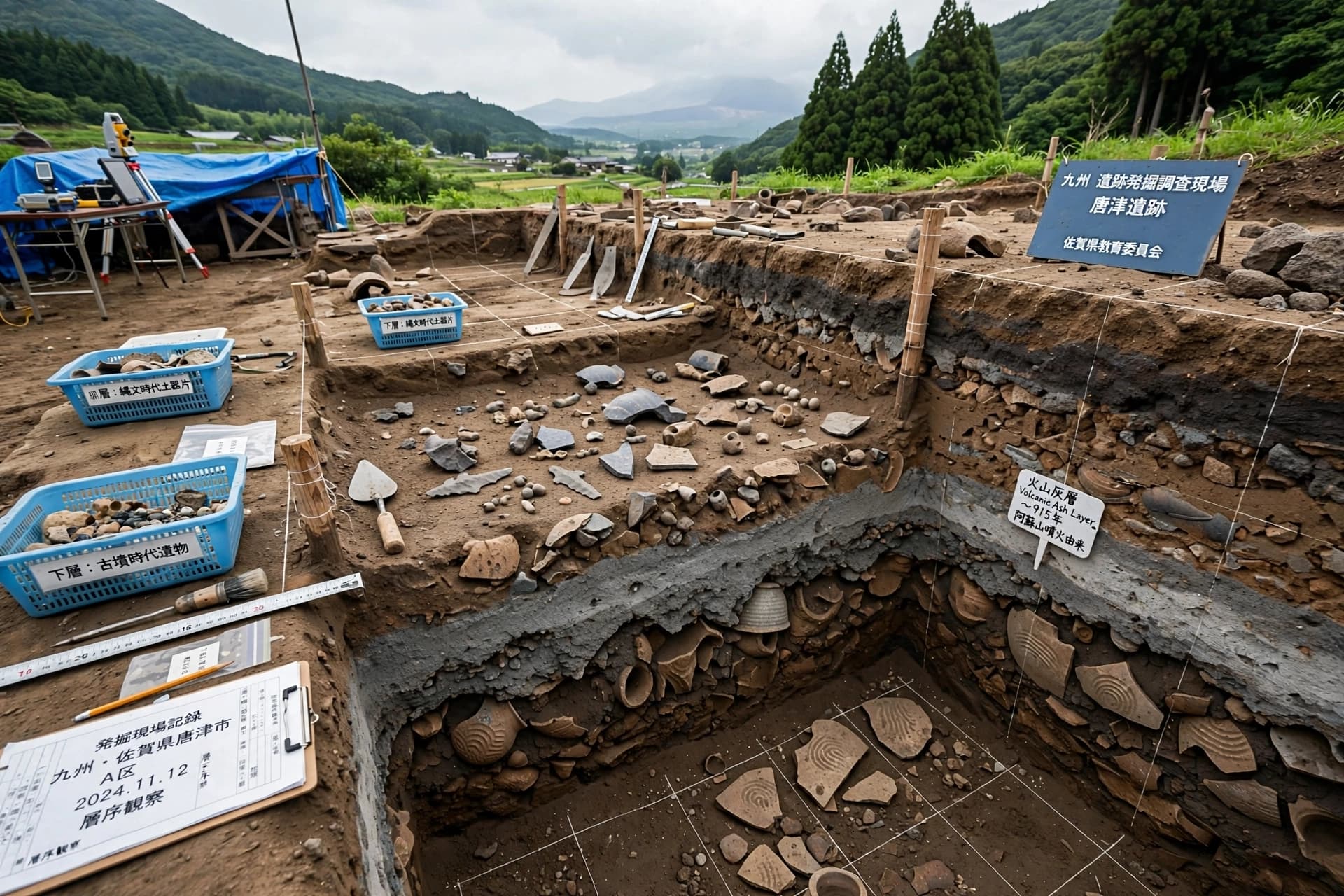
Time has a way of pressing its stories into stone, leaving behind traces so subtle they can wait hundreds of millions of years to be noticed. In the layered silence of ancient fossils, formed when life on Earth was still experimenting with complexity, scientists have now found a chemical signature that gently expands our understanding of the planet’s long and patient carbon cycle. It is not a dramatic revelation, but a quiet one, emerging from rocks that predate forests, dinosaurs, and even familiar oceans.
The discovery centers on a compound preserved within 500-million-year-old fossils, dating back to the Cambrian period. Using modern analytical techniques, researchers identified organic molecules that appear to have survived extraordinary spans of geological time. These compounds suggest that early life played a more direct role in locking carbon into sediments than previously understood, offering a glimpse into how Earth regulated its atmosphere during a critical chapter in its biological history.
Rather than portraying ancient organisms as passive residents of a hostile planet, the findings suggest they were active participants in shaping environmental balance. As microscopic life settled into sediments and became fossilized, carbon was carried with it, slowly removed from circulation. Over immense stretches of time, this process may have helped stabilize climate conditions, creating space for more complex life to emerge. The fossils, long studied for their shapes and structures, now speak through chemistry as well as form.
What makes the research especially meaningful is its continuity with the present. Earth’s carbon cycle remains central to discussions about climate and stability, and these ancient compounds provide a reminder that the system has always been influenced by life itself. The mechanisms were slower, quieter, and governed by different forces, yet the principle remains familiar: biology and geology move together, shaping the planet through mutual influence.
Scientists caution that this discovery does not overturn existing models, but refines them. It adds detail to a picture already sketched by decades of research, reinforcing the idea that carbon storage has deep biological roots. Each fossil, in this sense, becomes more than a remnant of past life. It becomes a record of Earth’s long negotiation with its own atmosphere.
As studies continue, researchers hope to identify similar compounds in fossils from other periods, gradually building a more complete map of how carbon moved through ancient ecosystems. For now, the finding stands as a reminder that even after half a billion years, the planet’s earliest life still has something new to tell us.
AI Image Disclaimer (Rotated Wording) Visuals are created with AI tools and are not real photographs.
Sources Nature Science Advances Smithsonian Magazine BBC Science Phys.org
Published by Banx Network. This article is part of the Banx decentralized media programme, powered by the BXE token on the XRP Ledger.