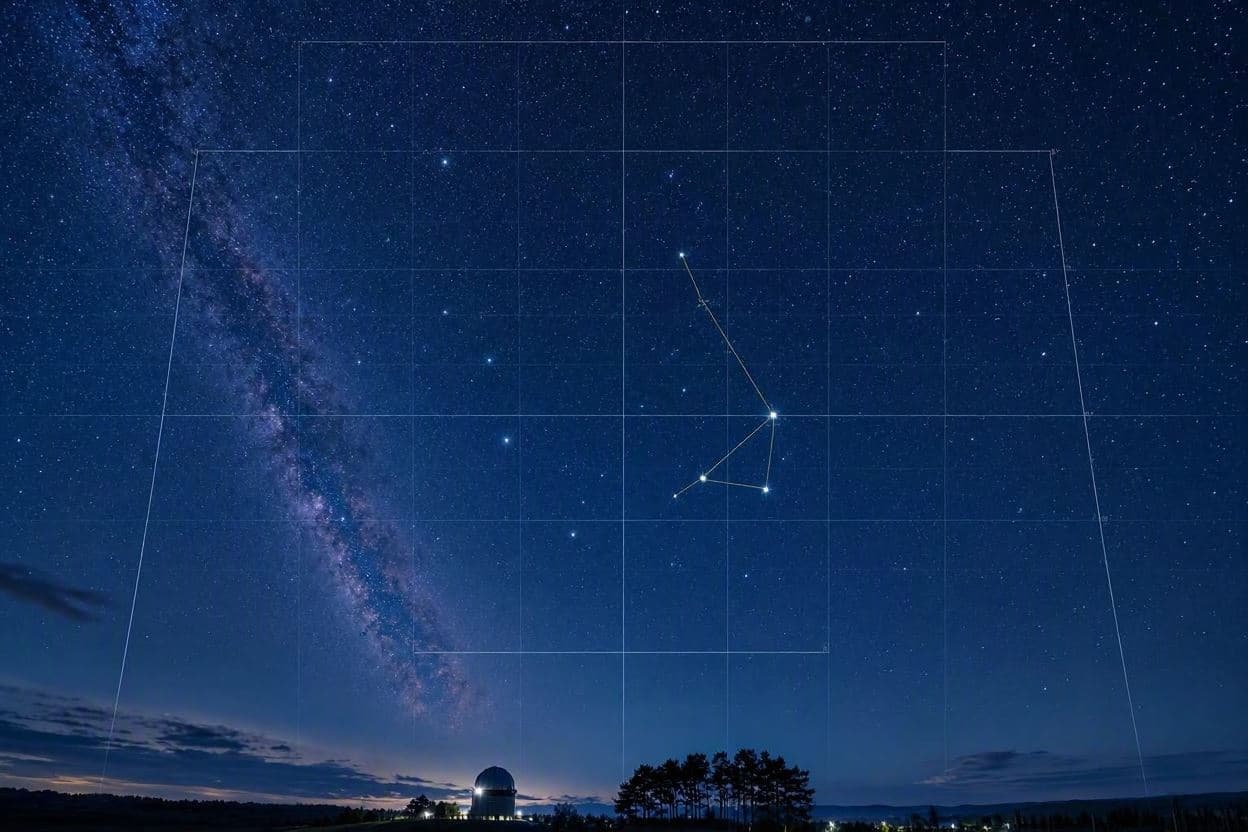
In the quest to map the universe, certain patches of sky become legendary for the wealth of data they hold. The COSMOS field, a region in the constellation Sextans, is one such area, having been studied extensively by some of the world’s most powerful telescopes. Now, the upcoming Vera C. Rubin Observatory is preparing to add its own profound layer of insight, promising to reveal the dynamic changes within this well-known cosmic window.
The COSMOS field has been a target for major observatories like Hubble, Chandra, and Spitzer, providing a multi-wavelength view of galaxy evolution. However, these previous studies offered static snapshots. The Rubin Observatory, with its wide-field camera and rapid survey capability, will monitor this region repeatedly over ten years. This approach shifts the focus from static structure to temporal change, capturing the transient events that define the life of the universe.
By peering deep into COSMOS, Rubin will detect millions of galaxies, many of which have never been seen before. Its sensitivity allows it to spot faint dwarf galaxies and distant quasars, filling in the gaps of our cosmic census. More importantly, it will observe how these objects change over time, from supernova explosions to the shifting brightness of active galactic nuclei.
This time-domain astronomy is crucial for understanding the processes that drive galaxy formation and black hole growth. The data from Rubin will help scientists track the history of star formation and the distribution of dark matter in unprecedented detail. It transforms the COSMOS field from a static portrait into a living movie, revealing the rhythm and pace of cosmic evolution.
The observatory’s location in Chile provides clear skies and optimal viewing conditions for this deep survey. Engineers and scientists are currently finalizing the instrumentation and data processing pipelines to handle the immense volume of information that will be generated. Each night, Rubin will capture terabytes of data, requiring advanced artificial intelligence to identify and classify interesting events in real time.
For the astronomical community, the Rubin survey of COSMOS represents a collaborative milestone. It builds upon decades of previous work, integrating new observations with existing datasets to create a comprehensive picture of the universe. This synergy enhances the value of every telescope involved, demonstrating the power of coordinated scientific effort.
As we await the first light from the Rubin Observatory, anticipation grows for what lies hidden in the familiar depths of COSMOS. It is a reminder that even in the most studied corners of the sky, there are still mysteries waiting to be uncovered. With each new glance, we deepen our connection to the vast and evolving cosmos.
AI Image Disclaimer: The images used in this report are AI-generated visuals created to illustrate the concept of wide-field astronomical surveys.
Sources: NSF, SLAC National Accelerator Laboratory, Astronomy Magazine
Published by Banx Network. This article is part of the Banx decentralized media programme, powered by the BXE token on the XRP Ledger.