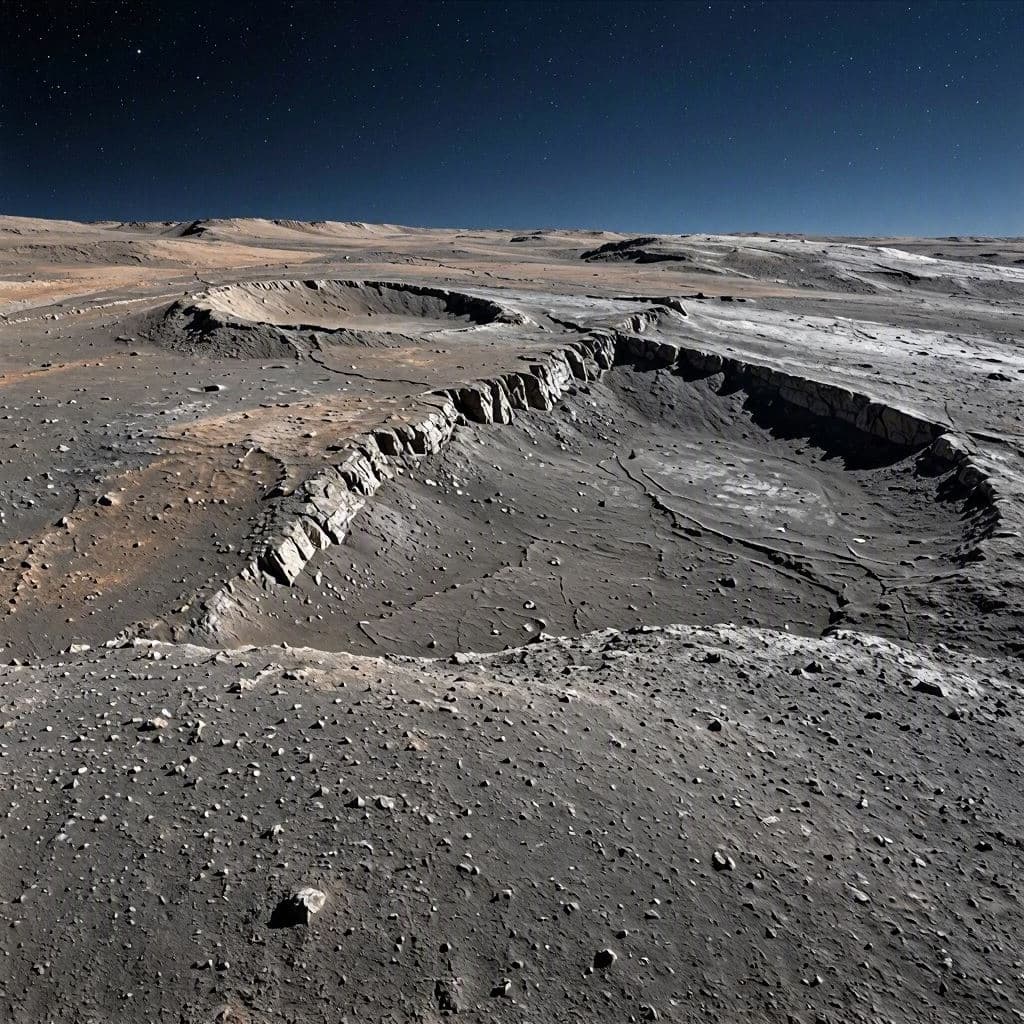
In the silent, scorched vicinity of the sun, the planet Mercury has long been a subject of scientific curiosity. Known for its extreme temperatures and cratered surface, it was already understood to be contracting as its interior cooled. However, new analysis of data from NASA’s MESSENGER mission has revealed that this shrinkage is far more extensive and geologically active than previously thought, reshaping our understanding of the smallest planet in our solar system.
For years, scientists believed that Mercury’s contraction was a slow, steady process, resulting in a global reduction of radius by about seven kilometers over its history. But recent studies suggest that the planet has lost significantly more volume, with some estimates indicating a reduction of up to ten kilometers. This difference, while seemingly small in planetary terms, represents a massive release of energy and stress within the planet’s crust, driving ongoing geological activity.
The evidence lies in the intricate network of lobate scarps and wrinkle ridges that crisscross Mercury’s surface. These features are essentially thrust faults, where one part of the crust has been pushed over another due to compression. High-resolution images show that many of these faults are young, suggesting that the planet is still actively shrinking today. This challenges the notion that Mercury is a dead, static world, revealing it instead as a dynamic body with a living geology.
The implications for planetary science are profound. If Mercury is still contracting, it means that its interior is cooling at a rate that sustains tectonic activity. This provides valuable insights into the thermal evolution of rocky planets, including Earth. By studying how Mercury handles the stress of contraction, scientists can better model the internal processes of other terrestrial bodies, enhancing our understanding of planetary formation and decay.
Furthermore, the discovery highlights the importance of detailed orbital missions. The MESSENGER spacecraft, which orbited Mercury from 2011 to 2015, provided a wealth of data that continues to yield surprises years after its mission ended. Each new analysis peels back another layer of mystery, demonstrating that even well-studied objects can hold hidden secrets. It is a reminder that exploration is an iterative process, with each answer leading to new questions.
For astronomers, the active nature of Mercury also affects how we interpret its magnetic field and exosphere. The outgassing associated with tectonic activity may contribute to the thin atmosphere that surrounds the planet. Understanding these connections helps build a more holistic picture of Mercury’s environment, linking its internal dynamics to its external characteristics.
As we look toward future missions, such as the European Space Agency’s BepiColombo, the focus will likely shift to monitoring these active faults in real-time. The goal is to capture the planet in the act of changing, providing direct evidence of its ongoing contraction. Until then, Mercury remains a fascinating puzzle, shrinking slowly but surely under the watchful eye of human curiosity.
AI Image Disclaimer: The images used in this report are AI-generated visuals created to illustrate the geological features and contraction of Mercury.
Sources: NASA, Nature Geoscience, Smithsonian Magazine
Published by Banx Network. This article is part of the Banx decentralized media programme, powered by the BXE token on the XRP Ledger.