
Key Highlights
- SpaceX's Starship test is set to redefine space travel.
- NASA's reliance on SpaceX raises questions about future missions.
- The Falcon 9 rocket, likened to a minivan, may soon be retired.
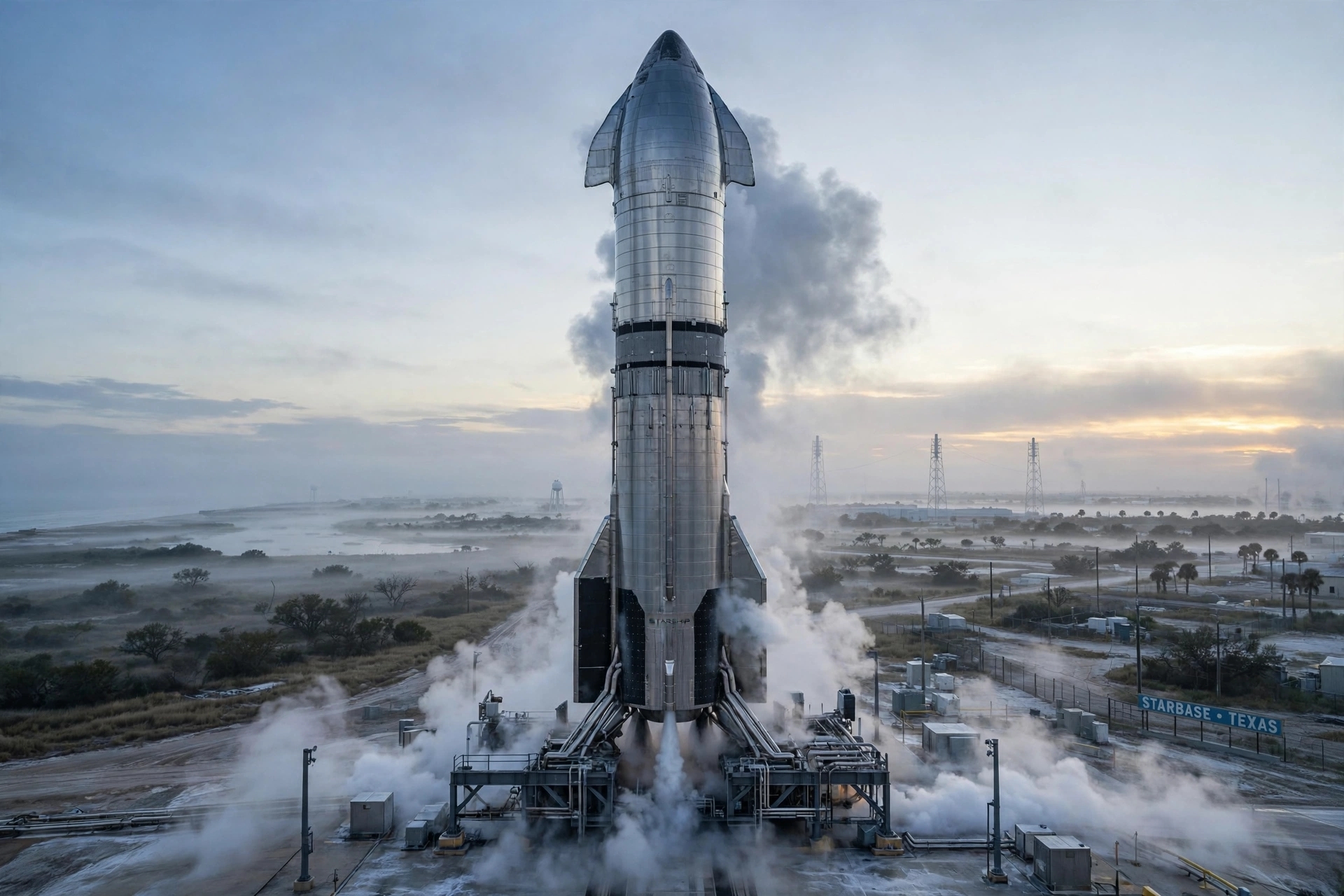
As SpaceX gears up for the most ambitious test of its Starship rocket, the dynamics of its relationship with NASA are shifting dramatically. Scheduled to launch from South Texas, Starship aims to circle the Earth and return to the same pad within twenty-two and a half hours. This monumental test not only represents a significant milestone for SpaceX but also raises critical questions about NASA's future in human spaceflight.
For over a decade, NASA has been a crucial partner for SpaceX, providing contracts that have kept the company afloat during its formative years. Elon Musk's emotional recollection of NASA's support in 2008 underscores the depth of this relationship. However, as SpaceX's ambitions grow, the question now is whether NASA can continue to rely on a partner that has outgrown its initial role.
The financial landscape has shifted significantly. SpaceX's revenue from launch contracts with NASA is dwarfed by its earnings from other ventures, including its satellite internet service, Starlink, which generated approximately $12.8 billion. In contrast, the revenue from NASA contracts is described as 'small potatoes' by industry analysts. Tim Farrar of TMF Associates noted that while individual missions may be profitable, they do not compare to the scale of SpaceX's other operations.
NASA's current reliance on SpaceX is underscored by its recent announcement of three additional Crew Dragon flights to the International Space Station (ISS), which will extend the operational life of the Dragon capsule through 2028. However, with the ISS set to retire in 2030, the urgency for alternative solutions is palpable. Boeing's Starliner, intended as a backup, has faced its own set of challenges, leaving NASA in a precarious position.
Gwynne Shotwell, SpaceX's President, has characterized the Falcon 9 rocket as akin to a minivan, suitable for short trips to the ISS but inadequate for the long journey to Mars. This analogy highlights the limitations of the current spacecraft in meeting future demands. A recent analysis by Quilty Space suggests that the commercial market may face a shortfall of around 150 launches by 2030, further complicating NASA's mission to maintain a steady flow of astronauts to the ISS.
The loyalty question looms large in this evolving narrative. As Tim Farrar pointed out, many may feel a sense of betrayal that NASA, which played a pivotal role in SpaceX's survival, is now facing a future where its most reliable partner has other priorities. While loyalty is a noble sentiment, it does not sustain business operations. The reality is that SpaceX has transformed into a powerhouse that is no longer solely dependent on NASA.
As the landscape of commercial spaceflight continues to evolve, NASA must adapt to the shifting priorities of SpaceX. The agency's ability to navigate this transition will be crucial in determining its future role in human space exploration. The upcoming Starship test is not just a milestone for SpaceX; it is a pivotal moment that could redefine the relationship between these two giants of the space industry.
The images in this article are AI-generated illustrations and are not actual photographs of the rockets or facilities.
Published by Banx Network. This article is part of the Banx decentralized media programme, powered by the BXE token on the XRP Ledger.