Time is usually a linear progression, moving steadily from dawn to dusk. But in certain places and at certain moments, the sky plays tricks on our perception, offering a spectacle that defies the ordinary rhythm of day and night. In a small village in Spain, residents and visitors will soon experience a rare phenomenon: darkness falling twice in a single night. This event, caused by a total solar eclipse, will transform the familiar into the extraordinary, inviting observers to pause and witness the celestial mechanics that govern our world.
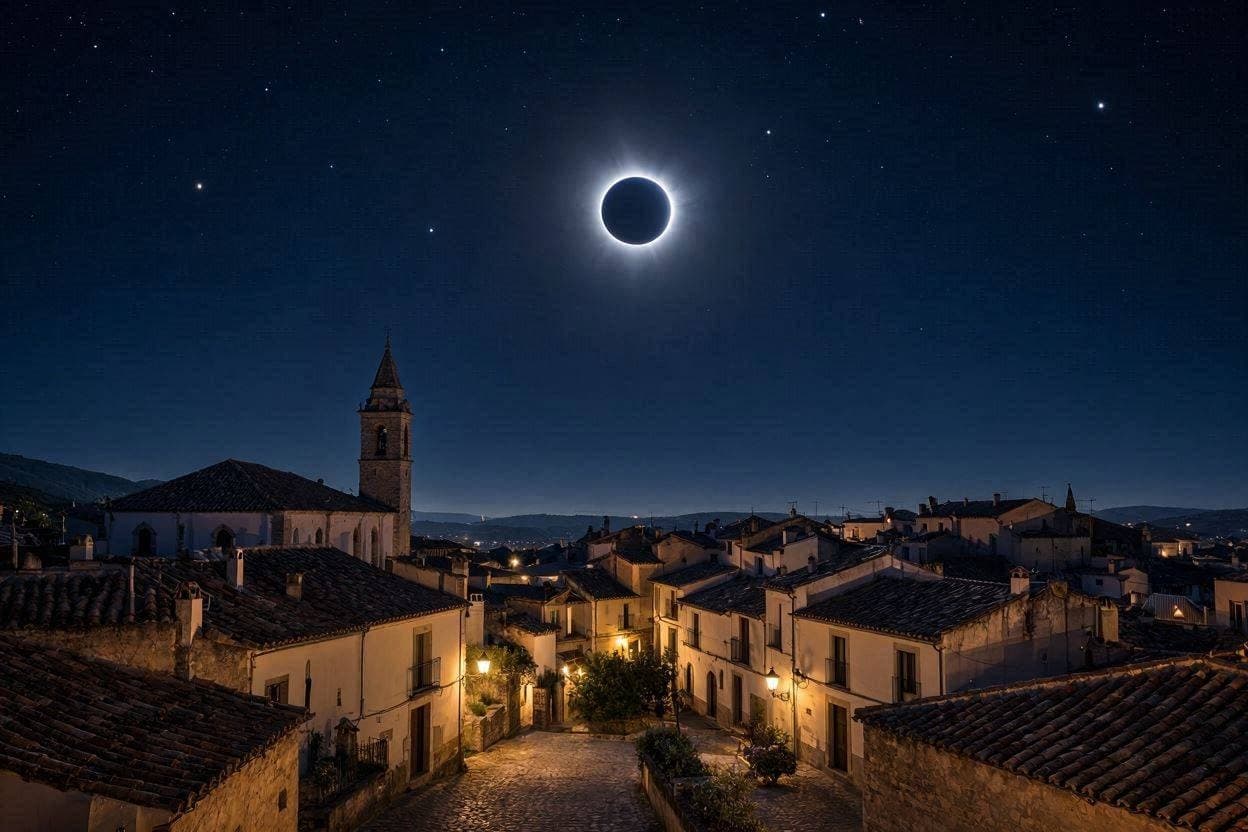
The village, located within the path of totality for the upcoming solar eclipse, will see the moon completely cover the sun during the late afternoon. As the shadow sweeps across the landscape, daylight will vanish, replaced by an eerie twilight. Stars will emerge, birds will roost, and temperatures will drop, creating a surreal atmosphere that lasts for a few precious minutes. Then, as the moon moves on, the sun will return, bringing back the light of day.
However, because the eclipse occurs in the evening, the sun will set shortly after totality ends. This means that the village will experience darkness once during the eclipse and again when night naturally falls. For locals, this double descent into darkness is a unique occurrence, blending the scientific wonder of an eclipse with the poetic beauty of a sunset. It is a moment where astronomy and nature align to create a memorable experience.
Such events draw enthusiasts from around the world, eager to capture the phenomenon through cameras and telescopes. The influx of visitors brings economic benefits to the small community, with local businesses preparing for the surge in tourism. Hotels, restaurants, and shops anticipate a busy period, highlighting how celestial events can impact local economies in unexpected ways.
For scientists, the eclipse offers valuable data on the sun’s corona and its effects on Earth’s atmosphere. Researchers will be stationed in the village to conduct observations, adding to the global understanding of solar activity. The combination of public engagement and scientific inquiry makes the event a celebration of knowledge and curiosity.
The cultural significance of eclipses has deep roots in Spanish history. Past eclipses have been recorded in local chronicles, often interpreted as omens or divine messages. Today, they are viewed through the lens of science, but the sense of awe remains unchanged. The village’s participation in this tradition connects the present to the past, honoring a shared human fascination with the sky.
Safety is a priority during such events. Authorities will provide guidance on proper viewing methods, ensuring that residents and tourists can enjoy the spectacle without risking eye damage. Eclipse glasses and educational workshops will be available, making the event accessible and safe for all ages.
The tiny Spanish village preparing for double darkness is a testament to the wonder of the universe. As the sun disappears and returns, only to set again, the community will share in a moment of collective awe, reminded of the delicate balance that sustains life on Earth.
AI Image Disclaimer: The images associated with this article are AI-generated illustrations designed to represent the themes of solar eclipses and rural tourism.
Sources: Time and Date, NASA Eclipse Website, El País, Royal Museums Greenwich
Published by Banx Network. This article is part of the Banx decentralized media programme, powered by the BXE token on the XRP Ledger.