There is a particular kind of scandal that emerges from the world of political fundraising—a scandal that involves not policy or ideology but money and access, that asks whether the line between donation and bribery has been crossed, and that leaves the participants pointing fingers at one another while the public tries to discern where the truth lies. In Washington, that scandal has now arrived. A major Trump donor has accused Kimberly Guilfoyle, a former Fox News host and one-time ambassador nominee, of demanding a $100,000 payment in exchange for access to the president and his political network. Guilfoyle has denied the allegation, calling the donor a "liar" and a "grifter."
The donor, whose identity has not been publicly disclosed, told reporters that Guilfoyle approached him with a proposal: in exchange for a six-figure payment, she would arrange meetings and events with Trump and other senior Republicans. The donor said he declined the offer and later reported it to federal investigators. The allegation, if true, would represent a serious violation of campaign finance laws, which prohibit the exchange of money for political access or influence.
Guilfoyle's legal team issued a statement denying the allegation. "Kimberly Guilfoyle has never demanded or received payment in exchange for access to the president or anyone else," the statement read. "These allegations are false and defamatory, and we will pursue all legal remedies against those who spread them." The statement did not address the specifics of the donor's claim, and Guilfoyle has not commented publicly beyond the statement.
The dispute is part of a broader pattern of allegations and counter-allegations that have surrounded Guilfoyle in recent months. She was nominated to be ambassador to Greece but withdrew amid questions about her qualifications and her relationships with donors. She has been a prominent figure in Trump's political operation, raising money and campaigning for candidates. The donor's allegation is the most serious she has faced, and it has drawn the attention of federal investigators.
The broader context is one of a campaign finance system that is often opaque, in which donations and access are intertwined, and in which the line between the two is not always clear. The law prohibits explicit quid pro quo arrangements, but the world of political fundraising often operates in a gray area—fundraisers and bundlers are rewarded with access, ambassadorships, and other perks, and the distinction between a reward for services rendered and a bribe is not always easy to establish. The question in Guilfoyle's case is whether the line was crossed. The answer will be determined by investigators, and perhaps by the courts.
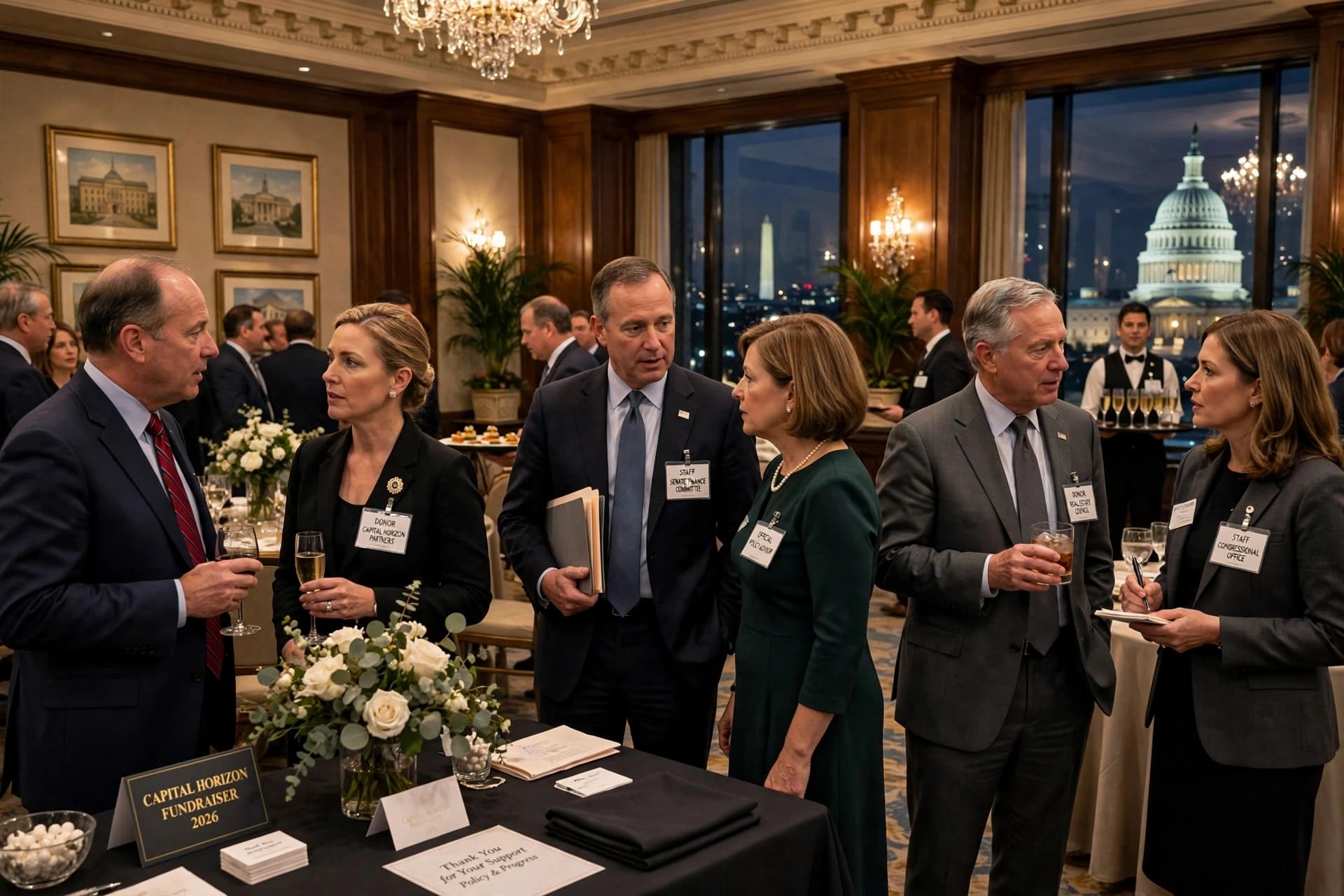
AI Image Disclaimer: All images in this article are generated by artificial intelligence and are for illustrative purposes only.
Sources: Politico, The Daily Beast, Reuters
Published by Banx Network. This article is part of the Banx decentralized media programme, powered by the BXE token on the XRP Ledger.