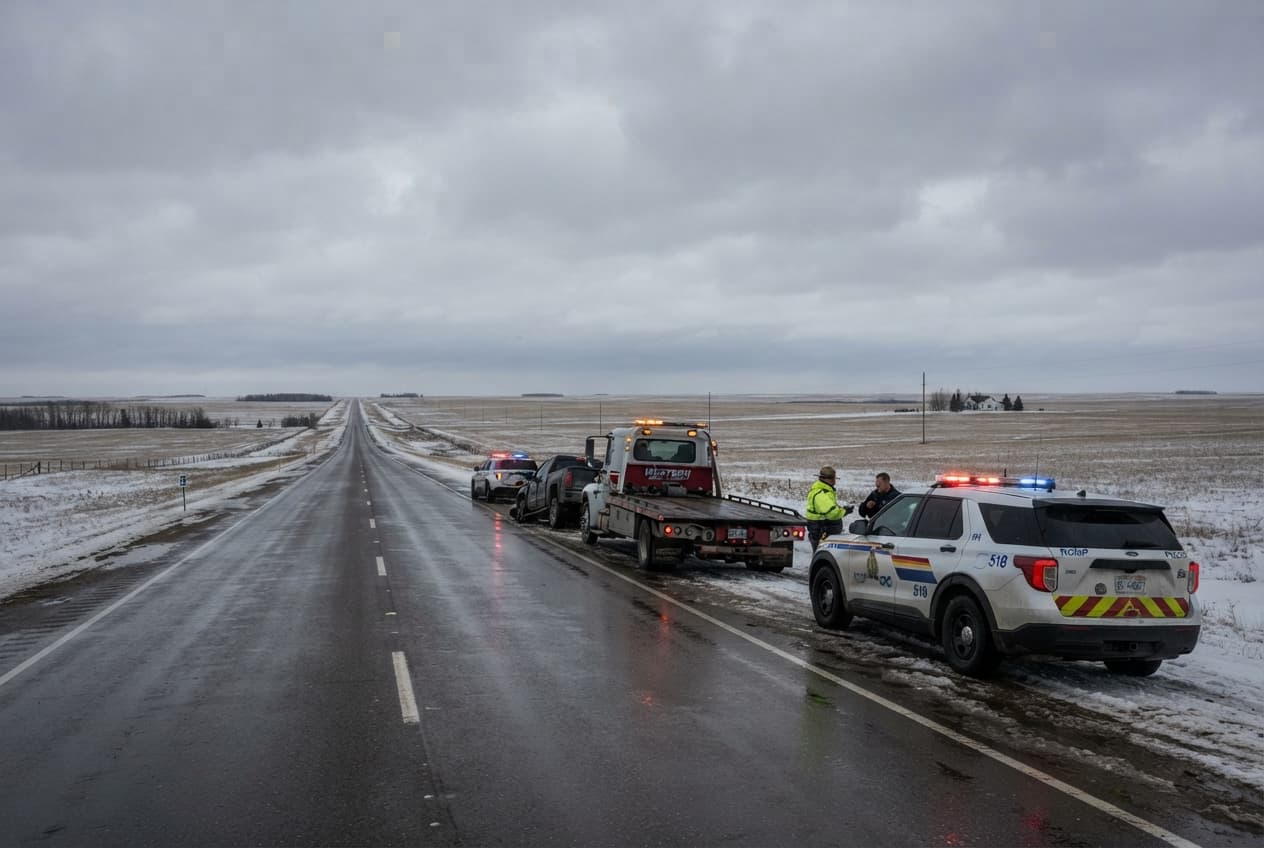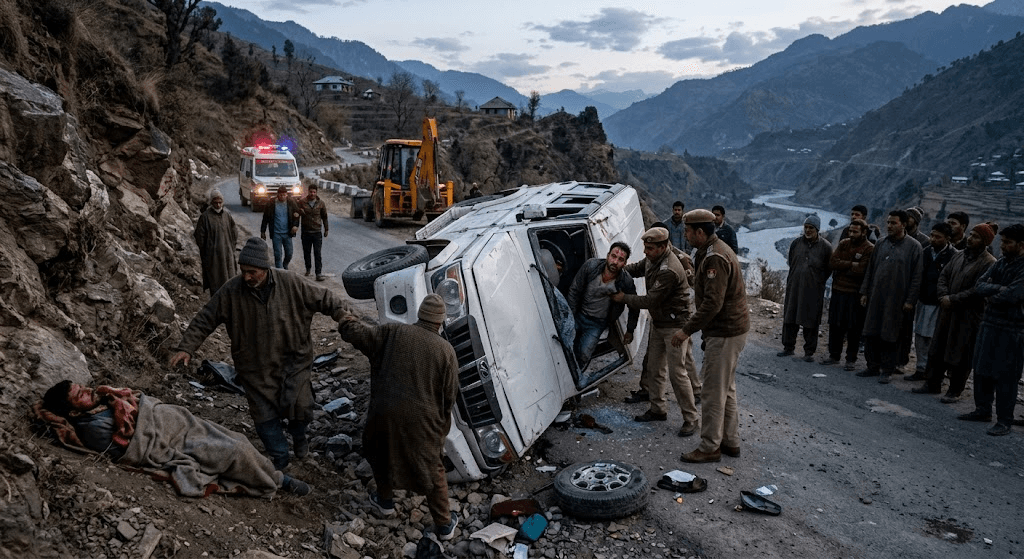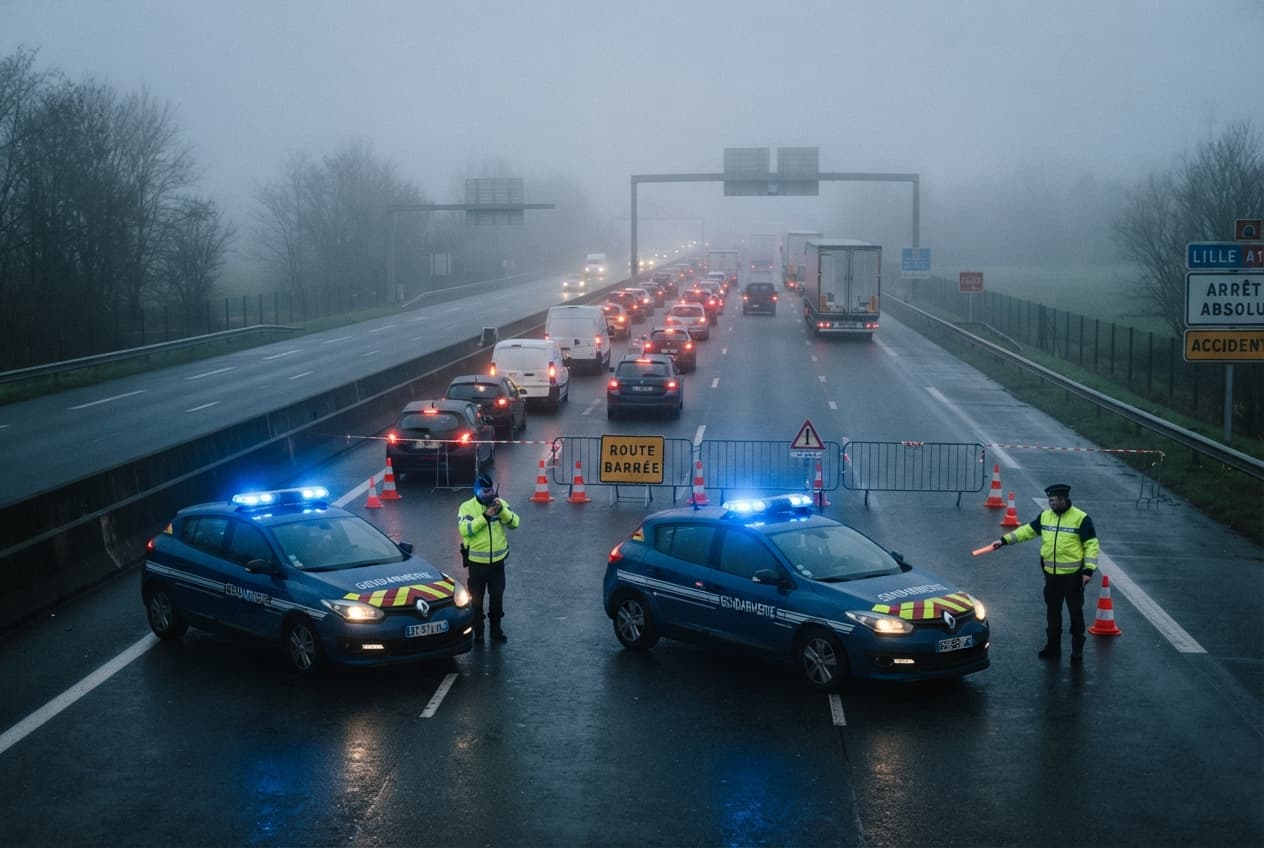
Lille, France—Emergency flashing amber lights cut through a dense blanket of early morning fog obscuring the multi-lane regional highway. A catastrophic multi-vehicle pileup involving multiple passenger cars and two commercial semi-trailers left four people dead in northern France. Gendarmerie highway patrol units and emergency medical services rushed to the corridor following a cascade of violent rear-end impacts. First responders encountered a chaotic scene of twisted metal and shattered glass spanning hundreds of meters of asphalt.
Paramedics confirmed that four motorists died at the scene due to severe impact trauma before medical evacuation could begin. Several other injured individuals were extracted from crushed cabins using hydraulic rescue tools and transported to regional trauma centers. Traffic along the vital commercial corridor ground to an immediate halt, stranding thousands of freight and passenger vehicles. Highway authorities established emergency diversion routes, routing traffic onto congested secondary regional roads.
Collision reconstruction specialists walked the foggy asphalt lane by lane, documenting tire marks and measuring vehicle resting positions. Initial meteorological data indicates sudden banks of thick morning fog severely reduced visibility limits across the open plain. Investigators examined the electronic tachographs of the commercial trucks involved to verify speed limits and rest periods. Transport safety inspectors reviewed roadway warning systems to determine whether visibility hazard advisories were active.
Regional freight transport associations expressed deep concern over high-speed driving habits during adverse weather conditions on major transit routes. Lawmakers renewed calls for automated speed enforcement upgrades and intelligent fog detection sensors along high-risk highway segments. Government ministers issued statements offering condolences to the victims' families and urging extreme motorist vigilance. Emergency towing operators deployed heavy wreckers to clear the smashed vehicles from the blocked traffic lanes.
Highway maintenance crews spread absorbent materials across oil slicks and fuel spills leaking from ruptured truck tanks onto the road surface. Environmental protection officers monitored nearby drainage ditches to prevent fuel contamination of agricultural water tables. The highway corridor remained completely closed to through traffic as forensic teams completed their on-site data gathering. Stranded motorists expressed frustration over extended delays as regional transit networks absorbed the gridlock.
National gendarmerie commanders reiterated strict warnings for drivers to maintain safe following distances during periods of reduced visibility. Forensic identification units supervised the transfer of the deceased to regional medical examiner facilities for formal identification. Transport ministry officials announced an extraordinary safety review targeting high-speed transit corridors across the northern departments. The cleared highway lanes finally reopened to restricted traffic flow under heavy police monitoring late in the evening.
Published by Banx Network. This article is part of the Banx decentralized media programme, powered by the BXE token on the XRP Ledger.