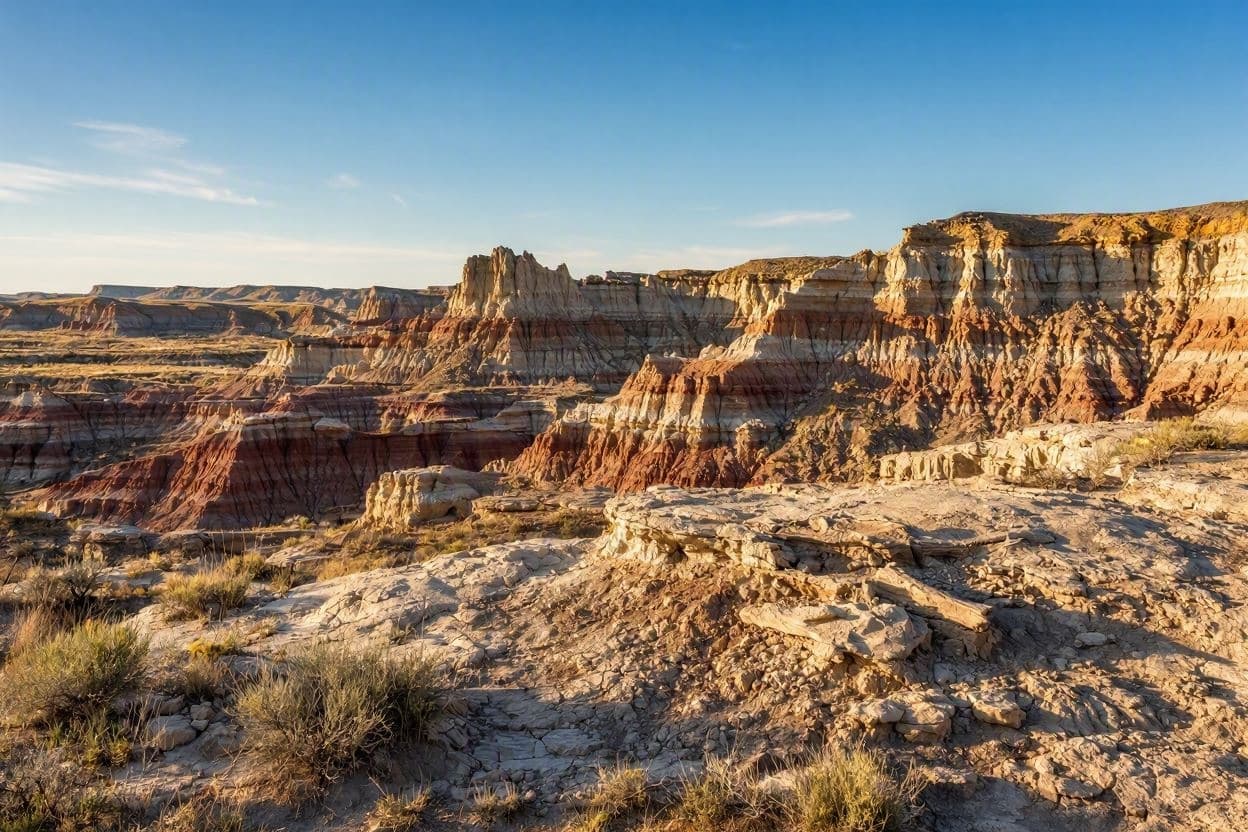
The badlands of North Dakota are a landscape of rugged beauty, where erosion has sculpted the earth into dramatic formations that whisper stories of deep time. It is here, amidst the layered rock and sparse vegetation, that a remarkable discovery has been made: the first-ever trackway of an adult Tyrannosaurus rex. These fossilized footprints offer a rare glimpse into the movement and behavior of one of history’s most iconic predators, bringing the Cretaceous period vividly to life.
The trackway consists of a series of large, three-toed prints preserved in sedimentary rock, indicating the path taken by a massive theropod millions of years ago. Unlike isolated footprints, a trackway provides context, revealing the dinosaur’s gait, speed, and direction. For paleontologists, this is akin to finding a snapshot of a moment frozen in time, allowing them to reconstruct the animal’s actions with greater precision than ever before.
The discovery was made by a team of researchers who had been surveying the area for years. Their persistence paid off when they identified the distinctive shape and size of the prints, which matched the known anatomy of T. rex. The size of the tracks suggests an individual of substantial maturity, likely weighing several tons, moving with a deliberate and powerful stride across the ancient floodplain.
This find is significant because soft-tissue traces like footprints are far rarer than bone fossils. While bones tell us about structure, tracks tell us about behavior. They reveal how the animal interacted with its environment, whether it was hunting, migrating, or simply traversing its territory. The preservation of such features requires specific geological conditions, making each discovery a fortunate accident of history.
Analysis of the trackway indicates that the T. rex was walking at a moderate pace, neither running nor standing still. This steady movement suggests a confident predator comfortable in its domain. The spacing between the prints allows scientists to estimate the hip height and stride length, providing data that complements skeletal reconstructions and biomechanical models.
The location of the trackway in the Hell Creek Formation adds to its importance, as this layer is rich in late Cretaceous fossils. It places the T. rex in a well-documented ecosystem, alongside other dinosaurs and prehistoric plants. This context helps researchers understand the ecological role of the apex predator and its interactions with other species in the region.
For the public, the discovery reignites fascination with the age of dinosaurs. It transforms T. rex from a static museum exhibit into a living, breathing creature that once walked the same earth we inhabit. The tangible connection to the past fosters a sense of wonder and curiosity about the natural world and its long history.
As studies continue, the trackway will likely yield more insights into the locomotion and social behavior of tyrannosaurs. It stands as a testament to the enduring mystery of the prehistoric world and the dedication of scientists who seek to uncover its secrets. Each footprint is a step closer to understanding the giants that once ruled the planet.
AI Image Disclaimer: Images used in this article are AI-generated to visualize the prehistoric landscape and fossil discoveries, avoiding any depiction of actual excavation sites or specific researchers.
Sources: National Geographic, Smithsonian Magazine, University of Kansas, PLOS One
Published by Banx Network. This article is part of the Banx decentralized media programme, powered by the BXE token on the XRP Ledger.