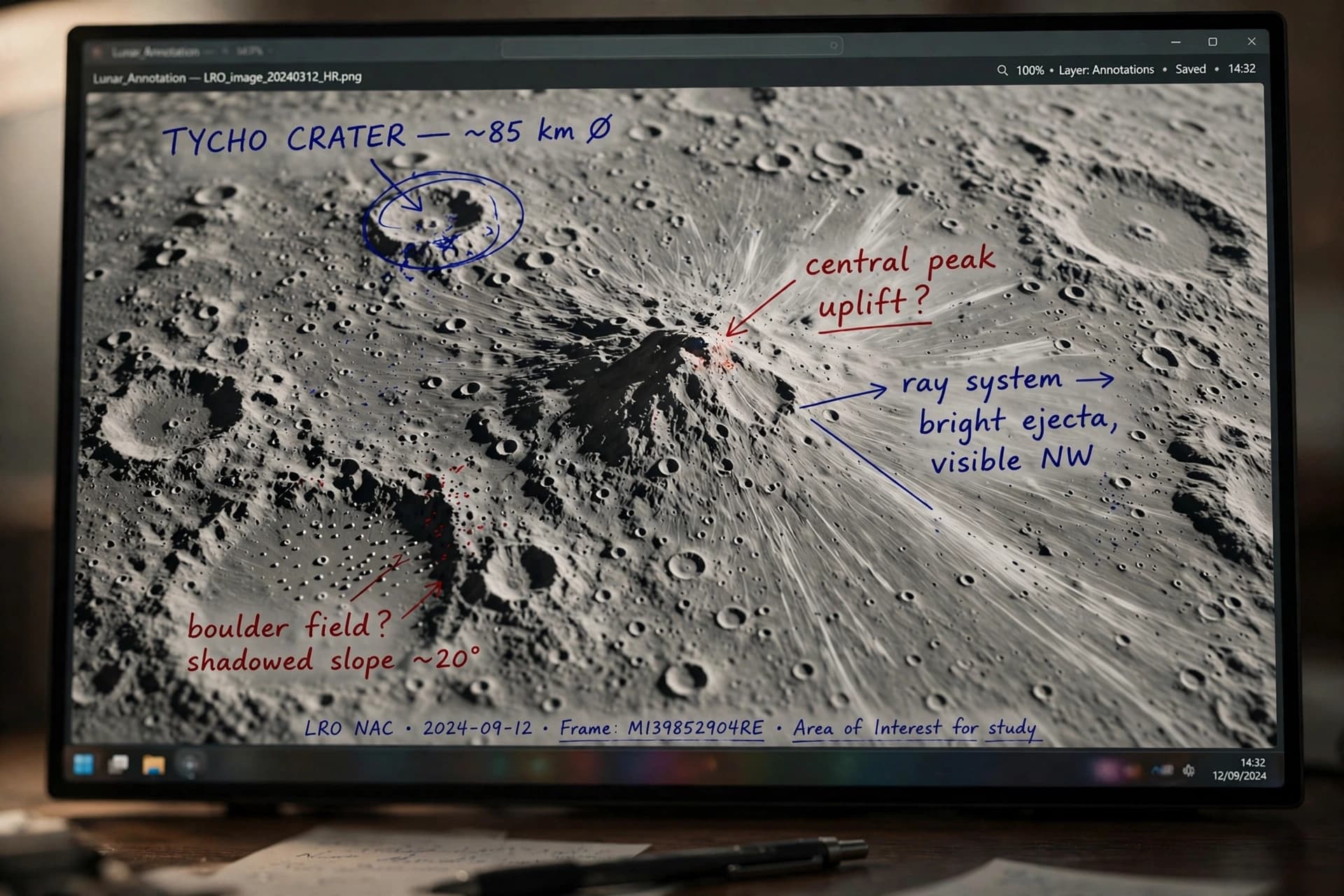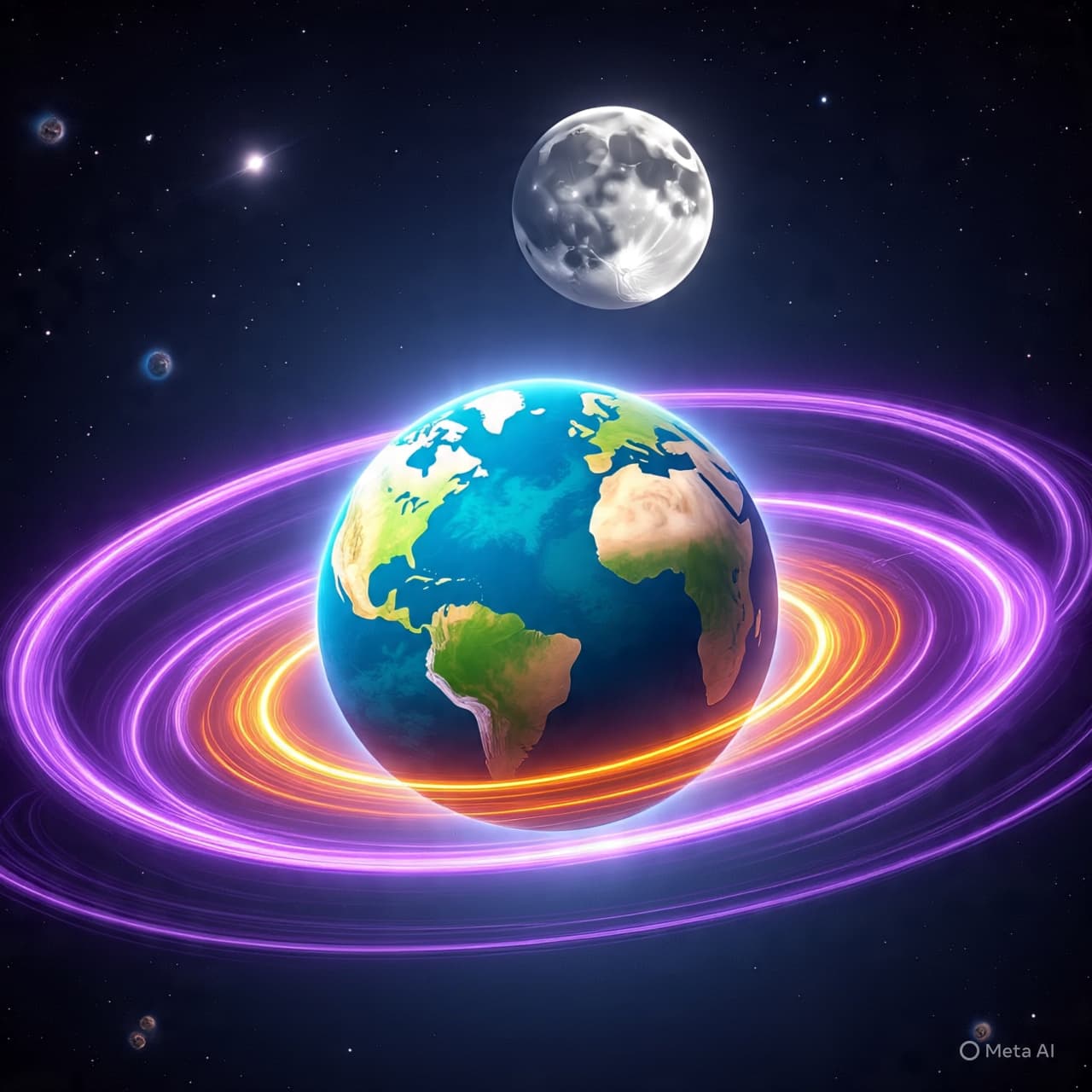
In the long, hushed symphony of the cosmos, Earth and its moon play notes that only patience can hear. We see the Moon each night — shining, serene, tethered to Earth by gravity — but beneath that quiet surface lies an unseen exchange, like whispered letters carried on a gentle wind. Over billions of years, fragments of Earth’s atmosphere have drifted outward, guided not by forceful gusts but by delicate currents of magnetic fields and the persistent push of the solar wind. What seems at first a lonely celestial dance turns out to be a tale of connection far more intimate than we once imagined.
For most of the twentieth century, scientists viewed the Moon as airless, a barren place where an atmosphere was a mere illusion. Yet analysis of lunar soil brought back by astronauts during the Apollo missions — samples of regolith untouched for millennia — has begun to rewrite that notion. Embedded within this dust, researchers have now identified molecules that carry the signature of Earth’s own atmosphere: nitrogen, helium, water-related volatiles, and other particles once part of our planet’s airy veil.
How did these particles make the seemingly impossible journey? The answer lies in the subtle interplay of Earth’s magnetic field and the solar wind — a stream of charged particles continuously flowing outward from the Sun. While it might seem intuitive that Earth’s magnetic shield would prevent atmospheric escape, scientists have found that in some conditions it can instead guide those escaped particles outward, like a quiet river beneath a bed of stone. Along magnetic field lines that stretch far into space, bits of atmosphere can be funneled outward, eventually settling on the Moon’s surface over immense spans of time.
This slow yet persistent process has unfolded over billions of years, ever since Earth’s magnetic field became strong enough to influence the paths of escaping ions. Once thought to block such escape, that same field now appears to have served as a gentle conduit, allowing our atmosphere to wander outward in microscopic parcels. The Moon’s soil, long considered a static relic of impact and dust, becomes a historical archive — a repository holding traces of Earth’s ancient air.
The implications of this discovery reach beyond mere curiosity. Lunar regolith may preserve a record of Earth’s atmospheric composition across epochs, offering scientists a rare glimpse into changes in Earth’s climate and environment long before direct human records existed. In this way, the Moon becomes not just a companion in the sky, but a keeper of Earth’s memories — a dusty ledger written in particles rather than ink.
While the amounts of atmosphere lost to the Moon are minute relative to the vastness of Earth’s own air, the discovery reframes our view of the Earth-Moon system. It highlights a long-standing exchange, a slow migration of particles across space, quietly knitting together the histories of two celestial neighbors. The narrative is less about loss and more about connection, a reminder that even across silent expanses, worlds can share a breath.
AI Image Disclaimer (rotated wording) “Visuals are created with AI tools and are not real photographs.”
Sources identified (media names only, as requested):
ScienceDaily LiveScience Space.com NDTV Scientific American
Published by Banx Network. This article is part of the Banx decentralized media programme, powered by the BXE token on the XRP Ledger.