There is something quietly remarkable about the idea that a journey taken by four people around the Moon can, upon its completion, become a gift to everyone on Earth. The Artemis II mission lasted only ten days in April, but the observations made during that brief passage—the photographs, the audio recordings, the hurried notes scribbled by astronauts watching a landscape no human had seen up close in more than half a century—now rest in a public archive, free for anyone to explore.
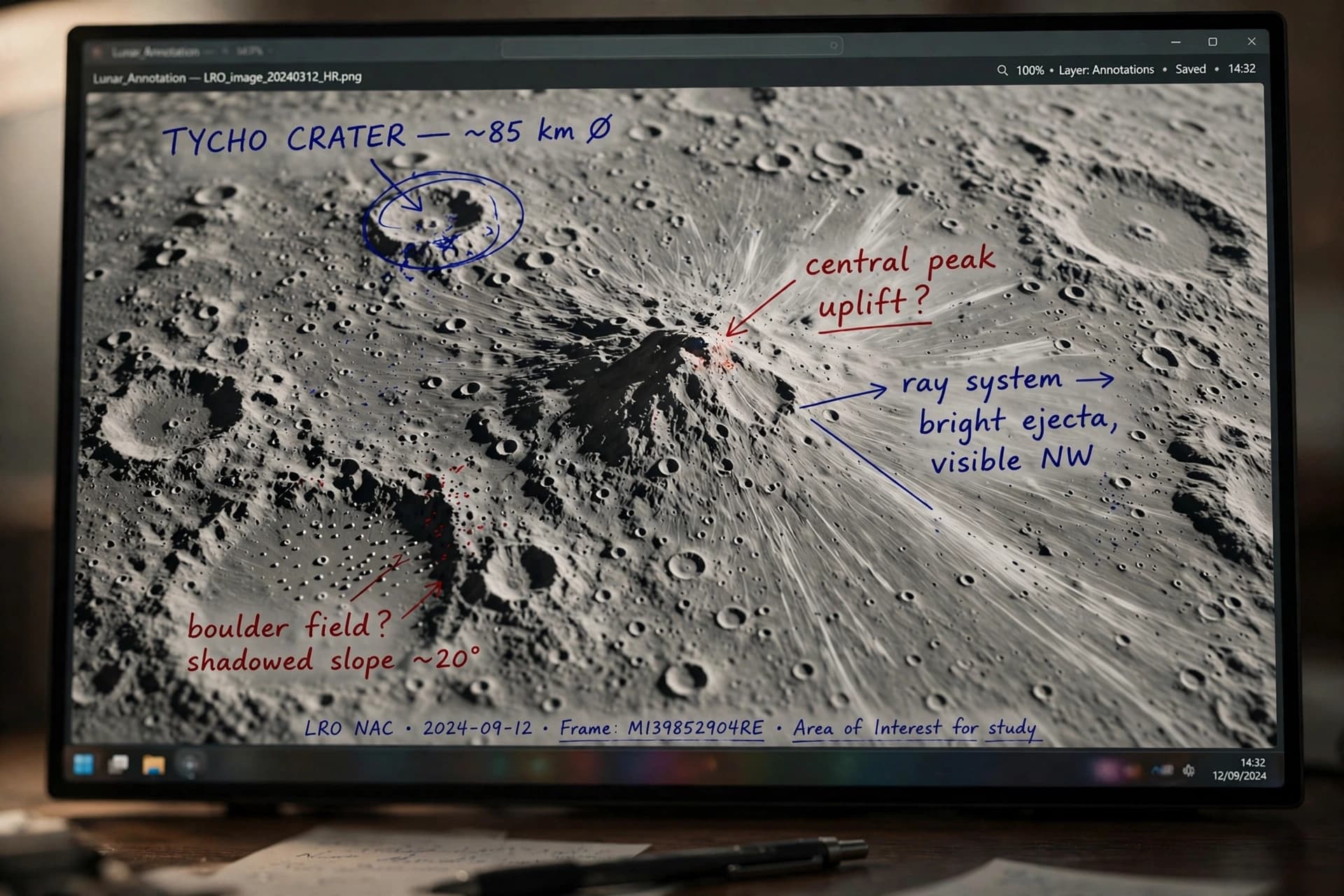
On October 7, NASA released more than 800 gigabytes of lunar science data from the Artemis II mission, uploading it to the agency’s Planetary Data System, the public repository for planetary science missions . The dataset includes more than 11,000 full-resolution images and videos captured by the crew’s handheld cameras and the Orion spacecraft’s onboard systems, as well as 8.5 hours of audio recordings of the astronauts’ scientific observations . There are also crew-annotated images—photographs marked up by the astronauts themselves, pointing to features they found noteworthy .
What makes this release significant is not merely its volume but its nature. As NASA notes, this is the first planetary science dataset captured primarily by humans in more than half a century . The Apollo astronauts brought back samples and photographs, but the systematic, annotated, audio-documented approach of Artemis II represents something new: a human perspective on the Moon, recorded in real time and shared with the world.
Among the more striking observations preserved in the data are five faint impact flashes seen by the crew on the dark side of the Moon. The astronauts were about 74,000 kilometers from the lunar surface when they witnessed the flashes, which are believed to have been caused by small meteoroids striking the Moon . These may be the faintest impact flashes ever observed with the human eye . The crew’s excitement at the sight is palpable in the audio recordings, which capture their real-time conversations with ground control .
The observations also document the astronauts’ perceptions of lunar color and terrain, which differed from what robotic cameras have recorded. Astronaut Christina Koch described a shade of brown as being like “mold growing on sandwich bread” . The crew reported seeing subtle hues of gray, black, brown, tan, white, green, and blue across the surface—colors that offer clues to the rocks and minerals in different regions . Blues point to titanium-rich volcanic rocks, browns reflect varying levels of iron, and greens signal glass formed during volcanic eruptions or asteroid impacts .
Alongside the data, NASA published three reports: the Artemis II Preliminary Lunar Science Report, the Artemis II Lunar Science Operations Report, and the Artemis II Lunar Science Data User Guide . These documents provide context for the raw data, explaining how the science plan was developed and how the observations were made.
The data is now available through NASA’s Planetary Data System, with a more accessible selection of images and audio available on the agency’s Artemis II science page . For scientists, it is a trove to be analyzed for years. For the rest of us, it is an invitation to see the Moon through human eyes—and to remember that the next time humans go there, they will be building on what these four astronauts saw and shared.
AI Image Disclaimer: All images associated with this article are AI-generated and serve illustrative purposes only, not as documentary records of the Artemis II mission.
Sources: NASA, Nature, The Verge, WIRED, RRI.co.id, NASA Planetary Data System
Published by Banx Network. This article is part of the Banx decentralized media programme, powered by the BXE token on the XRP Ledger.