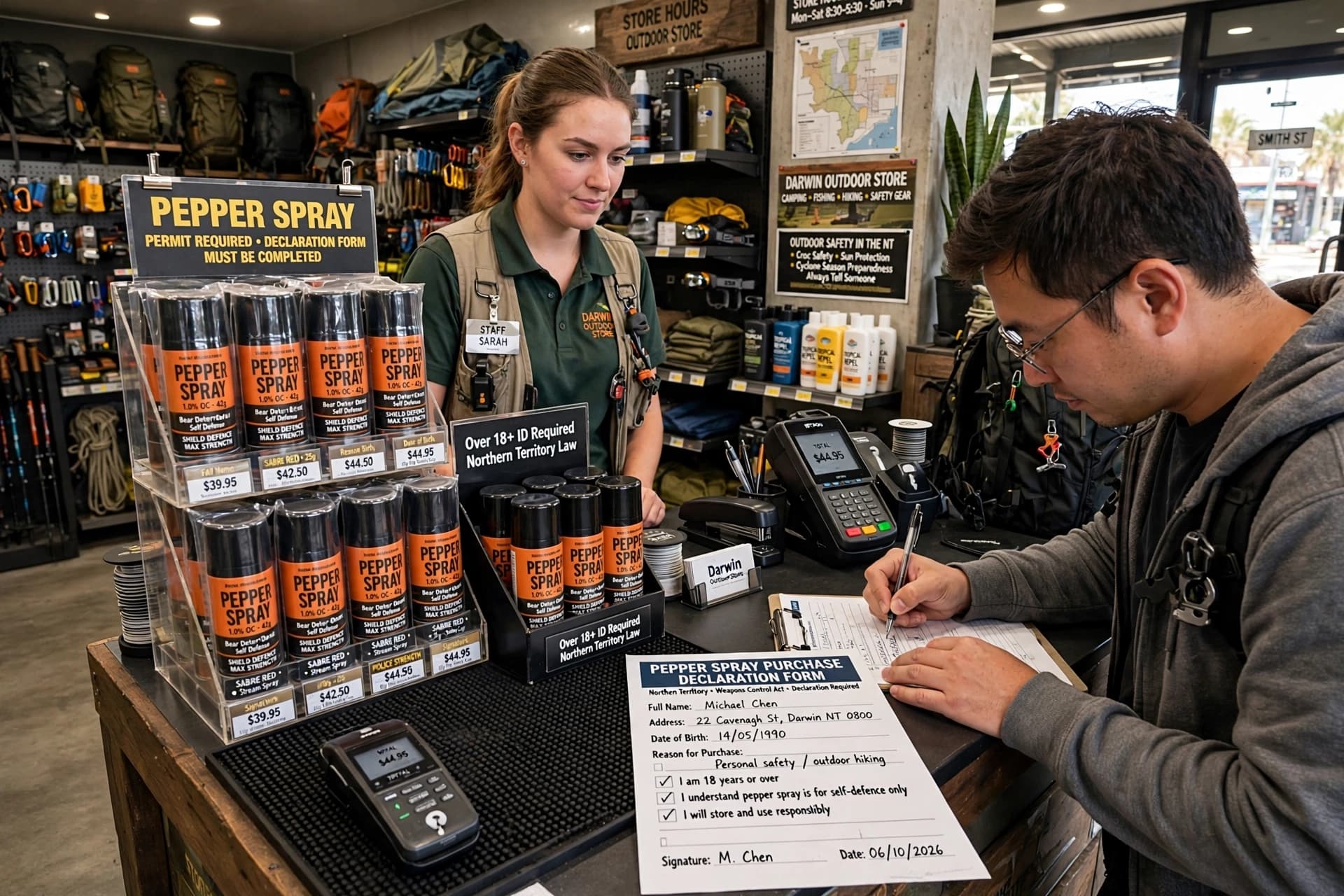
There is a particular calculus to a policy experiment—a calculation that weighs the promise of personal safety against the risk of misuse, that asks whether giving people a tool for self-defence makes them safer or simply introduces a new danger. In the Northern Territory, that experiment has now produced its first substantial data. More than a year after the trial allowing personal use of pepper spray began, figures show that 3,714 people have purchased the product, with 5,882 canisters sold and 69 seized by police. The numbers tell a story of a trial that has been embraced by the public, watched carefully by authorities, and questioned by those who warned it would do more harm than good .
The trial, which began on September 1, 2025, allows NT residents over 18 to purchase oleoresin capsicum (OC) spray from licensed firearms dealers for personal protection. To be eligible, buyers must present valid photo ID and sign a declaration confirming they have no relevant criminal history, police orders, or court orders. A copy of the declaration must be carried with the spray and presented to police on request . Since the trial began, 46 prohibited buyers have been identified—roughly 1.2 percent of purchasers—and eight people have been charged with making a false declaration or unlawfully possessing the spray .
The Community Reference Group (CRG) report reviewing the trial's first 12 months found "no significant or widespread community concerns" about the rollout. Superintendent Ian Kennon said police were "currently happy" with the trial, noting that "over 98 percent of people purchasing OC spray have done so in alignment to the conditions of the trial" . The report did identify a need for clearer public information, particularly around storage and transport of the product, and noted that some people who had previously carried improvised self-defence items—such as screwdrivers or deodorant spray—had transitioned to carrying OC spray instead .
The demographic profile of buyers has been notable. Warren Smith, a Darwin retailer who has sold more than 1,000 canisters, told the ABC that the majority of his customers are women. "Most people, the ladies, say it's just to make them feel safe, when they go for a walk of the evening, or the morning," he said . The sentiment reflects a broader concern about personal safety in the Territory, where crime has been a persistent political issue. The Country Liberal Party government, which implemented the trial, has framed it as part of a broader crime crackdown that includes strengthened bail laws and other measures .
Critics, however, have not been silenced. More than 20 prominent organisations signed an open letter warning that legalising pepper spray "risks escalating violent incidents" . The Northern Territory Police Association also voiced concerns, arguing the trial would endanger both the public and frontline officers . The data collected so far does not resolve this debate, but it does provide a baseline. The trial has been extended until December 31, 2026, and the government is considering making personal use of OC spray permanent, potentially broadening the scheme to include 16-year-olds and allowing household members to share a canister . For now, the experiment continues, and the numbers accumulate—one purchase at a time.
AI Image Disclaimer: The images accompanying this article were generated by artificial intelligence and are for illustrative purposes only.
Sources: Australian Broadcasting Corporation, NT Police, Sky News Australia, News.com.au
Published by Banx Network. This article is part of the Banx decentralized media programme, powered by the BXE token on the XRP Ledger.