There is a particular kind of anxiety that settles into a political party when its internal polling begins to confirm what its external critics have been saying—a panic that is not yet public, but that leaks out in the form of distancing, of private complaints, of the quiet search for distance from a president who has become a liability. In the final weeks before the midterm elections, that panic has become visible across the Republican Party. And the signs are accumulating.
The first sign is the polling. President Trump's approval rating has fallen to 31 percent in AP-NORC polling, a career low. Major averages place him at 37 percent approval and 61 percent disapproval. Only 26 percent of Americans approve of his handling of the economy—lower than Joe Biden's numbers at the height of inflation in 2022. And about six in ten Republicans now disapprove of how Trump is handling the cost of living, up from about half in April. The numbers are not merely bad. They are trending in the wrong direction.
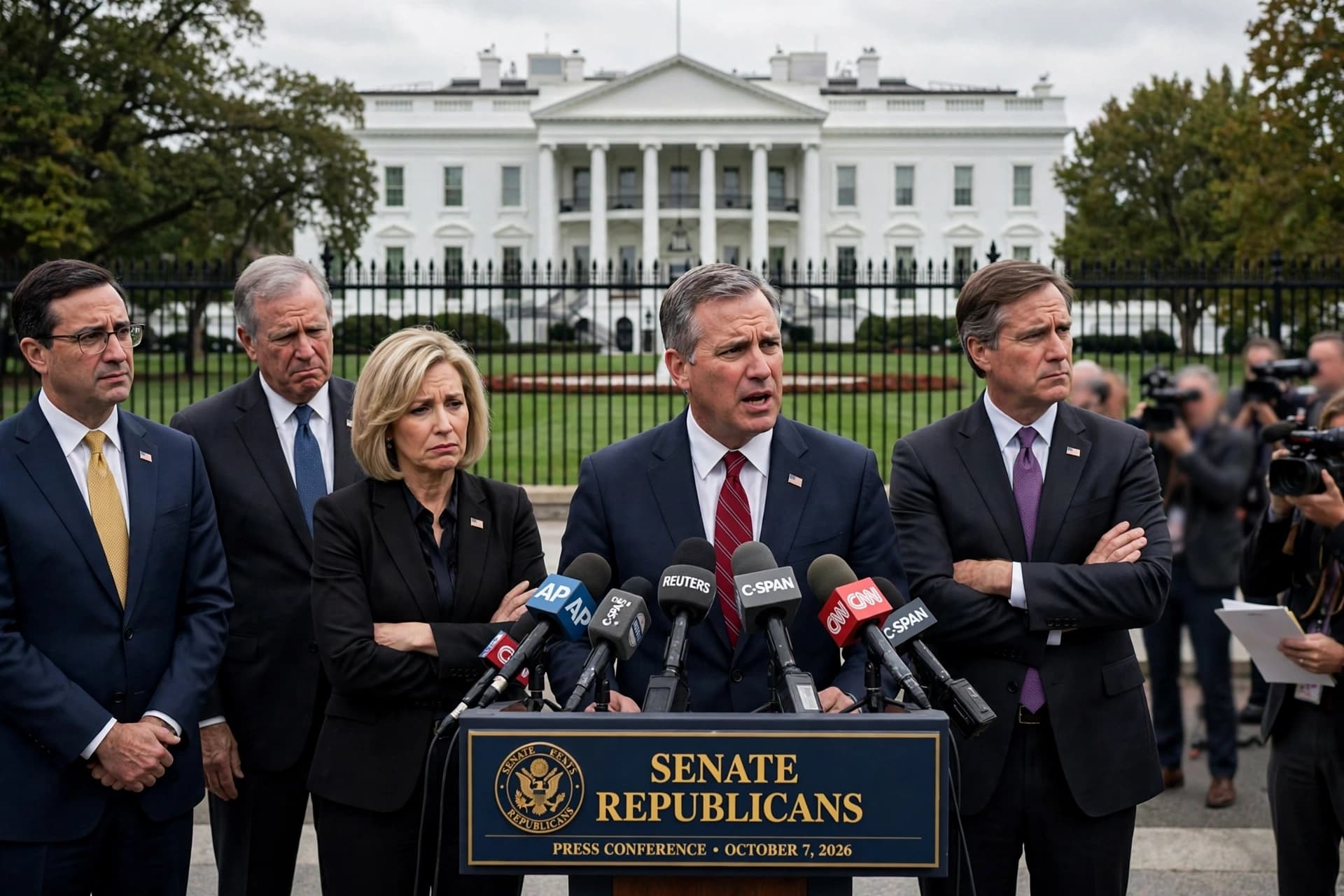
The second sign is the Senate. More Republicans are peeling away from the president as the war in Iran drags on. Sen. Thom Tillis of North Carolina, who is retiring, has said he is leaning toward voting for a war powers resolution to end the conflict. Sen. John Kennedy of Louisiana has called on Trump to address the nation about the war strategy. And in competitive races, Republican candidates are openly breaking with the White House. Ashley Hinson, the Republican Senate nominee in Iowa, called for an "immediate" end to the war. Mike Rogers in Michigan released an ad saying it "needs to end." Jon Husted in Ohio said, "we got to bring the war to a close."
The third sign is the money. MAGA Inc., the president's principal super PAC, had more than $403 million at the end of July—more cash than any party committee—and had spent almost none of it. Republican vendors were told in August to be ready for action, but no comprehensive plan materialized. As one donor put it, "Hope springs eternal." The delay has consequences: advertising rates are much higher now than they were in the spring, and in key markets like Texas, it may already be too late to reserve airtime. Trump has continued raising money rather than spending it.
The fourth sign is the gerrymandering. Republicans launched an unprecedented mid-decade redistricting push, redrawing maps in eight states in a bid to protect their majority. But the effort is falling short of expectations. Politico reported that Republicans are now worried the gerrymander will net them only six seats rather than the dozen they hoped. "Redistricting is construction, not sales," said Adam Kincaid of the National Republican Redistricting Trust. "Just because you build it doesn't mean they're going to come."
The fifth sign is the ads. The White House has been running campaign-style advertisements featuring Trump, funded by taxpayer dollars, during football games and other programming. Senate Republicans have been forced to answer questions about them—and their answers have been uncomfortable. Sen. John Thune, the majority leader, said, "It's a great message. I like the message. But it shouldn't be paid for with taxpayer dollars." Sen. Susan Collins called the spending cuts accompanying the ads "illegal." Sen. Thom Tillis said, "I hate them."
The panic is not uniform, and it is not yet a wave. But the signs are unmistakable: a president whose numbers are falling, a party whose candidates are running away from him, a super PAC sitting on its money, a redistricting strategy that is underperforming, and a set of taxpayer-funded ads that even Republicans cannot defend. The midterms are weeks away. The panic is real.
AI Image Disclaimer: All images in this article are generated by artificial intelligence and are for illustrative purposes only.
Sources: AP News, Politico, CNN, The New York Times
Published by Banx Network. This article is part of the Banx decentralized media programme, powered by the BXE token on the XRP Ledger.