The history of science is often portrayed as a steady march toward truth, but it is frequently paved with moments of profound personal struggle. Subrahmanyan Chandrasekhar, a brilliant astrophysicist, faced one such moment in the 1930s when his groundbreaking work on white dwarf stars was publicly dismissed by Sir Arthur Eddington. This episode, marked by what many historians describe as humiliation, reveals the human side of scientific progress, where ego and established authority can clash with new ideas.
Chandrasekhar’s calculation of the maximum mass of a white dwarf star, now known as the Chandrasekhar limit, was a radical departure from existing theories. He proposed that stars above a certain mass would collapse under their own gravity, a concept that challenged the prevailing belief in the stability of all stellar remnants. At just twenty years old, he presented this idea with confidence, unaware of the storm it would provoke among the scientific elite.
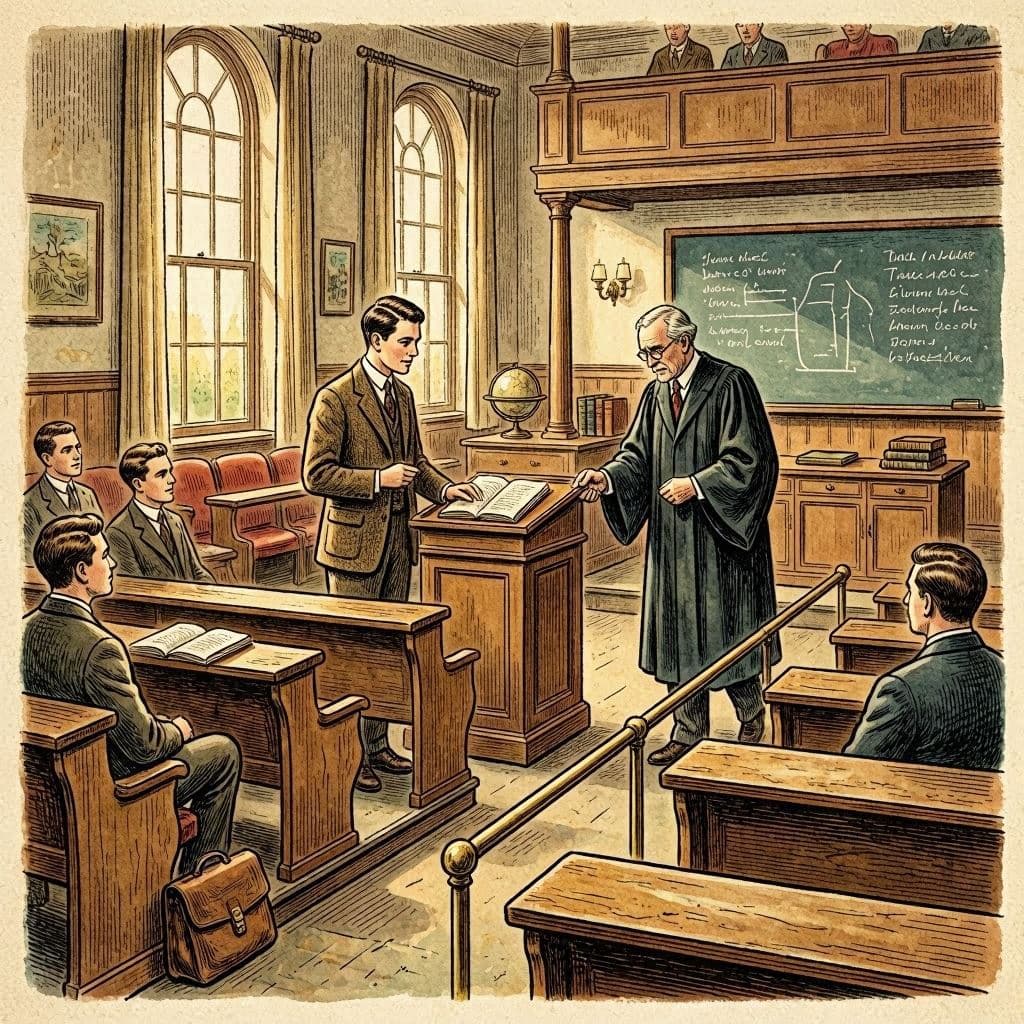
Sir Arthur Eddington, a towering figure in astronomy, rejected Chandrasekhar’s findings during a meeting of the Royal Astronomical Society. Eddington’s dismissal was not just a scientific critique but a public rebuke that questioned the validity of relativistic physics in stellar contexts. For a young scientist far from home, this rejection was deeply painful, casting a shadow over his early career and forcing him to reconsider his place in the academic world.
The humiliation Chandrasekhar experienced was not merely personal; it reflected the resistance of the scientific community to paradigm shifts. Eddington’s influence was so great that his opposition effectively stalled the acceptance of Chandrasekhar’s theory for decades. During this time, Chandrasekhar worked in relative isolation, continuing his research while facing skepticism from peers who adhered to traditional views.
Despite the setback, Chandrasekhar did not abandon his work. He moved to the University of Chicago, where he continued to develop his theories and explore other areas of astrophysics. His resilience in the face of professional adversity is a testament to his commitment to scientific integrity. He believed in the mathematics and the physics, even when the community was not ready to accept them.
It was only years later, with the discovery of neutron stars and black holes, that Chandrasekhar’s limit gained widespread recognition. The very phenomena he predicted became central to our understanding of stellar evolution. The scientific community eventually acknowledged his contribution, culminating in the Nobel Prize in Physics in 1983, a vindication that came too late to erase the earlier pain but sufficient to secure his legacy.
The story of Chandrasekhar and Eddington serves as a cautionary tale about the sociology of science. It highlights how authority can hinder progress and how young voices may be silenced by established norms. Yet, it also demonstrates the eventual triumph of evidence over opinion, as the universe itself provided the proof that Chandrasekhar had sought.
Chandrasekhar’s journey from humiliation to acclaim reminds us that scientific truth often requires patience and courage. His legacy is not just in the equations he derived but in the perseverance he showed in the face of rejection. Today, the Chandrasekhar limit stands as a fundamental pillar of astrophysics, a quiet victory for a man who once stood alone against the tide.
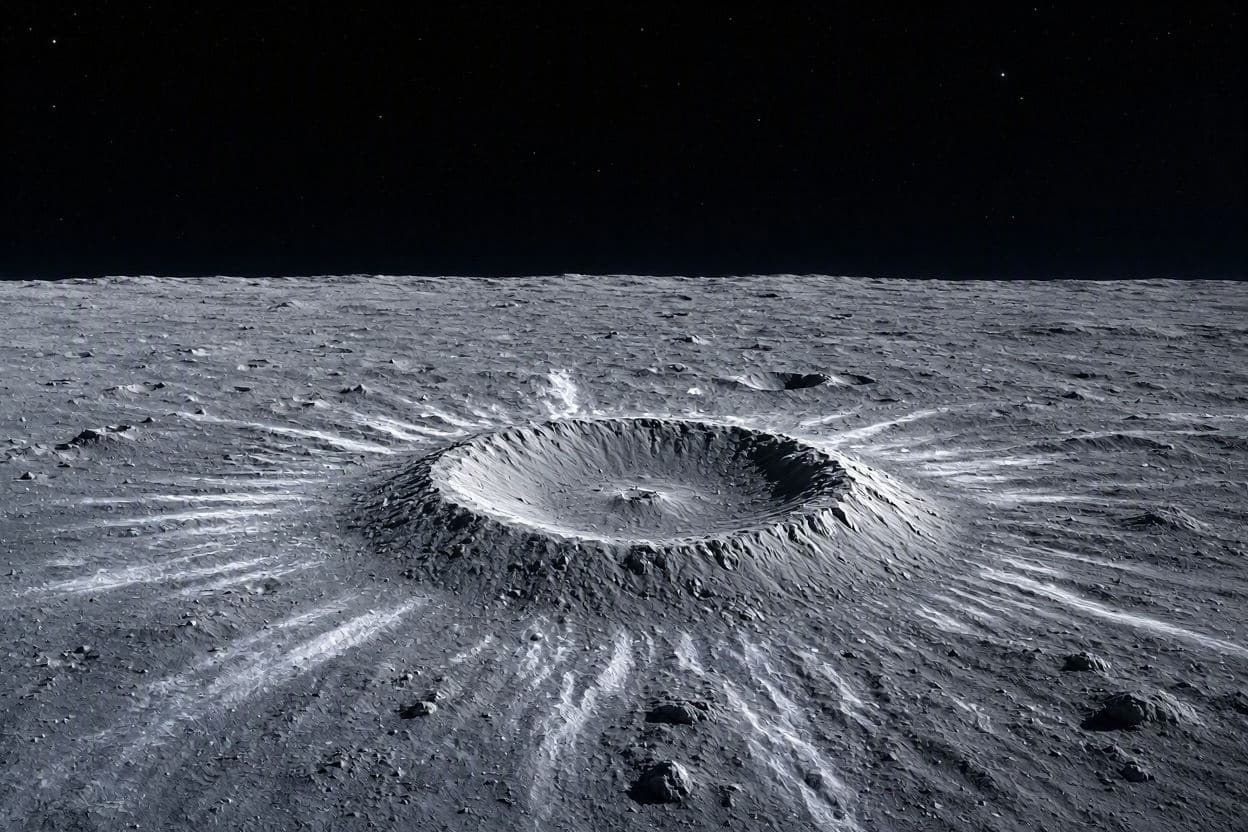
AI Image Disclaimer: The images accompanying this article are AI-generated illustrations depicting historical academic settings and conceptual astronomical phenomena, not actual photographs of the individuals.
Sources: The New York Times American Physical Society University of Chicago Archives Nature
Published by Banx Network. This article is part of the Banx decentralized media programme, powered by the BXE token on the XRP Ledger.