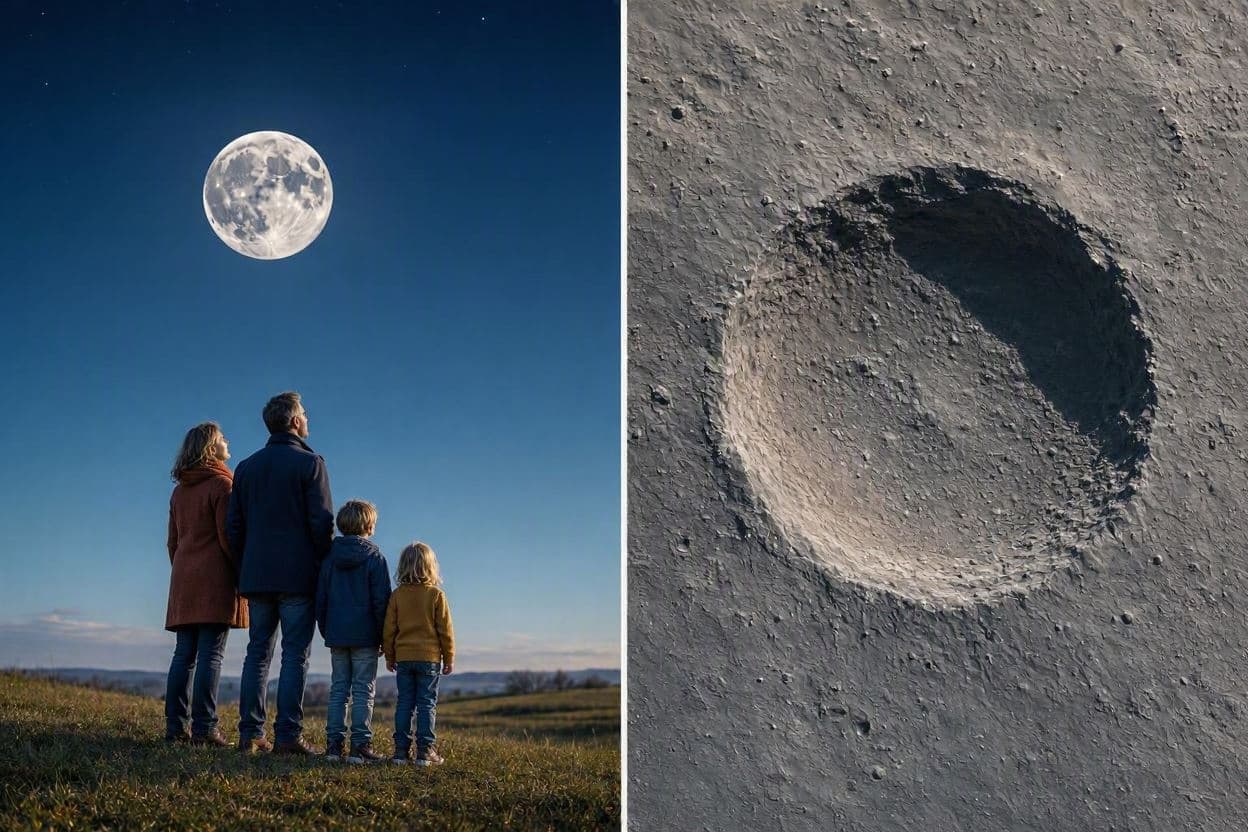
There is a gentle invitation extended to us each year, a call to lift our eyes and reconnect with the oldest companion of humanity. International Observe the Moon Night is not merely an event; it is a moment of collective wonder, a pause in our busy lives to appreciate the silvery glow that has guided travelers, inspired poets, and fueled scientific curiosity for millennia. Tonight, as the moon rises, it offers not just light, but a canvas of stories written in rock and shadow, waiting for anyone with a curious gaze to read them.
One of the most striking features to seek out is the Mare Imbrium, or Sea of Rains. Despite its name, this vast plain is dry and dusty, formed by ancient volcanic flows. Through a modest telescope, its smooth, dark surface contrasts sharply with the rugged highlands surrounding it. It serves as a reminder of the moon’s violent geological past, where lava once flowed like water, filling giant basins created by colossal impacts. Observing it invites reflection on the dynamic forces that shaped our solar system.
Another captivating sight is the crater Copernicus, a masterpiece of circular symmetry. Its terraced walls and central peaks rise majestically from the floor, showcasing the complex geometry of impact craters. When the sun is low on the lunar horizon, the shadows cast by these walls create a dramatic interplay of light and dark, revealing the depth and structure of the crater. It is a testament to the power of collision and the enduring beauty that can emerge from chaos.
For those with binoculars, the Apennine Mountains offer a rugged and impressive view. These mountains form part of the rim of the Imbrium Basin and stretch across the lunar surface like a jagged spine. Their peaks catch the sunlight early, glowing brightly against the darker maria. Observing them provides a sense of the moon’s topography, reminding us that it is a world of mountains and valleys, not just a flat disk in the sky.
The ray system of Tycho is another marvel, visible even to the naked eye as a bright spot in the southern highlands. Through a telescope, the long, bright streaks radiating from the crater become clear, stretching hundreds of kilometers across the surface. These rays are composed of ejecta thrown out during the impact that formed Tycho, remaining bright because they are relatively young and unweathered. They look like splashes of white paint on a gray canvas, adding a touch of artistic flair to the lunar landscape.
Finally, the terminator line—the boundary between day and night on the moon—offers the best viewing conditions for surface details. Here, the low angle of sunlight casts long shadows, accentuating every bump, crater, and ridge. It is along this line that the moon’s texture becomes most apparent, revealing the intricate details of its surface. Watching the terminator move over successive nights can be a meditative practice, connecting us to the rhythmic passage of time.
These sights are not just objects of study; they are invitations to wonder. Whether you are a seasoned astronomer or a casual observer, the moon offers something for everyone. It requires no expensive equipment to appreciate, only a clear sky and a willingness to look up. In doing so, we join a long lineage of observers who have found solace and inspiration in its light.
International Observe the Moon Night encourages global participation in lunar observation, fostering education and appreciation for space science. By taking time to view these five notable features, observers can deepen their connection to the cosmos. It is a simple yet profound act that reminds us of our place in the universe and the shared heritage of looking up.
AI Image Disclaimer: Visuals associated with this article are AI-generated representations intended to visualize the historical context and should not be considered photographic evidence.
Sources: NASA Goddard Space Flight Center International Observe the Moon Night Official Site Sky & Telescope National Geographic
Published by Banx Network. This article is part of the Banx decentralized media programme, powered by the BXE token on the XRP Ledger.