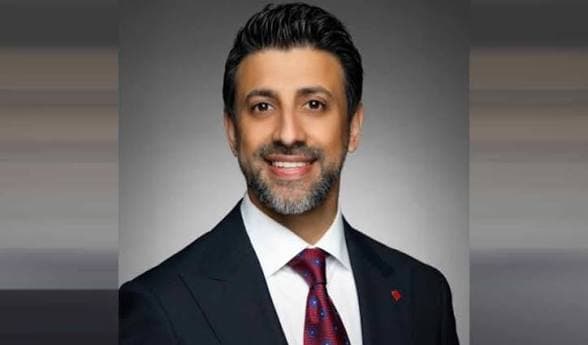
In the slender space between caution and curiosity, there is room for small but telling shifts — like a single leaf stirred by an autumn breeze, signaling the coming of change in what once seemed constant. For years, David Solomon, chief executive officer of one of Wall Street’s venerable institutions, stood firm in his skepticism toward Bitcoin, describing the pioneering cryptocurrency as a speculative and volatile asset without clear practical use. But recently, at a gathering of financiers and thinkers under Florida’s winter sky, that quiet posture seemed to soften ever so slightly, as he disclosed something that would have been unlikely just months ago.
At the World Liberty Forum in Mar‑a‑Lago this week, Solomon revealed that he personally owns a “very, very limited” amount of Bitcoin — modest in scale, perhaps, but remarkable in symbolism. In doing so, the Goldman Sachs CEO offered a snapshot of how traditional finance’s view of digital assets has evolved, tracing a line from skepticism toward cautious openness. Yet in his admission he was careful to frame himself not as a convert or a cheerleader, but as an observer: someone watching a broader story unfold rather than proclaiming a new chapter of his own.
This nuanced pivot reflects the broader environment in which global finance now finds itself. Over the past few years, regulators in the United States have adjusted their approach to cryptocurrencies, and large institutional players like BlackRock and others have launched vehicles to provide clients with structured exposure to Bitcoin. In this landscape of evolving norms and growing legitimacy, even those who once voiced doubt about the practical utility of such assets are re‑evaluating their perspectives — if only at the personal level.
Solomon’s own words conveyed a gentle humility. He described his personal holding as limited and acknowledged that he does not view himself as an expert prognosticator of Bitcoin’s future. This choice of language — reflective, modest, and precise — suggests that owning a small amount of cryptocurrency is not, for him, a signal of bullish conviction so much as an acknowledgment of the complex conversation now taking place between established finance and innovative digital markets.
Even as he maintains a cautious stance, his remarks underscore a key theme: the financial world’s perceptions of digital assets are no longer static. What was once viewed by many traditional bankers as an exotic fringe — interesting but distant — has gradually moved toward the center of strategic thought. For Solomon and others in his position, engaging with this transition means balancing skepticism with curiosity, and doing so with an eye toward understanding rather than imposing certainty.
In that gentle shift — from watchful distance to minor personal participation — there is insight into how one of the oldest facets of modern finance sees the future. It is not a declaration of triumph, nor a foretelling of upheaval, but rather a measured step that mirrors the broader intersection of legacy and innovation now playing out across markets.
AI Image Disclaimer (Rotated Wording) Graphics are AI‑generated and intended for representation, not reality.
Source Check — Credible Sources Found
Bloomberg Investing.com Economic Times Business Insider Crypto Briefing
Published by Banx Network. This article is part of the Banx decentralized media programme, powered by the BXE token on the XRP Ledger.