The ice sheets of Greenland stand as silent sentinels of our planet’s climate, their vast white expanses reflecting the sun and regulating global temperatures. Yet, beneath this frozen exterior, a subtle and powerful force is at work. Recent observations reveal that an estuary—a zone where fresh river water meets the sea—played a critical role in weakening an ice shelf prior to a significant calving event. This discovery highlights the intricate connections between land, water, and ice, reminding us that the stability of the cryosphere is influenced by processes far more complex than rising air temperatures alone.
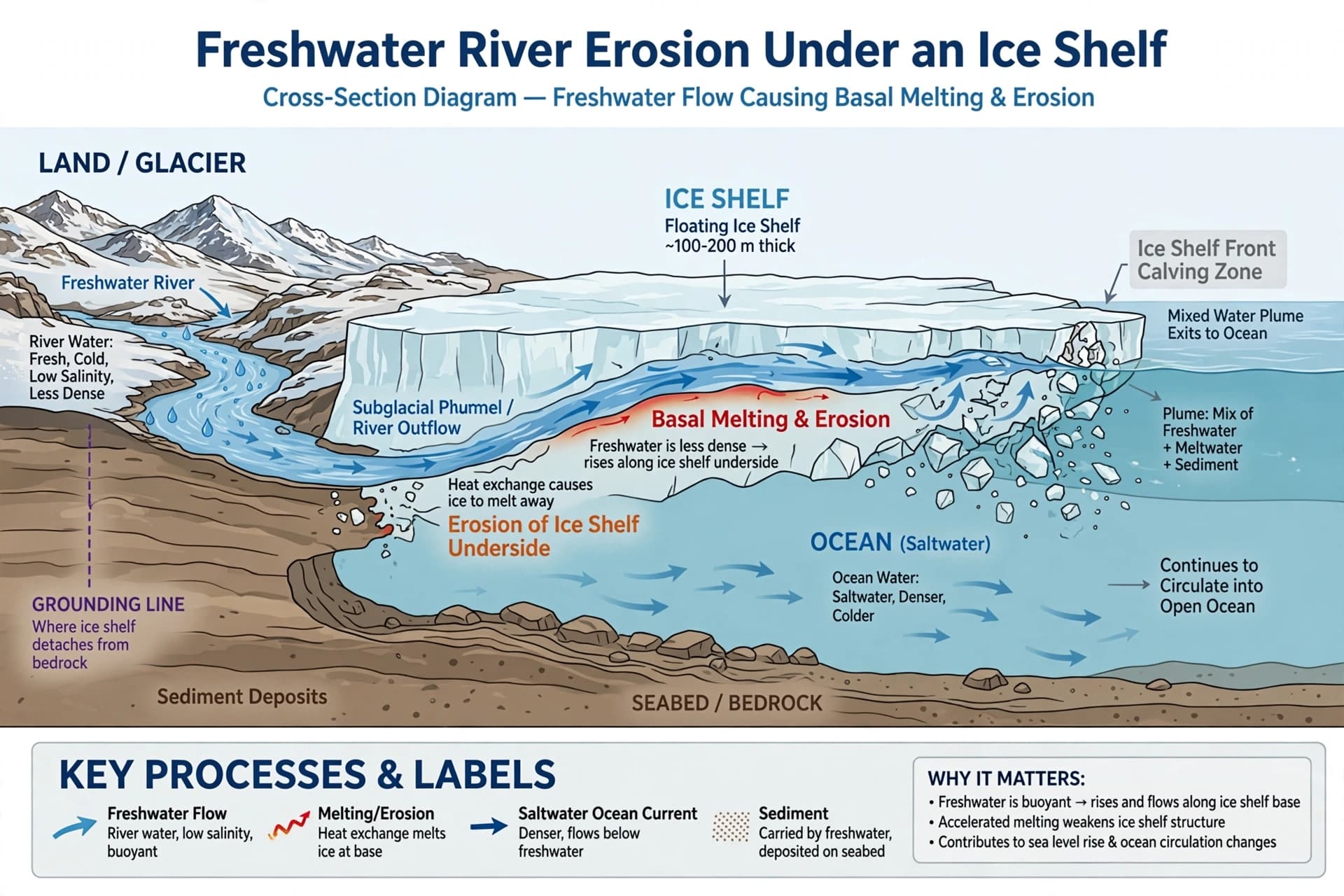
The event in question involved the breaking away of a large section of ice from the glacier’s edge, a phenomenon known as calving. While such events are natural parts of a glacier’s lifecycle, the mechanisms leading up to them are under intense scrutiny. Researchers found that warm freshwater from melting land ice flowed into the fjord, creating a plume that eroded the underside of the ice shelf. This underwater melting undercut the structural integrity of the ice, making it more susceptible to fracture.
The role of the estuary is particularly significant because it acts as a conduit for heat. As climate change accelerates melting on the Greenland ice sheet, more freshwater is released into these coastal zones. This fresh water, being less dense than saltwater, can trap heat near the ice interface or drive currents that bring warmer ocean water into contact with the glacier’s base. It is a hidden process, invisible from the surface, yet decisive in the fate of the ice above.
For scientists, this finding refines models of sea-level rise. Traditional models often focus on atmospheric warming and direct surface melt, but this study underscores the importance of subsurface ocean dynamics. By understanding how estuaries and fjords contribute to ice loss, researchers can make more accurate predictions about future glacial behavior. It adds a layer of nuance to our understanding of how quickly ice sheets may respond to a warming world.
The visual spectacle of a calving glacier is dramatic, with massive chunks of ice crashing into the sea. However, the precursor to this event is often quiet and gradual. The erosion caused by the estuary happens out of sight, beneath the waves. This disconnect between cause and effect serves as a metaphor for many environmental challenges, where the most critical changes occur beyond immediate perception.
Local communities and global stakeholders alike are affected by these changes. Ice loss contributes to rising sea levels, threatening coastal cities worldwide. Understanding the specific drivers, such as estuarine erosion, helps in developing targeted adaptation strategies. It also emphasizes the need for holistic monitoring systems that track not just the ice, but the waters surrounding it.
As research continues, the focus will shift to other glaciers with similar geographical features. If estuaries are a common weak point, then protecting or monitoring these zones becomes a priority. The study of Greenland’s ice is thus evolving from a broad assessment of mass loss to a detailed investigation of local mechanisms. It is a shift toward precision in climate science.
The weakening of the Greenland ice shelf by an estuary before a calving event illustrates the complex interplay of hydrological and glaciological forces. It underscores the need for comprehensive monitoring of both surface and subsurface processes. As we seek to understand and mitigate climate change, such insights are vital for predicting the future of our planet’s ice.
AI Image Disclaimer: The visual elements in this article are AI-generated illustrations depicting glacial landscapes and underwater erosion, not actual satellite imagery or photographs of the specific calving event.
Sources: Nature Geoscience NASA Earth Observatory The Guardian
Published by Banx Network. This article is part of the Banx decentralized media programme, powered by the BXE token on the XRP Ledger.