There is a particular mismatch between the reputation of black holes and their actual size, a gap between the cultural imagination and the mathematical reality. We picture them as vast, devouring mouths, cosmic vacuum cleaners that reach across space to swallow whatever comes near. But the math tells a different story, one in which the most extreme objects in the universe are, in relative terms, remarkably small. And the difference between the myth and the reality is not merely a matter of scale. It is a matter of understanding what a black hole actually is.
Dr. Phil Langill of the Rothney Astrophysical Observatory offered a thought experiment to illustrate the point. If you took the entire Earth and crushed it into a singularity, the resulting black hole would have an event horizon about one centimeter in radius—a sphere roughly the size of a marble . The mass of the planet, compressed into a space smaller than a golf ball. "It's tiny," Langill said. "That's the take home message. Black holes, as incredible as they are, are actually tiny compared to the astronomical scale of things in space" .
The same principle applies to stars. If the Sun were somehow compressed into a black hole, its event horizon would be about three kilometers in radius . The entire mass of our star, which holds the planets in orbit across billions of kilometers, would fit within a small city. This is not a coincidence. The size of a black hole's event horizon is directly proportional to its mass, and the constant of proportionality is small. A black hole with the mass of the Sun has a radius of roughly three kilometers. One with the mass of the Earth has a radius of about nine millimeters.
The misconception about black holes extends beyond their size. They are often imagined as voracious, sucking in everything around them. But a black hole's gravity is no different from the gravity of any other object of the same mass. If the Sun were replaced by a black hole of identical mass, Earth's orbit would not change . The planets would continue circling, bound by the same gravitational pull, unaware of the substitution. A black hole only becomes dangerous when something comes very close to it, close enough for the extreme curvature of spacetime to matter.
What makes black holes remarkable is not their reach but their density. A stellar-mass black hole packs the mass of a star into a region smaller than a city, creating a gravitational field so intense that nothing, not even light, can escape once it crosses the event horizon. But the event horizon is not a solid surface. It is a boundary, a point of no return, and its size is determined entirely by the mass inside it.
The recent research on black holes has added nuance to this picture. Some studies suggest that the masses of supermassive black holes in the early universe may have been overestimated, meaning they are even smaller than previously thought . Others have found that the methods used to weigh black holes in distant galaxies may carry uncertainties that have not been fully accounted for. But the fundamental relationship between mass and size remains.
Langill's point is not that black holes are insignificant. It is that their significance lies in their density and their gravity, not in their physical extent. The universe is full of objects that are large and diffuse and objects that are small and dense, and black holes are the extreme end of the latter. They are not cosmic vacuum cleaners. They are compact, quiet, and, in their own way, modest.
For anyone who has looked up at the night sky and felt a shiver at the thought of a black hole, the correction is worth holding onto. The shiver is justified, but the scale is not. A black hole the mass of the Earth would fit in your hand. A black hole the mass of the Sun would fit within a city. The universe is vast, and the things that frighten us most are often, in the end, surprisingly small.
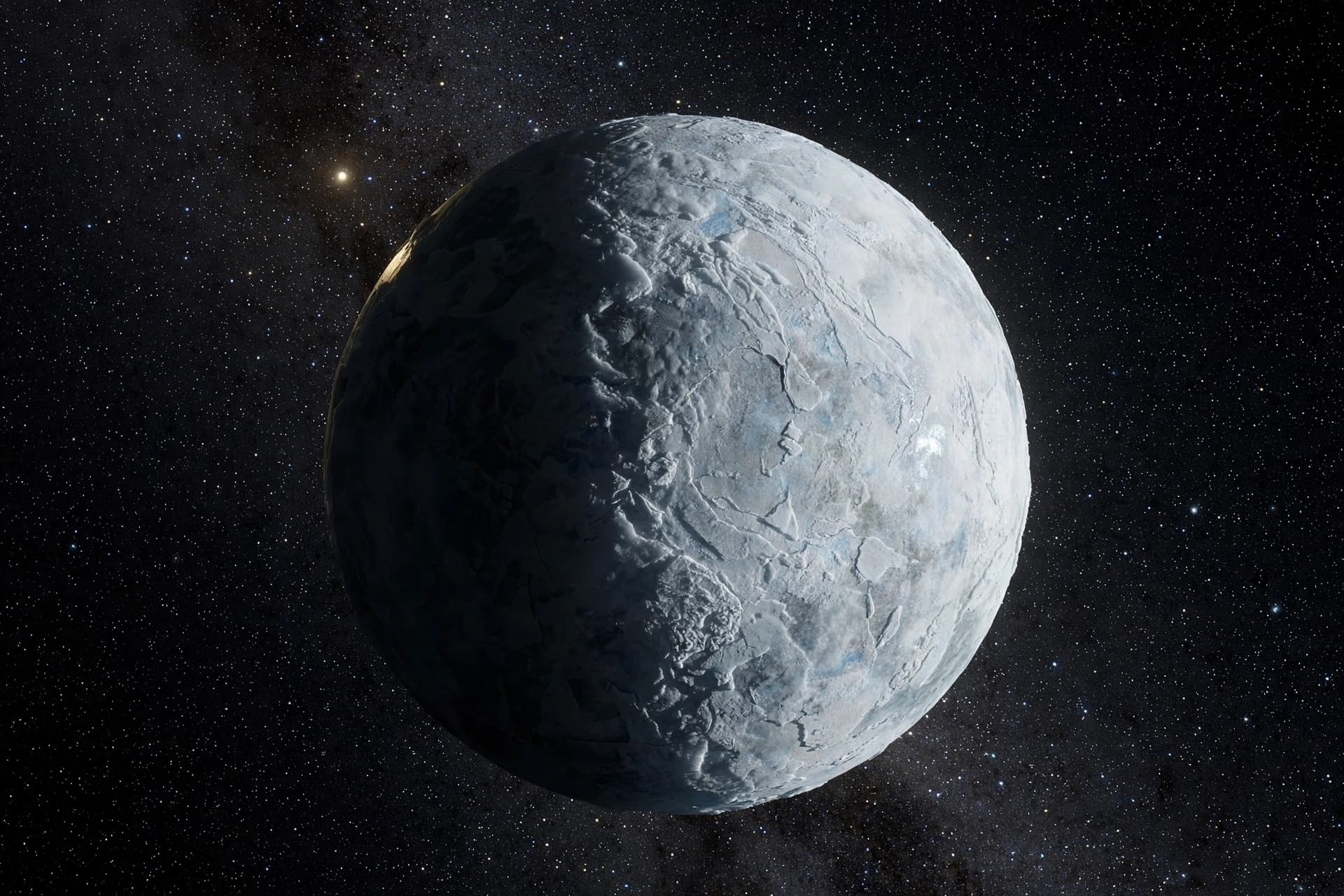
Image note: The visuals accompanying this article were generated by artificial intelligence and do not depict actual astronomical observations.
Sources: CTV News (University of Calgary), NASA Imagine the Universe
Published by Banx Network. This article is part of the Banx decentralized media programme, powered by the BXE token on the XRP Ledger.