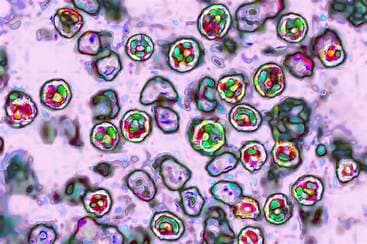
In the arc of public health triumphs, the United States once stood proudly as a country that had all but banished measles — a disease once feared for its ease of spread and severity among children. This distinction, known as measles elimination status, reflected decades of vaccination achievements and the collective will to protect future generations. Yet today, that status now teeters on the brink of being relinquished, not because of an inevitable biological tide, but amid widening outbreaks and shifting public conversations about immunization.
Over the past year, measles — a highly contagious virus prevented effectively by the measles, mumps, and rubella (MMR) vaccine — has surged across numerous states, with reported cases reaching their highest levels in decades. Public health officials from across South Carolina, Utah, Arizona and Texas have been investigating whether ongoing chains of transmission are linked, a key criterion that the Pan American Health Organization (PAHO) and World Health Organization (WHO) use to determine whether a country retains its elimination designation. Continuous transmission beyond a year would mean, in technical terms, a loss of the measles-free label that the U.S. earned in 2000.
Into this backdrop stepped Dr. Ralph Abraham, recently appointed principal deputy director of the Centers for Disease Control and Prevention (CDC). In remarks to reporters this week, Dr. Abraham characterized the potential loss of elimination status as “just the cost of doing business with our borders being somewhat porous for global and international travel,” and suggested that a reversal of the designation would be of limited significance. He added that such a shift “does not mean that the measles would be widespread.”
His comments — coming amid a resurgence of a disease once virtually absent — have stirred both introspection and concern. To some public health experts, this framing risks overlooking the underlying reasons for the outbreaks: falling vaccination coverage and rising numbers of communities with lower immunization rates. According to CDC and health reporting, the majority of recent measles cases have occurred among individuals who were unvaccinated or whose vaccination status was unknown.
For many parents and public health professionals, measles elimination once symbolized more than a label. It stood as a testament to coordinated prevention, community protection and the power of scientific achievement. Losing that status — even if not directly altering medical strategies for outbreak response — may signal deeper challenges in maintaining collective immunity and combating misinformation about vaccines.
As scientists complete genetic analyses to trace how virus strains linked to recent outbreaks relate to one another, the coming months will bring clarity on whether the U.S. keeps its measles-free title. Regardless of that technical decision, the broader public conversation — about how societies value vaccination, shared responsibility and how we respond to preventable disease — will likely endure long past any label.
AI Image Disclaimer (rotated wording) “Visuals are created with AI tools and are not real photographs.”
Sources (media names) KFF Health News CBS News AP News Healthline Yahoo News UK
Published by Banx Network. This article is part of the Banx decentralized media programme, powered by the BXE token on the XRP Ledger.